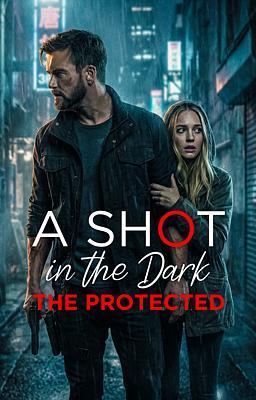
A Shot in the Dark: The Protected
Author
B. E. Harmel
Reads
584K
Chapters
39
Kate comes home expecting cake and candles, not chaos. One brutal night shatters everything she thought she knew about her family, dragging her into a dangerous world of secrets and lies. To survive, she’s placed under the watch of John, a relentless agent with shadows in his past and a vow to protect her at all costs. But guarding Kate isn’t as simple as it should be—the more time they spend together, the harder it becomes to keep the line between duty and desire intact. With enemies closing in and trust in short supply, survival means risk, sacrifice, and facing a temptation neither of them is prepared for. In a storm of danger, will passion save them—or destroy them?
Chapter 1
KATE
I woke up to the sound of glass shattering.
Then came yelling. Something heavy crashed to the floor. For a second, I couldn’t remember where I was.
The ceiling above me was low and wooden, and my hand brushed over a quilt that smelled like lavender. My old room. I was at my parents’ house—the one out in the country, where I’d come to spend my birthday weekend.
Not my apartment in D.C. Not the city, with its constant traffic and sirens. I was home.
I expected the smell of coffee drifting in, the familiar quiet—birds at the window, the old hallway clock ticking. Pancakes, one of my dad’s experimental coffees. The routines I kept promising myself I’d come back for.
That was a lie. Guilt twisted in my stomach.
I’d told them work at the firm was too busy, that I couldn’t take a weekend off. But now, lying here, I realized how much I’d missed this. And then the noise came again.
Another crash, louder this time. Men’s voices—deep, fast, angry.
My whole body went stiff. My brain tried to make sense of it.
Burglars? Neighbors? No—my parents didn’t live within miles of anyone.
My heart pounded so hard it hurt. The instinct that got me through law school—logic first, panic later—kicked in. I sat up, my pulse thumping in my throat.
The house was too big, too old. Every sound echoed. I tried to tell myself it was nothing—maybe my dad dropped something—but my gut knew better.
I slipped out of bed, my bare feet hitting the cold floorboards, and crept to the door. Every board groaned under me, like it was warning me to stay put. I ignored it.
The hallway was dark, except for a faint glow from downstairs. The house smelled like coffee and gun oil—my dad’s usual mix—and something sharp and metallic. I reached the mezzanine and leaned over the rail.
My dad was in the living room, still in his pajamas, hands raised as he faced three men with guns. My breath caught. He moved without hesitation—disarming one, driving another into the wall like muscle memory taking over.
My dad. The man who claimed to “just push paperwork.” Every part of me wanted to run to him, to help—but reason cut through the fear.
He’d trained for this. I hadn’t. My job was to survive.
“Stay down!” he shouted—but not at me. At them.
A fourth man appeared, gun in hand. My dad turned just in time to see the flash of a silencer.
“Don’t kill him, idiot,” a woman snapped from behind. “We need them alive.” Her voice was cold, sharp.
Panic clawed up my spine. I tried to fight the adrenaline, to think. I wanted to scream, but something told me not to.
Not yet. Then I saw my mom.
She stormed out of the hallway—barefoot, furious, swinging a lamp like a weapon. She fought, and for a second, I thought she might win. But there were too many.
When they dragged her down and struck her, I bit my knuckle to keep from screaming.
“Is there anyone else in the house?” a man barked.
My blood went cold.
“I don’t know. Check upstairs,” the woman ordered.
They were coming. Panic roared in my ears. My heart hammered so loud I thought they’d hear it.
Think, Kate.
My parents’ room—there was a gun in the nightstand, but it would take too long to get there. Their office—files. Maybe that’s what these people wanted.
Both of them had served. Maybe military files, something that might be worth killing for. My thoughts split in two, and for a dizzy second, I froze.
Then my mom’s voice echoed in my head, calm and clear: Don’t be stupid, don’t panic. Be fast.
Panic. That word flipped a switch, and suddenly I was thinking of an old lullaby she used to sing when I was scared. Her voice surfaced in my memory, soft but steady:
When shadows fall and fear takes flight, Step to the room and lock it tight. When danger calls, don’t make a sound, The panic room will keep you bound.
The panic room. We had one—hidden behind the pantry. But I was upstairs.
They’d be on the stairs in seconds. I had to move—fast. My mind raced.
The kitchen was a dead end; getting there meant running straight into them. Then I remembered the dumbwaiter. Small. Old. Loud.
But it ran from the second floor to the kitchen. If I could fit, I could get down without being seen. I moved.
My body shook, but I was thinking now, not freezing. I crept to the end of the mezzanine, found the dumbwaiter hatch, pulled it open, and crawled inside. My knees slammed into the wood.
Tight fit. Cold air. Dust everywhere.
I pressed the lever. The machine screeched like it hadn’t moved in years, the noise echoing through the house.
“Upstairs!” someone shouted.
Shit. The box jolted, and I bit my tongue to keep from crying out.
I forced myself to breathe steadily, even as boots thundered above. The dumbwaiter rattled down, slow as hell. The fear sharpened into something else—clear, focused.
I could hear everything: pounding feet, shouted orders, my heartbeat syncing with the grind of metal. By the time I reached the bottom, my palms were bleeding from gripping the sides so hard. They were upstairs now.
This was my only chance. I crawled out and sprinted for the kitchen, tore through the pantry, jars and spice bottles crashing to the floor. Behind them, the hidden wooden panel waited.
My hands shook too badly to get a good grip, but somehow I wrenched it open. Another door—metal this time. A keypad.
My mind scrambled for the next line of the lullaby. It wasn’t just a song—it was a code. I could see myself at five, wobbling on a chair while my dad pointed at the letters taped to the fridge.
“Come on, Katie-bug,” he’d say, grinning. “Sing it with us. Louder this time.”
Then my mom would join in, her voice soft:
B is for boat, it sails the sea, E is for elephant—big as can be. C is for car, it takes you home, Two and three, you’re not alone.
The melody played in my head, so vivid it almost hurt. My eyes burned as I punched the code into the keypad, my hands shaking so hard I could barely hit the buttons. B. E. C. 2. 3.
I pressed the sequence, half praying, half remembering. The lock clicked. I slipped inside, slammed the door, and finally let myself breathe.
The panic room sealed behind me with a heavy, final thud. For a second, I just stood there, pressed against the cold wall, my chest heaving. I looked around.
Four steel walls. A thin cushion on the floor. A small screen in front of me, glowing faintly.
Beneath it, on the console, a red button and a note in handwriting I knew by heart. Press, Kate. My mom’s handwriting.
Something inside me cracked. I pressed the button. The screen flickered to life, blue light slicing through the dark.
Words bloomed across it:
The redemption request, Katie-bug, was completed successfully.
“What the hell does that mean?” I whispered, my voice swallowed by the room.
The screen refreshed. And their faces stared back at me.