


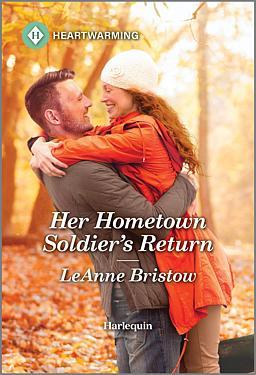
Her Hometown Soldier's Return
Author
LeAnne Bristow
Reads
17.0K
Chapters
21
CHAPTER ONE
RANDON FARR THREW the duffel bag over his shoulder and looked around his childhood hometown, Coronado, Arizona, filled with people who had known him his entire life. People who delighted in watching his father fail. People who expected him to do the same thing.
His chest tightened. He once swore not to set foot in this town until he’d made something of himself. Yet, here he was. Lower than when he left.
The whoosh of the bus door shutting behind him prodded him to take a few steps toward the sidewalk. He sighed as he watched the bus pull away. The building that loomed in front of him was too familiar. A mural depicting the White Mountains covered the side of the building, complete with Big Lake, Black River and a variety of wildlife. The words Coronado Market arched above the scene. Pride rippled through him. He’d painted that sign. It was his only contribution to the small town.
He didn’t have to go inside the market to know the smell of coffee would be thick in the air and fishermen, eager to get an early start at the lake, would be stocking up on bait and snacks. As badly as he wanted coffee, he would not go inside. He didn’t want anyone to know he was in town. Walking inside would be as effective as waving a flag and the entire town would know within hours, if not minutes, that he was back.
Most of all, he couldn’t risk running into Millie. He doubted that Millie still worked there now that she’d graduated nursing school. Even if she did, she probably wouldn’t be there this early. Stacy, the owner, always opened the store. Had that changed now that she was married with children? Two little girls, adopted from the country of Georgia, according to the letter Millie sent him before he left for Kuwait.
Millie. Just thinking her name sent waves of pain through his body. He had joined the military to prove to himself that he wasn’t like his dad. To prove he was someone who could be counted on. And to prove he could be worthy of someone like Millie. He’d messed that up and now even the Army couldn’t use him anymore. The only promise he’d managed to keep was his promise to keep her brother safe. And he’d barely managed to do that.
He sucked in a heavy breath and started walking away from town. The streets were mostly empty this early in the morning. He pulled at the collar of his shirt. Time to go home.
Two miles later, Randon found himself standing in front of the two-bedroom hewn log cabin that had been both his home and his prison. The yard was so overgrown with weeds that the stone pathway leading to the porch was obscured. Shingles were missing from the roof. Most of the shutters were either missing or only hanging by a hinge.
The cabin appeared as if it might collapse with the next strong wind. Randon’s heart ached. His great-grandfather had built the cabin. His grandfather had upgraded it, adding electricity and running water. When he was a little boy, he’d followed his grandfather around while he made repairs and improvements, learning everything he could about how to take care of the home that would one day be his.
His hands shook as he climbed the rickety steps to the front porch. The door swung open with a loud squeak and stuck about halfway. Randon shoved. The door opened another couple of inches. He shoved again.
The smell of cigarettes, dirt and trash assaulted his senses all at once. Gagging, he pulled his T-shirt up to cover his nose. Was this the condition it was in when his father died? Or had squatters taken up residence?
He made his way across the great room to the kitchen. On the window sill above the sink, dozens of medication bottles stood in line. He picked one up, reading his father’s name on the prescription. Had cancer changed the man’s ways at all? Dreading what he might see under the sink, he opened the cabinet door, anyway. Dozens of empty liquor bottles. Even cancer hadn’t stopped his dad from drinking. It wasn’t surprising that in the end, he’d died from drinking and not lung cancer.
He turned the handle to the faucet, but nothing happened. Was the electricity off, too? He walked over to the light switch and flipped it on. No electricity, either. His gaze strayed to the refrigerator. Had anything been left in it? He took a deep breath and held it before opening the door. There wasn’t much in there. Some beer cans. Something that looked like it had once been hot dogs and a few other things he wasn’t brave enough to examine were on the shelves. He left them there and closed the door.
Randon picked his way through the debris on the floor, down the hall, to where his room had been. Like the front door, it was warped and swollen and required a couple of shoves to get inside. His mouth dropped open. Nothing had been touched. Everything was just like he left it.
A plume of dust rose in the air as he dropped his duffel bag on the bed. He sat on the edge of the bed and buried his face in his hands. He should have come home last winter. If he’d come home when his father had been hospitalized, he wouldn’t have been on patrol that night.
What did it say about him that his regret wasn’t due to any obligation he felt toward his father? The man’s death hadn’t bothered him. At least not much. But because he ignored it, he put his best friend in danger, as well as the other members of his squad.
His heart began to race and he could feel the walls closing in around him. A shooting pain shot through his head and he squeezed his temples with his hands, trying to stop the pain. He gasped for air and pushed away from the waves of nausea as black waves threatened to engulf him.
Inhale. Count to five. Exhale. Repeat. Over and over, he sucked in air like his life depended on it. He lost track of time as he tried to regain his grip on the world around him. When the crashing of the waves finally stopped, he was left sweaty and cold.
His lip twitched. Dr. Harlow was wrong. Getting off the military base, away from the constant reminders of where he’d been, didn’t help. Randon couldn’t wait to tell him. No. He wouldn’t give the doctor anything to report to his new employer.
Bravos, a military contracting company, had hired him despite the fact that his shoulder would never be the same. They even knew he was dealing with some post-traumatic stress syndrome episodes. It was to be expected, the recruiter told him, when a soldier returns to civilian life after going through the things he’d gone through.
They had given him thirty days to get his father’s estate in order and return for a full medical workup. He had thirty days to learn how to control the PTSD episodes. His career depended on it. Maybe his life.
He stood up. Might as well get busy if he had any hope of making this sardine can inhabitable again. As soon as he did, he would put it on the market and sell it. It was the only way to cut his ties to Coronado and never have to return.
Without electricity and water, there wasn’t much he could do except clean out the trash. He glanced at his wristwatch. The utility office opened at nine o’clock. How much cleaning could he do in two hours? He gingerly walked down the narrow hallway and across the living room to the kitchen. Cleaning supplies and trash bags had always been kept under the sink. He pushed the empty vodka bottles around, but he didn’t see anything. No trash bags. No cleaning supplies. Nothing. Looked like he had no choice except to go to the market, after all. The thought sent chills down his arms and a weight settled in his chest.
He stepped outside and forced the door to close. An orange paper that he hadn’t seen when he came in flapped in the breeze next to the door.
He pulled the paper free and read it.
Condemned. This structure has been deemed unsafe and is set to be demolished. Please contact the Apache County Sheriff’s Department for questions.
Condemned. Just like him. He wadded the paper in his hand and shoved it in his pocket. He better go see Sheriff Frank Tedford before he did anything.
He glanced at the large barn standing on the edge of the property. He was certain his father’s pickup truck was parked inside, but he’d rather walk across the entire country before he used anything that was his father’s.
Fifteen minutes later, Randon approached the entrance to the Sheriff’s Department. Standing outside the double doors, he clenched his fists and waited for his heart to stop trying to leap into his throat. As soon as he walked through those doors, people would know he was here. Not that he really thought he could stay in Coronado for an entire month and no one would know. Taking a deep breath, he pushed through the doors.
The entrance was smaller than he remembered. An end table in the corner, littered with magazines, sat next to a row of three chairs. A sliding glass window separated the receptionist from people in the lobby.
The woman behind the glass glanced up. She raised her eyebrows and smiled. A few moments later, a buzz signaled the opening of the door and a tall burly man stepped toward him.
“Randon Farr!” The man reached out to shake his hand.
“Good morning, Sheriff Tedford.”
“You’re all grown up now! Call me Frank.” The sheriff pumped Randon’s hand enthusiastically. “I didn’t know you were coming home. How long is your leave?”
Randon frowned. No one in this town ever greeted him with this much enthusiasm before. He couldn’t bring himself to admit he was on permanent leave.
“I report back mid-November.” It wasn’t a complete lie. He would be reporting to Bravos, not the Army. He had to make it through one more medical evaluation before starting his new job.
“How’re you doing?” Frank gave him a sympathetic glance. “I heard you had to stay in the hospital a while after an ambush. You’re recovering okay?”
He stiffened. Of course, everyone in town knew about the incident. He doubted anyone knew the truth. He swallowed. “Yes, sir.”
“Glad to hear it.” Frank slapped the top of Randon’s arm and grinned. “I didn’t think you could get much bigger, but look at you. What brings you by here?”
Randon glanced down. He’d lost almost twenty pounds in the last eight months. Of course, he’d gained over fifty pounds since leaving Coronado. It was amazing what three square meals a day could do. It was more than he ever got at home.
He pulled the condemned notice from his pocket. “I wondered what we could do about this.”
“I see that you went by your cabin.”
Randon nodded. How could he be sad about a place he was so eager to be rid of? Still, it was the only home he’d ever known. “When is it supposed to happen?”
“Let’s go back to my office.” Frank turned and walked down the hallway. He opened the door to his office.
As soon as he closed the door, Frank leaned against his desk. “I put that sign up to keep vagrants out. It hasn’t been condemned.”
Relief flooded through him. “So it’s okay for me to stay there?”
The sheriff arched one eyebrow. “Have you been inside? It’s falling apart. It’s only a matter of time before it’s really condemned. Why don’t you let me put you up in a cabin at Whispering Pines?”
“No, thank you.” Randon shook his head. “I’ll repair it while I’m here, but the electricity and water have been shut off.”
“I can get that taken care of. What else do you need?” Frank moved around the desk to sit in his chair. “I don’t think I’ll have any trouble rounding up volunteers to help you.”
“No!” Randon’s heart threatened to jump out of his chest.
Frank looked at him in confusion. “Why not?”
Randon’s stomach twisted into a knot. “I just... I don’t want anyone to know I’m here, yet.”
“Why?” Frank’s voice was low and his eyes held a note of sympathy.
He glanced at the wall behind the sheriff’s head. Medals from Frank’s service during Desert Storm decorated the wall, along with a few pictures of Frank, surrounded by other soldiers, all dressed in fatigues.
Randon swallowed. If anyone in Coronado could understand how he felt, maybe Frank could. “I needed time away from the military base. The last thing I want to do is talk to people about...”
“About what happened,” Frank said softly.
“Yes.”
Frank nodded, his eyes full of understanding. “It’s a small town. Word is bound to get out sooner or later.”
“I know,” Randon said. “I just need some time alone.”
“What about the Gibsons?” Frank asked. “I’m sure they’ll be thrilled to see you.”
“No.” He shook his head. “Not even them.”
MILLIE GIBSON FLIPPED through the mail before closing the mailbox. She hadn’t received any responses to the letters she’d sent Randon over the past six months. If it had been her brother who saved his squad from an ambush eight months ago, she would say he was too busy enjoying his newfound fame to bother writing her back. But this was Randon, her brother’s best friend. He hated being the center of attention. She supposed that writing her back was probably at the bottom of his to-do list. He had a long recovery ahead of him. At least, that’s what his last letter said.
She closed the mailbox and kicked a rock from the edge of the graveled driveway that led to the two-story home she’d grown up in. Green vines climbed up the lattices in front of the wraparound porch and although most of the delicate white buds had disappeared with the chilly October nights, the occasional aroma of honeysuckle still hung in the air.
Tucking the mail under her arm, she entered as quietly as she could. Her father often took a nap around this time and she didn’t want to disturb him. She glanced in the living room and, sure enough, her father was asleep in his recliner. Her heart ached a little at the sight of him.
She tiptoed into the room and watched him for a moment. His face was smooth and peaceful, not marred with the confusion or worry that normally plagued him. At least while he slept, she could remember the father she’d grown up with.
Rattles from the kitchen told her where her mother was. Millie followed the sound and dropped the mail on the counter. Her gaze scanned the room, but she didn’t see her mother. “Mom?”
“Down here,” a voice answered.
Millie walked around the island in the middle of the room to see her mother, Laura, sitting on the floor, scrubbing the front of a cabinet with an old toothbrush.
Alarm bells went off in her head. Her mother only cleaned like that when she was upset or stressed. Millie sighed. “Didn’t you do that a couple of weeks ago?”
“No,” Mom said. “It’s been at least a month.”
These intense cleaning sprees were usually brought on by something outside of her mother’s control.
Millie knelt down next to her and touched her hand. “What happened?”
Mom dropped the toothbrush. Tears welled up in her eyes. “He couldn’t remember my name.”
Millie wrapped her arms around her mother and hugged her tight. “We knew this would happen eventually.”
Her father had been diagnosed with Alzheimer’s six years ago. So far, they’d managed pretty well. Her mother put sticky notes all over the house to help him remember where things were or to remind him to do simple things like brush his teeth. But forgetting Mom’s name was a sign that her father’s illness had progressed to stage six.
She knew what was going through her mother’s mind. The countdown to the end had begun. At best, her father had six or seven years left. More than likely, it would be less. And the time left would be difficult. Her mother knew that, too.
“Thank you.” Mom wiped a tear from the corner of her eye. “I don’t know what I’d do without you.”
Her four older brothers had left Coronado almost as soon as they graduated high school. Millie would never leave. Even before her father’s diagnosis, she’d planned to stay. Now she was glad she had.
“I can call Stacy and tell her I can’t work today,” Millie said. “Why don’t you call Summer’s Spa and get an appointment for this afternoon? I’ll stay with Dad.”
“No.” Mom shook her head and picked the toothbrush off the floor. “Things are probably going to get tough around here, so you better help Stacy while you can.”
Her mother wasn’t wrong. Millie might be the nurse in the family, but her mother knew as much about Alzheimer’s as she did. After his diagnosis, Mom read every book, blog and article she could get her hands on. Millie only hoped it was going to prepare her for what was coming.
“I better shower if I’m going to the market.” Millie looked down at the scrubs she was wearing. “I smell like Mrs. Jennings’s house.”
“How is Mrs. Jennings doing?”
Millie shrugged. “She’s fine.”
She wasn’t fine, but she didn’t tell her mother that. Partly because it was a HIPAA violation to discuss sensitive information about patients. And partly because her mother had enough to worry about and she didn’t want to add to that burden.
Mrs. Jennings had been her mother’s third grade teacher. She couldn’t tell her mother that the woman’s neuropathy was getting worse and she’d be lucky if she didn’t lose her right foot by the end of the month.
Mom shook her head. “Her daughter told me she keeps finding cookies under her bed.”
Millie sighed. “That explains why she can’t keep her diabetes in check.”
“It’s hard to teach an old dog new tricks.” Mom dipped the toothbrush into a bowl of soapy water and resumed scrubbing the crevices on the front of the cabinets.
Millie left her mother to her cleaning and went upstairs to shower. She knew her mother thought it was foolish for Millie to work at the market in addition to working as a home-health nurse, but she enjoyed it. And it wasn’t very often. Stacy Tedford Murphy, the owner, only scheduled her when things were really busy or if no one else could work.
She’d been working at the Coronado Market since she was sixteen years old. It had been her first part-time job. Stacy had adjusted her hours so she could participate in high school activities and then college. When she finished nursing school, Stacy had been in the front row, cheering for her like she was family. And in a way, she was. Stacy was the closest thing to a sister she had.
There might come a time when she had to quit working at the market, but for now, it was almost her stress reliever. She didn’t mind working whenever Stacy needed her.
It didn’t take long to shower and pull her curly hair into a messy bun on top of her head. She slipped on a pair of sneakers and went downstairs.
She plucked her jacket off the coat tree in the hallway. “Do you need anything at the market?”
There was no answer.
Millie walked into the kitchen to see her mother hanging up the wall-mounted phone. Although cell service was good in town, her parents refused to give up their landline. Worry lines were etched deep into her face.
“What is it?” Millie asked.
“That was Brian,” her mother answered. “He wants to know if we’ve heard from Randon.”
Millie’s breath hitched. Eight months ago, her brother and Randon had been on patrol on the outskirts of a small town in Kuwait when they were ambushed. Brian escaped relatively unharmed, thanks to Randon. Brian had been released to return to duty after a couple of days, but Randon was transferred from the military hospital overseas to a larger hospital in the States.
After several surgeries to repair damage done to Randon’s shoulder, he was finally moved to a rehabilitation clinic to begin physical therapy.
She could only assume Randon was still there. The letters they had exchanged regularly when he joined the Army stopped after their argument just before he left for Kuwait. But after he was injured, she wrote him several letters a week. Obviously, he couldn’t write while he was recovering from his injuries, but she expected the letters to resume once he was at the rehab center. They hadn’t. Except for one letter she’d received right after he got out of the hospital. That had been six months ago.
Her heart leaped to her throat. “What about Randon? Is he okay?”
Mom waved her hand. “He wants to know how Randon is doing. Says he won’t answer the phone.”
“How would we know? Randon hasn’t called or written in months.”
Randon’s last letter had been short and impersonal. Not at all like the letters she’d become accustomed to over the past six years.
When Brian returned from Kuwait a couple of months ago, he went to see Randon before he came home to see his parents. More than once Brian said that Randon was having a hard time. Ice water flooded through her veins.
“No.” Mom shook her head. “Randon was released from the Army last week.”
“Released?” Her heart lurched.
Mom bit her bottom lip. “I guess his injuries were worse than we knew.”
Millie’s breath caught in her lungs. She’d read enough medical journals and seen enough statistics to know that Brian had good reason to be worried for his friend. “He thinks Randon is in Coronado?”
“Where else would he go?” Mom clasped her hands together. “If he was here, why wouldn’t he tell us?”
Randon had spent more time at the Gibson house growing up than he had his own. Her mother often joked that she considered Randon one of her kids. The only one who didn’t see him as just another Gibson boy was Millie. She didn’t consider him a brother. Not at all. For one thing, she would never dream of sneaking a kiss with one of her brothers in the tree house. The memory sent heat rushing through her.
“Does Brian know when he left?”
Mom frowned. “No. He stopped by the hospital on Saturday and Randon was gone.”
Millie pressed her lips together. This was Tuesday. Unless Randon was walking, he’d had plenty of time to get to Coronado.
“If he’s in town, sooner or later he’ll have to come to the market,” she said. It was the only store around. “I’ll ask Stacy if she’s seen him. If he hasn’t shown up by the end of my shift, I’m going to his house.”
“Let me know as soon as you hear something.”
“I will.” She hugged her mother and walked out of the house.
She draped her jacket over her arm and started walking down the street toward the market. Soon, it would be too cold for her to walk. Already, winter was leaving its icy fingerprints on the windows each night, but for now, the fall sunshine was enough to keep the cold at bay. It was almost noon and the temperature was pleasant enough that she didn’t need her jacket for the half-mile trek to the Coronado Market.
As she walked, memories of Randon danced through her mind. She was only five years old the first time Brian brought him home after school. He was a dirty little thing, with pants three inches too short and hair that hadn’t seen a comb for days. A few years later, when Brian yelled at her for following them to their secret clubhouse, Randon waved her in and convinced Brian to let her be their lookout. From that moment on, Millie had been in love with him.
Where are you, Randon?