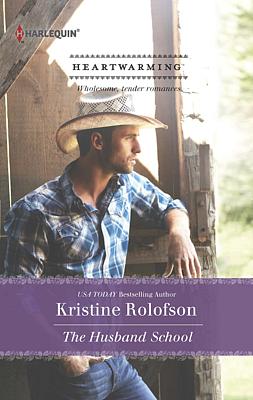

The Husband School
Author
Kristine Rolofson
Reads
17.6K
Chapters
16
Turning bachelors into Casanovas, one cowboy at a time Meg Ripley may run the local diner, but she has never been one to get involved in the small-town craziness of Willing, Montana. Now suddenly she's entangled in it? In addition to harboring a pregnant runaway, she's been enlisted to transform scruffy bachelor cowboys into husband material for a reality dating show. Including her ex-boyfriend, and the only man she's ever allowed herself to love, Owen MacGregor. Owen is still devastatingly handsome, and the passion between them hasn't faded with time. Unfortunately, neither have the issues that drove them apart. But that doesn't mean Meg is ready to turn him into the perfect man for someone else! Because despite their past, Meg suspects that Owen is still the one.
Chapter One
ON A TYPICAL Monday, Owen MacGregor would have never set foot in Meg Ripley’s restaurant. He would have done what he always did, which was drive up to the Java Hut, order a tall black coffee from dour Esther Grinnell and drive the final eighty miles home. But on this bleak October morning, when the sky looked as if it was about to unleash a wild storm on his corner of Montana, Esther’s coffee shack was inexplicably shuttered and Owen needed food. Boo nuzzled his collar and Owen reached up and scratched the dog’s chin.
“You hungry, too?” That was a dumb question, since the little mutt was always ready to eat. When he wasn’t sleeping. Or sprawled on the couch watching television. Owen had found the skinny stray hanging around the barn weeks ago. He’d brought him inside, fed him and named him. Content with his new living arrangements, Boo now had little use for the outdoor life.
Owen hesitated at the flashing red light at the intersection of Highway 10 and Main. Two blocks to the right, at the north edge of town, was a hot breakfast with his name on it, along with bacon for the dog gazing out the window and wagging his tail. Boo was looking for McDonald’s, his favorite place in the world, and expected a treat whenever he rode along in the truck. But Owen hadn’t had an appetite two hours ago after his weekly trip to Hopewell Living Center, and had sped past the cluster of Great Fall’s fast food restaurants next to the highway. It had taken some time for his mood to lift and his hunger to set in.
And now the thought of breakfast was strong enough to make him consider stepping into the Dirty Shame Café. Oh, the sign in front of the building read Willing Café, but folks born and bred in the area knew the place as “The Shame” and probably would always call it by its original name. He’d heard Meg had changed the name on the menus, but he also knew she couldn’t fight history.
Boo whined and wagged and licked his ear, but Owen didn’t smile. He rarely smiled these days.... His own fault. He’d spent most of his adult life in an office, dealing with politicians and lawyers. He had a gift for dealing with difficult people, and he’d turned a law degree into one of the top environmental firms in the country.
And yet he rarely felt any degree of happiness.
Owen turned the steering wheel and stepped on the gas. The world wasn’t going to come to an end if he walked into Meg Ripley’s restaurant and ordered a couple of fried eggs.
With luck, she wouldn’t be there.
With luck, she’d ignore him.
With luck, he’d be able to ignore her.
Owen didn’t imagine his luck, meager as it was this morning, would hold. For one thing, he assumed Meg would be working. He also assumed she still lived in one of the original cabins adjacent to the restaurant. And ignore him? Well, that was the best he could hope for.
She was thirty-two, unfortunately young enough to remember their disastrous summer together, unlike his irate mother, who this morning had demanded he apologize for sitting on her cat even though she hadn’t owned a cat in two decades, and he’d made the mistake when he was nine. His mother’s memory had become increasingly faulty, her confusion more apparent this past year. He hadn’t told her about his temporary move to the ranch; she assumed he was still working in DC and so far it hadn’t occurred to her to question his weekly Sunday visits, though on the rare times she mentioned his work, he’d told her he’d taken some time off. She hadn’t seemed to understand, which was just as well. Explaining he’d used the settlement of the ranch property as an excuse to leave an increasingly boring career would not have been easy. His mother had no love for the Triple M.
Boo whined again as Owen drove past the restaurant to find a parking spot in the lot next door. The dog believed “stop” equaled “food,” and he was usually right.
Owen took a couple of minutes to stretch while Boo trotted over to a half-dead bush and lifted his leg. Then the dog hurried back to jump in the front seat, knowing he would be rewarded with food after guarding the truck while his owner was inside the building doing whatever humans did before they brought food to their loyal canines.
“I’ll be back,” Owen promised. He was talking to his dog a lot more often lately, which was the behavior of a man who had settled into a solitary lifestyle. No, he told himself, he wasn’t going to turn into his late uncle, a grizzled loner who preferred dogs to people and rarely bathed. He didn’t want to end up dying alone, freezing to death next to a barn, his body discovered a week later by a UPS driver. That was not a lifestyle Owen would willingly choose. Although lately he’d begun to wonder if he’d started down the “eccentric bachelor” path without being aware of it.
Damn. Hungry and lonely was a tough way to start the day.
* * *
“DO YOU THINK she’ll marry me?”
“Of course not.” Meg placed a plate piled high with bacon, eggs and hash browns in front of the hopeful suitor. She had no intention of coddling Joey Peckham, who was at this moment looking depressed, despite the fact that she’d just refilled his coffee and served him breakfast. “You must be out of your mind. She’s not going to go out with you, so leave her alone.”
“You serious?”
“Deadly serious,” she assured him.
“Aw, you’re breaking my heart.” He picked up his fork and, ignoring the paper napkin she’d slid next to his coffee cup, stabbed a chunk of fried egg. “And ruinin’ my day, too, if you want to know.”
“I’m not ruining anything. She danced with you once, at Pete’s party,” she reminded him. “It wasn’t exactly a relationship.”
“It could be. If she’d let it. If you’d talk her into giving me a chance.” He spoke with his mouth full, so Meg turned away. Joey was six years younger than she was, but acted about fifteen instead of twenty-six. He needed to find himself a real, live girlfriend, the sooner the better, and stop imagining himself in love with every woman who two-stepped with him. Especially not with Lucia Swallow, who baked the restaurant’s pies and was single-handedly raising three children since her husband had died in Afghanistan.
“You’re hallucinating. Lucia is too old for you,” she stated one more time over her shoulder, knowing as she said it that the only thing Joey wanted to hear was that she would support his romance.
Which she wouldn’t. Lucia was a friend and Joey was an idiot.
“You don’t know what it’s like to be in love,” Joey muttered.
“Maybe, maybe not. But I’m sure it’s overrated.”
“You have no heart,” he said, looking down at his eggs again. “That’s your problem.”
“One of many,” Meg agreed, trying not to laugh. “Really, Joe. Lucia’s not the woman for you. And you’re too young to be a father to those boys of hers.”
He scowled down at his plate. “How come you know so much and you don’t even have a boyfriend?”
“They’re overrated, too.” She gave in and laughed, all too familiar with comments about her private life. There were few secrets in such a small town. “And if you don’t stop griping, I’ll tell Lucia you have fourteen cats.”
“That’s my uncle. Not me.”
Meg shrugged. “She’ll think that kind of crazy runs in the family.”
“We have dogs,” Mr. Fargus interjected from his perch on the neighboring stool. “Two poodles. Do you know my wife lets them dogs in the bed the minute she hears the back door slam shut? Every morning. None of them can wait for me to leave.”
Meg could understand that. Ben Fargus, at the age of eighty-six, was a man who liked the sound of his own voice. Meg was accustomed to his opinions; they piled up like dirty dishes all morning long. She often wondered how his wife put up with him, but they’d been together for more than sixty years. By choice or habit, Meg had no idea, but poor Mrs. Fargus obviously had a lot of patience. Or was really good at pretending he didn’t exist.
“Women,” Joey said, shaking his head. “They’re difficult.”
“So are poodles,” Fargus stated. “Real smart, though.”
“Huh,” Joey said, letting that information sink in. “Meg, do you think Lucia would like a dog?”
What Lucia liked or didn’t like wasn’t any of Joey’s business, so Meg pretended she didn’t hear the question and poured more coffee into the half-full mugs lined up in front of the five retired men seated in their usual places at the counter. For many of her customers, breakfast at Willing’s was a tradition only broken because of vacations, hospital stays or death. Despite such loyalty, Meg was always worried about making it through the winter.
“How’s everyone doing? Martin, you need more half ’n’ half?”
“I’m set, thanks.”
“George?”
“Please.”
It was a typical morning; the L-shaped room, as familiar to her as her own little house, was comfortably packed with the usual crowd. The mayor was holding his monthly meeting to discuss town business. The council members had pushed a couple of tables together in the back corner and from all appearances were involved in a serious discussion. Mondays were busy, but this morning had been almost hectic. There was something about the snow flurries and the gray sky that seemed to make folks want to get out and about while they still could, before a long, blizzard-filled winter began in earnest. And few seemed to be in any hurry to leave the snug warmth of the restaurant and head out into the wind.
Meg moved down the counter and dispersed coffee. The slender man on the last stool put his hand over his cup. “Thanks, Margaret, but I’ve had enough. Should be getting home, I guess.”
“Okay.” She paused in front of Mr. Ferguson, her former algebra teacher, who’d long since retired, and set his check on the counter. “How’s Janet? I haven’t seen her in a while.”
“She’s been busy getting ready for the quilt show. She’s been in her sewing room for weeks.” He smiled the indulgent smile of a man who loves his wife. “She says it’s going to be quite a show.”
“I’m looking forward to it,” Meg said, knowing the annual event would give business a boost. “I bought an ad in the program. It’s on Saturday, right?”
“Yes.” He frowned, trying to remember. “Sunday, too, I think.”
“I hope I can get over there to see it.” She’d have to remember to ask one of the high school girls to fill in for her for a couple of hours after the noon rush. The quilt guild would be selling coffee and desserts during the show at the senior center, but Meg hoped a soup-and-sandwich special at the café would bring in a little extra business.
“What are they doing over there?” Fargus gestured toward members of the town council huddled around a large table at the far end of the room.
“Planning to raise taxes, I’ll bet,” George grumbled. “I’m getting damn tired of taxes.”
“You could move to Florida,” Martin said. Meg hid her smile. George, a creature of habit who had been born in Willing, didn’t even like going to Billings.
“There’s something going on,” Fargus declared. “We’ll hear about it soon enough. Jerry’s got some idea. I can tell by the look on his face.”
They all stared down at the far end of the room. Sure enough, the mayor seemed excited as one of the town elders read aloud from a sheet of paper.
“If they’re raising taxes, then they’re trying to figure out how to get blood from a stone,” George grumbled. “I’ve half a mind to go over there and tell them so.”
Fargus snorted. “Like that would do any good.”
“Maybe I should get on the town council,” Joey mused. “Women like men with power, right?”
Meg noticed John Ferguson and Martin Smith exchanging an amused look before John grabbed his cap and stood to leave.
“Thanks for breakfast, Margaret.” He set six dollars by the empty coffee mug. “Guess I’ll get home before the snow starts for real.” He turned as the door jangled to announce another customer.
And it wasn’t just any customer, either, because the sight of this one made Meg’s stomach tense and her mouth go dry.
Owen MacGregor, master of all he surveyed, was a tall, imposing man. A down vest, unzipped, covered most of his wide chest, and he wore the typical Montana outfit: jeans, boots and plaid shirt. He politely stomped his feet on the worn doormat and removed his hat, but before he could move toward a seat, a white-haired man called his name. Meg watched as he greeted the Burkharts, an elderly couple in the process of holding each other up as they made their way across the room. Owen MacGregor played the gentleman and opened the door for them, allowing another burst of cold air in. If she didn’t know better, she’d think he was the best thing to ever walk into the room. Even Mr. Ferguson looked pleased as the two men talked for a minute before the teacher disappeared out into the cold.
“Well, this is a surprise,” Martin declared quietly to his cronies at the counter. “Didn’t think he remembered where he came from.”
“With Eddie dead and gone, I don’t think there’s anyone to run things,” George said. “Guess that forced his hand.”
“Irene’s in a nursing home in Great Falls now,” one of the other men informed them. “I heard she gets confused easily. My daughter-in-law works there, says the boy visits her every week.”
Yes, Meg thought. He was always a devoted son. She’d assumed the old witch would live forever, queen of all she surveyed. She couldn’t picture the regal Mrs. MacGregor incapacitated in any way. The last time Meg had seen her was after the funeral, and the widow hadn’t let Meg in the house. Still, it was sad to think of Irene MacGregor in a nursing home.
She watched Owen slide into an empty booth and shrug off his jacket. He set his gloves on the table and picked up a menu. Which meant she was supposed to scurry over there with coffee and take his order, just as if they barely knew each other?
This was true, actually. He was a stranger now, far different from the young man who’d told her he loved her and given her his grandmother’s sapphire ring.
Meg still remembered the day she heard he’d left town. She’d cried in her mother’s arms for hours.
“You’d better get on over there,” one of the men said. “MacGregor doesn’t spend much time in town, so this is a special occasion.”
“You’re right.” She managed a cheerful smile. “And I need all the customers I can get.”
Well, she could handle it. No problem. She’d give him a minute to read the menu, and then she would saunter over and pretend they were friends.
This morning Owen MacGregor looked a little the worse for wear. Oh, he was still handsome, with that lean, lined face and thick, dark hair. She knew he wore contacts, hated shrimp and had named his first horse Pumpkin, much to his father’s dismay. He was secretly afraid of heights, crazy about animals and had broken his nose twice in one summer, causing his mother to faint both times.
At the moment he and his nicely healed nose were absorbed in the menu.
“Hey,” she said, approaching the table with a carafe of coffee.
“Hey.” He tipped his mug right side up and Meg filled it for him. “Thanks.”
“You’re welcome. What can I get you?” She used her best cheerful-friendly-waitress voice, as if he was a tourist she’d never seen before. He frowned just a little.
“It all looks good,” he said, copying her tone. “How about the Hungry Man Special, with scrambled eggs and bacon? And with an extra side of bacon to go, please.”
“Sure.” This wasn’t so hard. She could do this. Meg didn’t write down the order for fear her fingers would shake. Silly, but she had her pride.
“So how’ve you been?” He took a cautious sip of coffee and looked at her with real interest. As if he actually wanted to know the answer.
“Just fine. And you?”
“I’m good.” He kept looking at her, studying her face until, still gripping the handle of the carafe, she backed up a step. She was conscious of how she must appear to him, dowdy Margaret Ripley in her apron, worn jeans and thick athletic shoes. “Well, I’ll go put your order in.”
“Thanks.”
With that she turned and headed toward the kitchen. She returned the carafe to the coffee machine, wrote up the order before handing it to Al and, on the pretense of checking supplies, escaped to the back room. There wasn’t much privacy in either the town or the restaurant, but there was a tiny alcove behind the walk-in freezer that provided the perfect place to hide for a few minutes. Meg leaned against the gray wall, took a deep breath and eyed the calendar tacked to the wall. October was here already, with a long winter ahead.
She should be over it. She was over it. She was a grown woman, capable of running a business and running her life. She had friends. And a home. She dated when she wanted to, though she seldom wanted to, and rarely ever thought of the eighteen-year-old girl who had fallen foolishly in love with a young man she could never have. His presence here couldn’t upset her if she didn’t allow it to, but she hoped he wouldn’t make breakfast at Willing’s a habit. They’d each become so good at pretending the other didn’t exist, so why stop now?
* * *
“AND SO WE have to ask ourselves—what do women want?” Jerry Thompson desperately needed to know the answer. He tapped his pen against the empty page of the legal pad spread before him and studied the yellow-lined paper as if the solution to his problems would magically appear. When he looked up, the six members of the town council stared back at him.
Bachelors all, they were a varied group. On his left sat Les Purcell, a young cowboy who had been injured on the rodeo circuit and now lived with his grandparents. Seated next to Les was Pete Lyons, a nice enough guy who looked as if he slept in his clothes.
“Now, there’s one heck of a question,” Les muttered. “Anyone who has the answer to that can write a book, go on Dr. Phil and make a pile of money.”
“It’s a valid question,” Jerry, recently elected mayor—because Art Woodhouse died and no one wanted the job—and full of ideas, looked across the table at the owner of the only auto-repair place in town. Hank Dougherty was likely too busy to watch much daytime television.
“What’s Dr. Phil got to do with it?” Hank asked.
“Nothing. Just that he knows everything.”
“Or thinks he does,” Les said.
Jerry took a swallow of coffee. Obviously this was going to take more time than he’d thought. “Let’s not get off track. I’m serious about this. We need to know what women want and then we have to give it to them.” He ignored the spurt of laughter that followed this declaration and frowned. “I’m trying to get something going here. We’re talking about publicity. About money coming into town. About women coming into town.”
“Women? What kind of women?” This question came from Jack Dugan, who Jerry figured had no problem getting dates.
“Single women,” he replied, as if he was talking to a bunch of first-graders. Not that he had any idea what it was like to talk to schoolkids. But this group, the city council and various other men who enjoyed free coffee once a month at the town meetings and sat around a couple of pushed-together Formica-topped tables, was about as dense a bunch of men as he’d ever met. No wonder they didn’t have women of their own, or at least a date once in a while. Not that he himself was much different. He’d had two dates since he left Los Angeles three years ago and neither one had been what anyone would remotely call a success.
Pete, a thirty-something rancher who also drove the school bus, leaned forward. “How old are these women gonna be? And they’re not gonna be from a foreign country, are they?”
“Like the Russian mafia and the mail-order brides,” Mike Breen, the town treasurer who ran the county newspaper, added. “Saw it on Law & Order last night. Scary stuff.”
This was quite the suspicious group. Jerry took a deep breath and started over again. “No, Mike, they’re not going to take your money and kill you when you want to divorce them.” He’d seen that episode himself. “Look,” he said, eying the six bachelors who comprised the council. They weren’t a bad-looking bunch. They could be cleaned up, their shirts ironed or, better yet, replaced. They had a rugged appeal he knew some women were attracted to, but he had severe doubts that his constituents had the skills to keep a woman interested past the first date. Heck, most of them couldn’t make it further than a getting-to-know-you bottle of beer. “I have a friend in Los Angeles who’s putting together an idea for a reality show.”
“Like Survivor?” Hank perked up. He was fifty-five, widowed, with two grown daughters and a decent property in town. He might appeal to an older demographic, maybe the over-forty women.
“More like The Bachelor.”
Jack, who worked at the feed store, grinned. “Man, that’s a great show, that Bachelor. I never miss it.” The crowd grumbled their displeasure, but Jack didn’t waver. “You should see the women,” he insisted. “They act crazy, and they’re gorgeous and they sit in a lot of hot tubs with the bachelor. Everyone tries to get a date with the guy and lots of times he can’t tell the crazy ones from the ones who really like him.”
Jack was young and good-looking, struggling to keep a small cattle outfit afloat while working in town. He picked up odd carpentry jobs and was careful with his money. And, Jerry thought, he’d look perfect on TV.
“That’s right. Hot tubs and hot women in bathing suits.” Now he had their interest.
“The only hot tub in the county belongs to MacGregor,” Gary Petersen, retired from the co-op, whispered. “And he just sat down behind you, Jerry, so you might want to keep your voice down.”
Jerry restrained himself from turning around to see if Gary was telling the truth. He’d never met Angus MacGregor’s descendant but he’d read a lot about the family history. They’d practically invented cattle ranching in Montana.
“Thanks, Gary, for pointing that out.” Jerry wrote hot tub on his paper. “I’ll bet the TV production would spring for something. Either that or maybe we could use some town funds and buy one ourselves.” Everyone looked at Mike, who shrugged.
“Money’s hard to come by these days,” he declared.
“Yeah,” Pete muttered. “And so is a sex life.”
“We’re not talking about sex,” Jerry felt it necessary to point out, though the lack of women was the one of the biggest drawbacks to living in rural Montana. “We’re talking about attracting single women to our town. We’re talking about publicity, about attracting businesses, about letting people know we live in a beautiful part of the country where people care about one another. We’re talking about expanding the population, saving the school, making Willing a great place to raise a family again.”
“Quite a speech, Jerry. You’re starting to sound like a politician,” Hank said, chuckling. “You’re not running for governor, are you, son?”
“Not yet,” Jerry said. “Now, do any of you have any objections to getting married?”
“Well,” Hank drawled, “I did it once.”
“And?” Jerry prompted.
“It sure beat being alone.”
Not exactly high praise. Jerry fought the urge to bang his forehead on the table. Instead he gave each man a long look. “You’re all lonely and miserable and you know well enough that if a woman gave you as much as a nod you’d be signing a marriage license and following her around the IGA with a grocery cart.”
No one denied it, so Jerry figured they’d all just voted yes. Yes to inviting Hollywood to Willing. Yes to encouraging a busload of single women to give Montana bachelors a chance to impress them. Yes to drumming up a little excitement for a change.
Speaking of excitement, Jerry looked down the length of the crowded room and waved to Meg. She picked up a carafe and made her way toward his table. As far as Jerry was concerned, Meg Ripley was an important person. She knew everyone in town and he had no doubt she could run against him for mayor and win in a landslide. He’d been told she was thirtyish, single and straight, so Jerry had asked her out to dinner a month after he’d moved to town. They’d quickly become friends, though Meg politely refused any dates that could be construed as romantic.
He actually preferred blondes, but dark-haired Meg was attractive in a no-frills, low-maintenance way. He’d never seen her in anything but jeans, but she had a cute figure and a nice smile. In a town overpopulated by men, she mysteriously remained single, though he’d heard plenty of stories about broken hearts. As far as he could tell, Meg kept to herself and didn’t go out of her way to break anything.
“Meg,” he began, “how many times have you been proposed to?”
“I really don’t think—”
“Seriously,” Jerry said. “It’s important.”
She took a step back. “I’m not going to—”
“Eighteen,” Jack declared. “Last time we did a count, it was eighteen.”
“You’ve kept count?” Meg shot him a horrified look and Jack shrank back into his chair.
“It’s posted at the Dahl,” Hank pointed out. “It’s not like it’s a secret or anything.”
“P-posted?” Meg sputtered. “I never saw it.”
“Men’s room.” Les whispered to Jerry, “Lucia Swallow’s up to eight and Patsy—you know, Patsy Parrish at the Hair Lair—she has seven.” These were interesting statistics, but Jerry needed Meg involved in his scheme and these numbers weren’t going to make that happen.
“Eighteen proposals of marriage,” he mused. “I’m impressed.”
“Don’t be,” she said. “I’m not.” She set down the full pot and removed the empty one. “Every once in a while someone has too much to drink, waves roses in front of me and wants to get married. And don’t get me started on Valentine’s Day.”
“There,” he said, slapping his hand on the table. “You’ve proved my point exactly. Do you all see now how unbalanced and crazy this is?”
“Crazy? You think it’s crazy that someone would want to marry me?” The look she gave him practically shriveled his manhood.
The council members sucked in their collective breaths. Jerry realized he was flying too close to the flame now, and any minute Meg would toss them all out of the restaurant, meeting adjourned. She wasn’t a fan of personal questions and she didn’t take kindly to discussing her love life, not that anyone thought she had one. He’d know if Meg had a boyfriend, probably because the news would make the front page of the local paper. Or at least the men’s room of the Dahl.
For one agonizing moment Jerry feared she would fling the empty coffeepot across the room. He’d heard there was a temper beneath the cheerful smile, but up until now he hadn’t believed it. He pulled out a chair and gestured toward it. “Look, Meg, I’m sorry. That’s not quite what I meant. Join us for a minute, will you?” He kept his voice soft, used the persuasive tone he’d spent so much time cultivating. “We need your help.”
She edged away. “No, thanks. I have breakfast orders—”
He wasn’t about to let her off the hook. He needed a female perspective and he needed it now. And he didn’t care if it came from an overly sensitive woman who had a bad attitude or a bad boyfriend or just disliked men. “Meg. Please. Just tell me, what do women want? You know, from men. We need to know.”
“Excuse me?” The question obviously surprised her, because she paused in midflight and stared at him.
“I’m serious,” he repeated, his pen poised. “Tell me what women want. It’s important. I’ll take notes.”
“Jerry,” she said, backing up. “You don’t have a big enough piece of paper.”