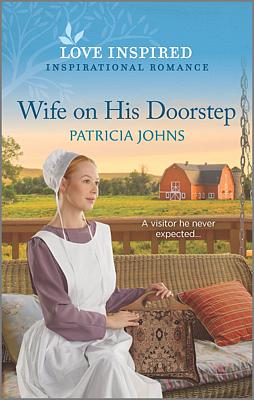

Wife on His Doorstep
Autorzy
Patricia Johns
Lektury
15,8K
Rozdziały
14
A visitor he never expected… Can the differences that drove them apart…ignite a love to make her stay? When Miriam Lapp arrives unannounced at her estranged husband's house, she has no intention of staying. But she can't walk away when Amos's ailing grandmother needs a woman's support. She'll help temporarily, then leave to start her own Amish business. But spending time together makes Miriam and Amos question their past mistakes. Can a once mismatched couple find love ten years later?
Chapter One
“Mammi, let me get that for you.” Amos pulled his grandmother’s mug of tea closer to her before she could rise to her feet to reach it. Outside, the day was chilly, the May sunlight drawing out the buds on the trees, but not warm enough for the sick old woman’s comfort. She had a shawl around her shoulders, and Amos had put another one over her lap, but her fingers were still cold. He wanted to help...more than help, he wanted to make her well.
The sound of an engine drew their attention, and Amos rose to his feet and headed for the window. It was a taxi, and he couldn’t see the occupant, but it was a blue dress that first appeared out the door, then a small traveling bag, and when the woman straightened and turned, bag in hand, his heart stuttered to a stop.
“Who’s there?” Mammi asked.
He knew the woman very well, and at the sight of her, his breath turned shallow and his heart hammered hard to catch up.
“Amos?” Mammi said.
“It’s my wife,” he breathed.
Miriam Lapp tugged a black woolen coat closer around herself in the spring chill, and she stopped short when she saw Amos in the window. Miriam had changed a little since she’d left him ten years ago. Her strawberry blond hair was pulled back under her kapp, but one tendril fell free and it ruffled in the wind. She’d be thirty-five now, and she could still make his breath catch.
“Miriam is here?” Mammi asked, and this time she did stand up and her lap blanket fell into a pile at her feet.
“Yah, it looks that way,” Amos said, and he headed for the door and pulled it open. “Mammi, you should sit down,” he said over his shoulder, but his grandmother didn’t listen.
Miriam headed toward him and came up the steps, then stopped. It was like the last decade just crumbled around him and he was left looking at the wife he’d vowed to love and protect all the days of his life...
“Hello,” Amos said quietly.
“Hello, Amos.” She didn’t smile.
“It’s been a long time,” he said, his voice tight. He cleared his throat. “A very long time.”
“Yah, I know,” she replied. “You look...” She looked him over in a frank appraisal. “You look good, Amos.”
“I’ve held together,” he replied. “So do you.”
She looked more than good—she looked beautiful in that way she always had. She’d never been an obvious beauty. Men didn’t twist in their buggies to get a second look at her, and Amos had liked that. He’d never wanted a wife that other men gawked at. Miriam had a solidity about her, and a frank honesty that he’d been drawn to from the start. It was why he’d asked her to marry him after only knowing her for four days. They both wanted marriage and kinner, and he’d thought she’d make a fine wife. What was the point in wasting time?
“Can I come in?” Miriam asked.
“Yah.” Amos stepped back, and he watched her as she came inside the house, unwrapping the shawl from around her shoulders. She’d put on a little weight in the last few years, and it looked good on her. But why was she here?
“Hello, Mammi,” Miriam said, and she went forward to take Mammi’s outstretched hand. “I’m sorry to burst in on you like this.”
“I’m glad to see you,” Mammi said softly. “It’s been...a while.”
“Yah.” Miriam released Mammi’s hand and glanced back at Amos. “I don’t need to take up much of your time, Amos. I know I’m probably not welcome here—”
“Nonsense,” Mammi interrupted. “You’re Amos’s wife, dear. You belong here.”
Amos could hear his own breathing, and his head felt light. He’d had enough shocks for one day, and he eyed Miriam uncomfortably. Technically, Mammi was right, but the goodwill of extended family hadn’t been enough to keep them together.
“Why have you come?” he asked at last.
“My daet passed away.” Her lips quivered with repressed emotion. “Last week. A stroke.”
“I’m sorry,” he said. “I didn’t hear.” He looked futilely toward the folded newspaper, The Budget, that lay on the kitchen table. He hadn’t opened it yet, but that was the best way he’d learn of anything happening in Miriam’s hometown of Epson, Pennsylvania, where her father had lived and owned his businesses.
Miriam nodded and blinked back some tears. “Gott knew best.” For a moment, there was some awkward silence. “Anyway, Daet left everything to my brother, Japheth.”
“Everything?” Amos asked. “He didn’t hold something back for you?”
She shook her head. “I thought he would have—”
So did Amos, for that matter. Her father, Leroy Schwartz, was a wealthy Amish businessman, and he had never made any attempt to help Amos and Miriam reconcile—at least no attempt that allowed Amos to have any self-respect. Leroy thought Amos wasn’t a good enough provider for his daughter, and if he’d kept his married daughter home with him, enjoying a life that Amos couldn’t hope to provide, then the least the old man could have done was leave her something in the will so that she could continue in comfort.
“Are you coming back, then?” Amos asked, uncertain how the question sounded, but it had to be asked. Her father was dead, and Leroy had been the one providing for her. As her husband, Amos was the one responsible for providing for her now, if she needed help.
“No, I’m not coming back to be a burden on you,” Miriam said, and color bloomed in her face. “But when you and I got married, Daet gave us that commercial property in Epson as a wedding gift, and—” Miriam stopped. “And since Daet was running the place, anyway, all these years—it was only in our names on paper—”
“You want it back,” Amos said.
“Yah...” She shrugged weakly. “I know it’s crass, Amos, but it’s the way I’ll support myself, if you’ll let me. Otherwise, I’d become your problem.”
Miriam smiled slightly, and Amos’s gaze moved toward that small travel bag. She hadn’t come prepared for a long stay, so it seemed as if she were partway joking. Amos hadn’t heard anything about that strip of stores since she left. Her father had put them into both of their names, but he’d continued to manage them—not that Leroy Schwartz would have trusted him with it. That was more of an insurance for his daughter in the old man’s eyes.
“Yah...” Amos shrugged. “It’s yours, Miriam. Do with it as you like. Your daet wanted you to have it, anyway, and I’ve never had anything to do with that property.”
Besides, Amos had his own thriving carpentry business, and he wasn’t a vindictive man. He and Miriam had both suffered enough.
“Do you know where the papers are?” Miriam asked hopefully. “I need to show them to Japheth and prove that strip mall belongs to me. He’s already changing things, and he was about to evict some tenants, and—” She stopped. “I need to prove it’s mine.”
“They might be in the safe-deposit box at the bank,” he said. “I don’t remember if that was where I put them or if they’re still around here somewhere—but the bank is already closed for the day.”
Miriam’s face flushed again, but she didn’t ask him if she could stay. She dropped her gaze, then nodded twice.
“I’ll come back tomorrow, and maybe we could go to the bank together, then,” she said. “I’ll get a room in town, and in the meantime, if you’d be willing to look through your papers here—”
“Come back?” Mammi interrupted. “Why would you go to some hotel in town when your home is right here?”
“Mammi’s right,” Amos said. “You can stay here until this is sorted out. It’s your home, after all.”
Even if she’d never appreciated it. Even if she’d been so anxious to get away from it that she’d left important documents behind in her rush.
“Thank you,” Miriam said, and she glanced around uncomfortably. “I’ll try not to be in your way, Amos. I’ll do the cooking and cleaning while I’m here, of course, and—”
“Amos, would you go see to the chores outside?” Mammi said, her voice silencing Miriam.
Amos met his grandmother’s gaze, irritated. Was she really trying to get rid of him?
“If you don’t mind, dear,” Mammi said, softening her tone. She cast him an apologetic look.
“Yah, of course,” Amos replied.
“I need a word with you alone, Miriam,” Mammi said, and her voice firmed. “This requires some privacy between women.”
Miriam and Amos both looked back at Mammi now, and Amos couldn’t help but wonder what Mammi had to say that he couldn’t hear.
Amos pulled his coat on and headed outside without another word, but as he shut the door behind him, he couldn’t help but cast another curious look over his shoulder. Mammi had never been the take-charge sort around his house, and the last several years, he, Noah and Thomas had been taking care of her in her old age. She didn’t have the same strength or even eyesight anymore.
What could Mammi have to say to Amos’s estranged wife at this late stage? Miriam was his wife in Gott’s eyes, and in the community’s, but she hadn’t been a wife to him in a very long time. Whatever Mammi had to say to her could be said in front of him, couldn’t it? Unless Mammi didn’t want to embarrass Miriam any more than she had to when she lectured her about her moral, wifely duties. Who knew what passed between women when men were out of earshot?
Amos sighed and headed in the direction of the stables. He might as well muck out some stalls.
Besides, having Miriam here for a day might help with Mammi. She’d need some care that only a woman could provide, and both Noah’s wife and Thomas’s had small kinner of their own to care for. If Miriam could pitch in, it would help.
Gott, heal my grandmother, Amos prayed in his heart as he pulled open the stable door. This was the same prayer he’d been raising up since that doctor’s appointment yesterday morning. They were all in Gott’s hands, but right now Amos needed Mammi’s sensible advice and gentle ways more than ever.
Because Miriam had just arrived, and that had sent his heart for a different kind of tumble.
Miriam looked toward the closed door, then toward the old woman. Mammi, or Mary Lapp as the rest of the community knew her, looked smaller somehow, and more fragile. But at her age, frailty could creep up faster than any expected. It had been a long time since Miriam had been in this house or even looked into this old woman’s face...and she fully expected a lecture.
Miriam was not a good wife.
“Sit down, dear,” Mammi said.
Miriam pulled up a chair opposite Mammi and sat, perching on the edge. Miriam pressed her lips together, bracing for the onslaught.
“I’m sorry for your father,” Mammi said quietly.
“Thank you.” Miriam felt the tears rise again. Her father’s death had been a shock to everyone. “We didn’t see it coming.”
“No, we don’t tend to,” Mammi said. “You know, at my age, you look at me and see a withered old woman. But I don’t feel old. My joints feel old, and my hips sure do, but my heart doesn’t. I look in the mirror, and it’s like I see a stranger with wrinkles and white hair. In here—” she placed a hand over her chest “—I’m as young as you.”
Miriam nodded. “They say time flies.”
“It does,” Mammi replied. “It feels like yesterday your Amos was a little boy at my apron. Now he’s your husband.”
Mammi looked at her meaningfully. Here it was—the lecture.
“Mammi, I know this didn’t turn out the way anyone hoped,” Miriam said. “But it’s complicated. I’m not some horrible woman who uses and abuses her own husband.”
“Then help me to understand,” Mammi said. “Why can’t you and Amos be together? It isn’t like either of you can remarry and try this again. He’s the only husband you have.”
“We don’t get along, Mammi,” Miriam said quietly. “He wants kinner, as all Amish men do, and I’m afraid to have them. The thing is, I was just as eager for a family as any other woman when we got engaged, but you know that my mother died delivering me. It was when my sister died with her second baby two weeks before the wedding that I got really scared... I didn’t want to die giving birth like she and my mother did. Is it so wicked of me to think that I might have value aside from giving birth?”
Mammi shook her head. “Of course you have value in and of yourself. Gott created you in His image. And I had a good deal of trouble having babies, myself. You know about that. So I do understand.”
“But Amos thought I’d get over it—he thought I was just grieving a sudden death in the family. He wanted me to have more faith—but it wasn’t his life that was in the balance, was it?” Miriam’s voice trembled. It was an old argument, but it felt fresh. “And I’m too bold and forthright for him. It was a good thing when I came looking for a husband in Redemption, but not once we were married. I was supposed to change who I was.”
“That first year is difficult,” Mammi said.
“More than difficult,” Miriam replied. “He couldn’t get along with my father, and I couldn’t be the woman he wanted. I’m good with numbers, with business, and I learned a lot from my father—none of which Amos wanted from me. He wanted kinner. He thought I was someone different when he married me, and I take responsibility for that. All the same, we made a mistake. We jumped into marriage because we were both lonely, and we thought it would be enough. It wasn’t.”
“And yet, you’re still his wife,” Mammi said seriously. “And there are certain duties—”
“I’m not sacrificing myself to have a baby!” Miriam burst out.
“I’m not asking you to,” Mammi said. “But there is something I need you to do, and it’s important.”
What would it be now? Some ploy to bring them back together and show them that a lifetime of tolerating each other under the same roof was better than what they had now? Miriam wasn’t a good wife. She couldn’t settle into the Amish rhythms of marriage, babies and motherhood. But she did have other plans.
“Mammi, please, this is between me and Amos, and—”
“I’m dying.”
The words hit Miriam in the chest. She blinked. “What?”
“I’m dying,” Mammi repeated. “We found out yesterday. I’ve been going for tests and I have some very aggressive cancer.”
“You could still beat it,” Miriam said with a shake of her head.
“It’s very advanced.” Mammi pressed her lips together. “No, I think it’s best to accept the inevitable. This is bad, Miriam. And I only have a couple of weeks left.”
Somehow, Amos’s grandmother had seemed like she’d outlive the rest of them. She was always so strong—emotionally and physically. But then, Miriam’s father had been a strong, barrel-chested man, too, and he’d died. Human beings were all more fragile than they might like.
Miriam shook her head. “I don’t know what to say. I’m so sorry... I—”
“Gott doesn’t make mistakes,” Mammi said gently. “Isn’t that what you said earlier? Gott counts out days. He lays them out before us, and when our time to go home to Him comes, we go.”
Miriam met the old woman’s watery gaze, and for a moment, they were both silent.
“Are you scared?” Miriam asked weakly.
“A little,” Mammi replied. “I’ve never died before.” The old woman smiled at her own gallows humor. “I don’t know what that will feel like. But I do know that I’m in Gott’s hands, and I feel confident in that. I’m looking forward to Heaven. I’ll see my own dear husband again, and the babies who died in their infancy—I’ll finally hold them again. I didn’t have an easy life, my dear. All of my children died before me, so I’ll be grateful to see them again.”
“I hope I have your courage when the time comes,” Miriam said.
“This brings me to my request,” Mammi said. “Right now, I have some strength to dress myself and wash myself, but the days are coming very quickly where I will need a woman’s help. I know I could ask any number of relatives in Ohio or Florida once I tell them the news, but they’re far away, and it wouldn’t be easy on them. Besides, I’m asking you.”
Miriam felt her heart skip a beat, and she licked her dry lips. This was a heavy request—one she couldn’t deny if she were part of the community here, but she wasn’t any longer. “Why me, Mammi? I’m not exactly part of the family anymore.”
“Technically, you are,” Mammi replied. “But more than that, my grandson needs your support, too. I’ve been the woman caring for his home these last ten years, and I’ve helped him in raising two teenagers to manhood. I’ve been the one to encourage him and remind him that Gott loves him still, even when life is hard. And I’m about to die. He needs support through this, and I want you to help him.”
He’d raised teens—she’d heard the rumors about that. Her husband had taken in two boys.
“Would he want that?” Miriam breathed. “Because I don’t think he looked overjoyed to see me, Mammi. It’s been a long time. I’m sure there are other people who are closer to him.”
Mammi was silent, her blue eyes meeting Miriam’s until Miriam dropped her gaze uncomfortably.
“You left him, Miriam,” Mammi said firmly. “Yah, marriage was hard. It was hard for both of you, but you left this home, and you doomed that man to a lonely life without a wife by his side. He didn’t leave you. There is a distinction there.”
Guilt welled up inside of Miriam’s breast, and she swallowed. “I tried, Mammi.”
“I know, dear.” Mammi’s voice softened. “And I’m not asking you to come back and live as his wife. All I’m asking for is that you stay for two weeks—maybe three—and you help Amos through my death. That’s all. As his lawful wife, I think you could do that much for him.” Mammi deflated back into her chair. “But you can decline. I’ll understand, and I’ll never mention it to Amos.”
Miriam sucked in a breath. The old woman watched her fixedly, and Miriam knew that what Mammi asked was reasonable. This was how the Amish community survived—they pitched in and helped to care for each other. They didn’t have old-age homes, they had family, and Mary Lapp didn’t have any living children to step in. Marriage was a lifelong commitment, and there was no divorce permitted. Mammi was only asking her to do her Amish duty in a time of need.
“I’ll need my own room,” Miriam said. “I know we’re married, but Amos and I can’t share a room.”
Mammi smiled at that. “Of course, dear. I’m not asking you to keep up appearances, just to support Amos. That’s all.”
There were footsteps outside, and the side door opened. Amos came back in, and he glanced at them, then went to the mudroom sink to wash his hands.
“Am I all right to come back in?” Amos asked.
“You’re the man of his house,” Mammi replied softly. “You come and go as you wish.”
Miriam smiled weakly at that. Mammi had always been a strong spirit whose words were sometimes a little closer to the Amish ideal than her actions. She’d most certainly booted Amos out of the house for the conversation.
“Mammi has asked me to stay,” Miriam said.
Amos eyed her for a moment, then his gaze slid toward his grandmother. “What?”
“For two or three weeks,” Mammi said. “I need help that only a woman can provide, Amos. And I’ve chosen Miriam.”
Amos nodded, but worry creased his brow.
“Mammi, if this is some attempt to reunite Miriam and me—”
“Nonsense,” Mammi said with a small shrug. “Do you really think I’d use the last few weeks of my life to meddle in yours?”
“It had occurred to me,” he said with a faint smile. “But we’re adults who know what we’re doing,” Amos added. “We’ve tried this, Mammi. More than once.”
“Sometimes things change,” Mammi said quietly. “That’s all you can really count on in life, isn’t it?”
Amos looked over at Miriam and they exchanged an uncertain look. Even knowing what Mammi was very likely trying to do, how could Miriam turn down a dying old lady who’d always been nothing but kind and good to her? And as much as she hated to admit it, Amos was going to need help getting through this—Mammi wasn’t wrong there.
“I’ll stay in the guest room, if it’s available still,” Miriam said. “And we’re understood that there is no pressure here. I’m just here to do my duty by you both and help for a little while. Then I’ll take my paperwork and go back home. You don’t have to worry about that.”
Amos cleared his throat. “So Mammi told you what the doctor said?”
Miriam nodded.
“Okay, then,” Amos said with a sigh. “I guess it’s decided.”
Miriam looked toward the kitchen. There were dishes to wash, and dinner would come soon enough. She grabbed a blue apron from a peg on the wall and tied it around herself.
“I’ll cook and clean while I’m here,” Miriam said. “So you won’t have to worry about that. I’ll even get some food put aside into the freezer. You still have one in the basement, don’t you?”
“Yah,” Amos said.
Other people would come by with food, as well. Amos would be fed after his grandmother passed.
“I’m ready for a nap, if you two don’t mind,” Mammi said.
“Let me help you to bed,” Amos said, and as Mammi pushed herself to her feet, he went to her side, steadying her.
Miriam was back in her married home, and it was strange how little had changed around here. Granted, she could see the corner of a bed in the sitting room, making things easier for Mammi, but the rest of this house remained the same.
She touched a blue, chipped teapot on the counter, and her mind swept back to the day she’d moved into this old house as Amos’s wife. She’d been full of hope back then, and that blue teapot had been new—a wedding gift. She’d unpacked it, washed it and made their first pot of tea as a married couple. Amos had brought whoopee pies—the chocolate kind with the white, whipped centers. She loved them, and he knew it. Their first meal together in that house had been whoopee pies and hot tea.
Ten years ago, she’d still thought that Gott had blessed her with a home of her own, and that her talents would be celebrated by this quiet, new husband of hers...
Miriam picked up the warm teapot and emptied it into the sink. The teabag fell to the bottom of the sink with a splat.
Ten years ago, Miriam had still thought that those wedding vows guaranteed some sort of special blessing onto the well-meaning couple—a hedge of protection, or a deeper well of wisdom...but she couldn’t have been more wrong.
Miriam had made a mistake to marry Amos, and as a good Amish woman, there was no way to undo it. But she could help now—for a couple of weeks while they needed it most.