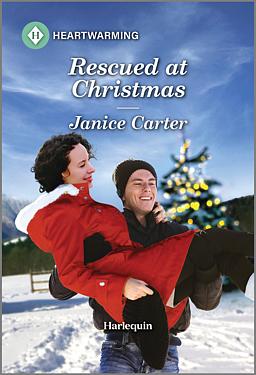

Rescued at Christmas
Автор
Janice Carter
Прочтений
18,1K
Глав
23
Rescuing her was his Christmas miracle… But will she be gone again by New Year's? Devon Fairchild arrives in the small town of Maple Glen just weeks before Christmas to honor a promise she made to her late brother. Then she'll get back to her life in the city. But when she's injured, firefighter Finn McAllister rescues her and takes her home to his family, who shower her with compassion and holiday cheer. For the first time, Devon starts to feel like she belongs. But the walls she's built around her heart have always kept her safe. If she lets them fall, will she truly be rescued… or will it only lead to more heartbreak?
CHAPTER ONE
“WE HAVE A saying here in Maple Glen,” warned the owner of the Shady Nook Bed and Breakfast, “‘sunny at daybreak and raining by noon.’ Or in this case, snowing by noon. My opinion? Wait till tomorrow.”
Devon Fairchild peered out the picture window of the small dining room. It was sunny, and despite the pillowy white clouds on the horizon, there was plenty of blue sky. She’d put off this day long enough and had traveled many miles to fulfill the promise she’d made in a highly emotional state four months ago. She turned from the window to look at Bernie Watson, standing with hands on hips in the kitchen doorway, his brow furrowed beneath a thatch of gray hair.
She could see that he was concerned, but he didn’t really know her. She’d only checked in yesterday afternoon, and his weather advice probably stemmed from an overabundance of caution. He’d noted her Chicago address and drawn a conclusion. City slicker and greenhorn were probably the first two words that popped into his head when she told him her plan at dinner last night. Still, he’d sat down with her when she’d finished her meal and sketched a rough map, showing her how to get to the path leading from Maple Glen to link up with the Long Trail arm of the Appalachian Trail.
“I’ll be fine, Mr. Watson... Bernie. Trust me. I’m not inexperienced.” Devon hoped her ears weren’t bright pink at the slightly misleading implication of those last two words. “Not inexperienced” didn’t equal “experienced.” She sat on one of the chairs to lace up her hiking boots, feeling his eyes on her the whole time.
“Do you have crampons for those?”
“I’m not going up the mountain,” she told him for the umpteenth time since last night. “Just to the conservation area and along the valley to the base.”
“Best avoid the ice beds, then.”
Devon kept her head down, hiding an eye roll. Bernie Watson, a man she’d known for less than twenty-four hours, was channeling some mythical parent. She’d fought too long—since she was a teen—to manage her own life as much as possible. The last thing she needed was a surrogate parent.
“I will.” She reached for the daypack on the floor, zipped up her down vest, then pulled her Gore-Tex parka over her fleece-lined water-resistant pants and cast a big smile at the large gray-haired man. “I’m hoping to be back for a hearty lunch. What’s on the menu today?”
“French onion soup with my sourdough bread.”
“Sounds amazing. I may be late, so please save me some.” Slinging her pack over one shoulder, Devon headed out of the dining area toward the front door. She heard Bernie shuffling behind her and wondered what further advice would sound before she left. It came as she placed her hand on the doorknob.
“Cell phone coverage is sketchy, especially in the valley.”
“Thanks. I’ll keep that in mind.” Closing the door behind her, Devon felt a rush of both relief and trepidation.
The early morning sun reflected off yesterday’s snowfall, shooting out prisms of color, and Devon blinked against the brightness, reaching into her coat pocket for her sunglasses. Bernie’s warning about more snow seemed far-fetched right now, but Devon decided her mission today should be accomplished as quickly as possible. She stood for a moment, peering up and down the main drag of the village, thinking how unearthly quiet the place was on a Wednesday morning two weeks before Christmas.
Her research had informed her that Maple Glen predated its closest neighbor, the town of Wallingford, about ten miles north. After picking up her rental car at the airport in Rutland yesterday, she’d made a brief stop at a tourist information kiosk for maps and pamphlets. Not that she planned to stay in the area any longer than necessary, but her natural curiosity about places and things often guided her rare impulses. It was her first time being in Vermont that she could actually remember, so best to take in the local scenery while she was here. Besides, none of this was for her. Holding steadfast to that fact was the best way to endure whatever challenges arose in the next twenty-four hours.
Adjusting the weight of her daypack on her shoulders, Devon turned away from the small intersection that was the heart of Maple Glen and headed for the large tract of forest in the near distance. It was cold enough for her expelled breath to puff tendrils of vapor ahead of her, but the crisp air felt good. Winters in Chicago were seldom pretty or refreshing, and as she walked, the unspoken mantra that had been spooling in her head since she’d made her decision urged her on: You can do this.
The scattering of houses she passed were a range of white and pastel frame buildings—mainly Colonial and Federal with more contemporary houses—similar to the architecture she’d seen in nearby Wallingford. There was a bakery beyond the Shady Nook with a tiny post office attached to it, and the aromas wafting out were tempting, but Devon had opted for the full breakfast at the B and B in case her hike took longer than expected. She’d easily managed five-mile walks in the past, but not in the winter and not alone. Plus, Dan had always been her cheerleader, egging her on whenever she wanted to quit. You can do this, he’d urge. And she could. By the time she was a teenager, Dan’s coaching had instilled her with enough self-confidence to assert her independence and step out from her brother’s nurturing shadow.
There were few street signs in the village. She’d noted yesterday that the B and B was situated on Church Street, the main drag, and sure enough, there was the church straight ahead. Its white framed structure was topped by a modest steeple and sat imposingly on the crest of a small hill with a pretty house next to it. The reverend’s, Devon assumed. The village seemed to be awakening now, as a car and a pickup rolled down the street heading for the exit to Route 7, which Devon had taken out of Wallingford yesterday. She imagined many of the residents commuted to that larger community and even beyond, to Rutland in the north or Bennington to the south. There’d been a few farms along Route 7, and on the cutoff to Maple Glen, some dairy farms with cows wandering intrepidly through snow-covered pastures, but she’d also spotted fields of dried cornstalks from last autumn. Just before she reached the village, she noticed a horse farm—at least she thought the four-legged creatures standing in a far-off paddock were horses, though their shapes were stockier.
A footbridge spanning a shallow creek marked the end of Church Street, yards away from the woodland ahead. This was the end of the village and the start of the access that linked eventually to the Long Trail, as Bernie had mentioned. On the opposite side of the road, Devon saw a large two-story framed house with a wraparound veranda, a white picket fence and a couple of outbuildings. The quintessential chocolate-box country home, she thought. The creek curved around the property, separating it from the woods it bordered, and she crossed the road for a better look at the place.
An old wooden sign, its faded lettering reading The Manor, had been hammered onto the gate post next to a typical rural mail stanchion. The name on the mailbox was clearly defined—McAllister. Perhaps one of Maple Glen’s original homesteaders, Devon figured, since the house looked old. She was about to turn away to cross the footbridge into the woods when she spotted a small figure in the large bay window. A child waving to her. Devon smiled, taking this as a good omen for her mission today. She waved back and, straightening her backpack once more, stepped onto the bridge and left the village behind.
The path was immediately obvious, and a mere six feet or so in, Devon came upon a tree with a laminated sign reading Off Trail to the Long Trail and the blue painted slash mark, or “blaze” as Bernie called it, that would lead the way to the main trail, marked by white blazes. Once she met up with that main trail, the White Rocks National Recreation Area was an approximate seven miles away. The path was covered with the heavy wet snowfall from last night, but some patches were already melting beneath the sun’s rays. By the time she returned along this same route, hopefully in a couple of hours or so, Devon figured those patches would have frozen over. She’d have to be careful. But the goal today was to keep her promise to Dan.
Ten minutes into the walk, the path angled uphill and the composting leaves on its surface gave way to sedimentary rock, slabs and pieces of all sizes and shapes. Devon realized that longtime caretakers of the trail had fashioned as accessible a path as possible, and she felt some of her apprehension fade. Her boots didn’t have cleats or crampons, but she figured she’d be okay as long as she watched her footing. She could easily have driven to the recreation area, where there was a large parking lot and a well-marked route for less committed hikers, but she knew Dan would have expected—no, wanted—her to walk the whole way, and so far, it was a beautiful day for a hike.
The forest was quiet at first, except for the crunch of snow beneath her boots and the rhythmic exhalations of her breath, but soon Devon could hear birdsong and the rustling of small mammals somewhere in the trees flanking the trail. She’d brought bear spray just in case but knew there was little chance of encountering one. They’re hibernating right now, she reminded herself, but still she was startled by a flutter of movement somewhere in the dense vegetation. About an hour after she’d entered the woods, she reached the fork where the off trail joined up with the main Appalachian/Long Trail and spied the first white blaze. Some thoughtful person had long ago posted a wooden sign pointing the way to White Rocks Mountain and Devon felt herself relax.
“You can do this,” she quietly muttered.
There was a reason why Dan had chosen the section of the trail beyond the conservation area to mark the twenty-fifth anniversary of their new start in life. It’s symbolic, he’d said in the low, raspy voice of his last days. The place where we left behind our childhood, our original names and our family. In a sense, it’s where we were reborn. We were never the same after.
Devon also knew she’d never be the same after fulfilling her promise.
NO DOUBT ABOUT IT, Maple Glen was a winter fairyland today, Finn McAllister thought as he peered out the front bay window of his childhood home. As magical as the scene might be for his seven-year-old niece, Kaya, who’d been entranced by it at breakfast, the sight of new heavy snow draping tree branches and electricity wires meant only one thing for Finn—a potentially busy day. He hoped any hikers would sensibly stay indoors, but if there was one thing he’d learned during his four years on the volunteer search-and-rescue team operating out of Wallingford, many would not. Some foolhardy souls might even view last night’s snowfall as an extra challenge for hiking to the section of the White Rocks National Recreation Area closest to the Glen. But Finn knew all too well how visibility on the trail could quickly shift or how fresh snow hid treacherous obstacles.
Checking the time, he realized the school bus would be arriving any minute. He moved away from the living room window to the bottom of the staircase. “Kaya! Time to go. Are you ready?”
His mother heard him from the kitchen, where she was clearing breakfast dishes, and came to the open doorway off the hall. “Are you going to drive her?”
“Huh? Mom, we only have to walk a few yards.”
“Sure, but you know Kaya.”
Kaya and her mother, Finn’s younger sister, had only been living with them six months, but that was definitely long enough to know his niece. Those few yards to the bus stop took a lot longer to walk than usual with the easily distracted seven-year-old. Still, Finn balked. Kaya needed to learn to focus and this was a learning opportunity for her.
Seconds later, Kaya practically tumbled down the stairs, followed by her mother, Roxanne, and they dashed for the mudroom at the back of the house. Finn mentally counted as the snowsuit donning commenced. He marveled at his sister’s patience, always smiling at Kaya’s nonstop chatter or her sudden interest in a scrap of paper in her snowsuit pocket or a small toy that had been dropped and forgotten days ago. The daily routine was a whirlwind of talk and movement, one that left Finn exhausted even as a mere bystander.
By the time he got to fifteen, they were scurrying back along the hall to where he waited at the front door. “I can drive her,” Roxanne said.
Finn shook his head, determined not to give in. “I’ll walk with her. Mom wants some bread from the bakery anyway.” He noticed his sister bite down on her lip and regretted his tone. She’d been through enough in the past several months and didn’t need a brother to hand down parenting advice. Or any kind of advice, for that matter. Biting his own lip when it came to speaking up had been his ongoing challenge since they’d moved in, and although he knew this bad habit was improving, there were still moments when he reverted to that know-it-all older brother from their youth. When Roxanne yielded, he felt even worse.
“Okay, I’ll help Mom clean up,” she mumbled and headed for the kitchen.
Finn noticed Kaya’s glance from him to her mother. Could a child pick up this vibe? he wondered. Probably, he thought, feeling even guiltier. Surely, Kaya, too, had been through enough since her parents split up six months ago. He stifled a sigh. Maybe a freshly baked cookie from the bakery would make up for his churlishness this morning.
“Okay, shrimp?” he quipped, reaching for his down jacket draped on the stair newel post. When she grinned and stuck her tongue out at him, Finn knew he’d been forgiven.
They paused briefly on the veranda while Kaya pulled her mittens on. Finn realized he should have cleared last night’s snowfall, but his mother’s waffles—a special treat for Kaya that morning—had been too tempting. The shovel was right there, propped next to the door, but he knew they couldn’t spare the time. The bus taking Maple Glen’s elementary school kids to Wallingford would only wait an extra five minutes.
“Let’s do this,” he announced in the “go get ’em” voice he assumed for his team of volunteers.
Kaya gave him a thumbs-up and descended the steps to the sidewalk leading to the gate and Church Street. Finn smiled at her waddle, the padding from her snowsuit adding extra surface area to her skinny frame. Fortunately, the snowfall was only a few inches deep, but one glance at the eastern sky told Finn more would be coming, and soon. He didn’t notice the footprints until they were at the gate.
“Hmm,” he muttered, staring down at the single set of prints leading from across the road to their gate and then toward the footbridge. Not a good sign, he thought. At this time of year, hikers typically entered the trail from the entrance closest to Wallingford. Even in spring and fall, tourists rarely stumbled on the Glen’s access to an off trail leading to White Rocks Mountain. Few guidebooks bothered listing the small village, focusing on the more accessible and convenient Wallingford, though Finn knew some trekking and hiking websites mentioned the route from Maple Glen.
Kaya must have noticed his attention to the footprints. “It was a lady,” she said.
He looked up, frowning.
“I saw a lady go into the woods when we were about to have breakfast.”
“Was she a hiker?”
“She had a backpack and was in a snowsuit, too. But not like mine,” Kaya quickly added.
Great, Finn thought. Only a newbie to the trail would head out today, given the ominous sky and the forecast. His next shift at the Wallingford Fire Department wasn’t until Saturday, and he planned to do some training with a couple of new volunteers for the area’s search-and-rescue team. In fact, one of them—young Scott Watson, Bernie’s nephew—was scheduled to hike out with Finn after lunch. Well, whoever the hiker was, he wished her luck.
By the time they reached the village’s main intersection, the bus was already loaded. Kaya ran ahead, her backpack swaying against her frame. As she mounted the bus steps, she turned to wave goodbye. Finn had hoped to buy that cookie for her as a school snack, but a welcome-home treat at the end of the day would be just as good. The bus door closed and the driver made a U-turn to head for Wallingford, where the only elementary school in the area was located. The high school serving the small local communities was even farther away, not that Roxanne and Kaya would still be living in Maple Glen by that time. At least Finn hoped not, for their sakes. He watched the bus until it turned onto the side road to Route 7, and the realization of how much his life had changed—not only in the past six months but the last four years—struck him again.
When he’d moved back home to help his mother, who’d been recently diagnosed with macular degeneration, cope with his father’s move to a care facility in Rutland, Finn had expected to sort things out and return to Burlington shortly to resume his job as a captain in one of the city’s fire stations. That was before he knew the gravity of his mother’s vision problems or the hopelessness of his father’s dementia. Around the same time, he also resigned himself to the collapse of his marriage, though its demise had been long coming. He’d simply been ignoring the warning signs. That was then and this is now, he told himself, sighing.
He pushed open the bakery door and was immediately assailed by a burst of steam and mouthwatering fragrance. The owner and chief baker, Sue Giordano, called out from the rear of the store where all the goodness happened. “Right with you!”
Finn browsed the stainless steel racks displaying trays of everything from muffins to bagels. There were no fancy French pastries—“Too finicky,” Sue said—but Finn guessed the residents of Maple Glen were plenty satisfied with the daily offerings.
“Hey, Finn, how’re things?” Sue asked, drying her hands on a tea towel as she came out of the kitchen.
They’d been schoolmates, and Sue was one of the few who never left, staying behind to take over her parents’ bakery when they passed. Her husband, Tony, ran the post office next door, and the two had married a couple of years after Tony had been transferred to the Glen from Postal Services in Bennington.
“Great,” Finn replied. “And you?”
She shrugged. “Can’t complain. Getting ready for the holiday season.”
Christmas. Finn’s stomach lurched a bit at the reminder that the biggest holiday of the year was a mere two weeks away. It would be Kaya’s first Christmas without both parents. Another major adjustment for her and for Roxanne as well. For all of them, really.
“What’ll it be, then?”
“A loaf of multigrain, sliced, and if you happen to have a cookie? Something special for Kaya.”
“Sure.” She ran the bread through the slicing machine and inserted it in a plastic freezer bag. “I just made a batch of gingerbread men, perfecting my recipe before the Christmas rush. One of those do?”
“Excellent.”
The store’s doorbell tinkled, and a couple Finn didn’t recognize entered, exclaiming loudly over the enticing aromas. Sue came back from the kitchen with a wrapped cookie and, handing it to Finn, winked as the couple checked out the baked goods. At least the Glen still attracted a few tourists in the dead of winter, if only to the bakery. Tourists who were savvy enough not to go traipsing into the woods on their own. As he left, Finn realized he could have asked Sue about the woman, but she was busy now with her new customers.
When he got home, he noticed Roxanne’s car was gone. She had a part-time job at the library in Rutland three days a week, which Finn and his mother, Marion, considered a blessing. When Kaya and Roxanne moved back home last summer, Roxanne hadn’t resembled the chatty, extroverted sister Finn had grown up with. Finn and Marion had given her the space and time to heal from the breakup of her marriage, and eventually, Roxanne had become a wiser, though perhaps more cynical, version of her old self.
He dropped the bakery bag inside the front door and shoveled the sidewalk, then tackled the driveway. Roxanne could have done this, he grumbled to himself as he worked. But then, that was Roxanne, whose distracted, almost flighty nature had been a family legend since she was a kid. Around Kaya’s age, Finn thought, smiling at the connection.
When he finished clearing the snow, he retreated to his bedroom and booted up his laptop. His duties as Long Trail section head and leader of the volunteer search-and-rescue unit for the county kept him busy during his off shifts from the fire department in Wallingford. Initially, he found juggling both a challenge, but after four years, he’d managed to perfect a routine that accommodated the needs of his regular work—firefighting—and trail volunteering. Besides, the two occupations overlapped. His recent promotion to captain meant more administrative work, and his volunteering called for the same kind of organizational and search-and-rescue skills he’d acquired through firefighting. When his mother called him down for lunch, he noticed that the impending snow had arrived.
The knock at the front door just as they were finishing lunch announced Scott’s arrival.
“Wasn’t sure if you were gonna cancel,” the younger man said, stamping his snowy boots on the mat inside the front door.
Finn smiled at the idea. “This is the perfect weather condition, Scott, for a practice run. Or walk, I guess I should say.” Finn had set out his hiking clothes before lunch and was putting them on when his mother appeared behind him and Scott.
“Do you two men need any food for your session today?”
“We’re good, Mom,” Finn answered. Then, glancing at Scott, he added, “Unless...”
“I’m good,” Scott said. “Oh, by the way, Uncle Bernie asked me to pass on a message.”
Finn looked up from lacing his boots. “Yeah?”
“He asked if we could look out for one of his guests. A woman left for the trail early this morning and was supposed to be back for lunch. She was headed for the conservation area. He thinks it’s not a problem, but just in case...”
The woman Kaya had seen. Finn was about to reply when Scott went on to say, “She’s from Chicago, so...you know...”
Yep, Finn mused. What I thought. A city slicker.
By the time Finn had hoisted his working backpack with its kit of safety and rescue equipment onto his shoulders and adjusted Scott’s smaller one for him, snow was pelting down from the gun-metal sky. They marched down the sidewalk, which was filling up again with snow, and crossed the footbridge. The woman’s boot prints were long gone, and Finn remembered for the first time since spotting them that she hadn’t been wearing crampons. Another rookie mistake.
Scott had been training with Finn long enough to know not to chatter as they walked. Talking was a distraction, which meant you weren’t paying attention. As lovely as a walk in the woods could be at any time of the year, Finn knew all too well the potential dangers of a preoccupied mind. They’d been walking in silence almost an hour when they reached the fork in the path and the shift from blue blazes to white. There were more off trails ahead, also blazed with blue streaks and branching off from the main trail to White Rocks, and when they reached the next one, Finn decided to let Scott take the lead.
This second blue trail would take them lower into the valley, away from White Rocks Mountain and toward the Ice Beds Trail. They wouldn’t go that far, though, because the area was risky even in spring and summer. Only a fool would tackle it during what was now a full-out snow squall. A fool like some woman from Chicago, Finn thought, when a strange sound rose above the wind. He froze. Sensing he’d stopped, Scott turned around. Finn raised his finger to his lips. There it was again. A high-pitched cry. Human, Finn knew. And maybe female.