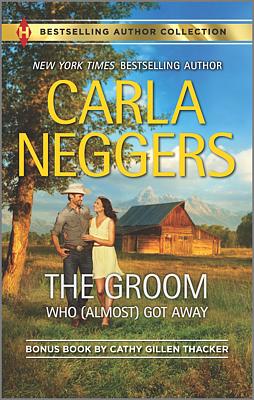

The Groom Who (Almost) Got Away & The Texas Rancher's Marriage
Autor:in
Carla Neggers
Gelesen
15,3K
Kapitel
30
UNCOMPROMISING COWBOY Max Slade has no time for regrets. Until the biggest regret of his life shows up in Wyoming. Four years ago, Max left Calley Hastings without a word of explanation. He'd tried to write, but how do you tell a thoroughly urban woman that you're moving to a ranch to take care of three orphaned little boys? No, Calley didn't belong on the ranch or in his life — then or now. Calley thought she was coming to Wyoming to visit a pen pal, but it turns out she's been writing to Max's matchmaking brothers! Well, there was no way she and Max would ever reconcile. She doesn't know how to ride a horse, and more important, how could she love someone who'd found it so easy to walk away from her? And yet, how can she crush the hope of the boys who just want to see Max happy again? BONUS BOOK INCLUDED IN THIS VOLUME! The Texas Rancher's Marriage by Cathy Gillen Thacker Few people in Laramie, Texas, know that Merri Duncan is actually the biological mother of her late sister's twins. Even fewer know that Chase Armstrong is their biological father. It's even news to Chase…
Prologue
Christopher Slade was eleven years old and convinced no one understood him. No one would care if he died. No one believed he had any feelings at all.
He ducked into one of the storage rooms in the old stone stable his grandfather had built decades ago. It wasn’t used for much of anything anymore. Christopher quietly shut the door behind him. His little brothers wouldn’t miss him. Jimmy wouldn’t notice he was gone until he didn’t show up for supper. Even Max wouldn’t notice.
He could rot out in the stable before anybody noticed he wasn’t around.
Big, fat tears rolled down his cheeks as he sat on the cold floor and leaned against a huge old trunk, his bony knees tucked up under his chin. He would never be as strong as Max, he thought. He’d never seen his older brother cry. Oh, Max had said it was okay for Christopher and his little brothers to cry; crying didn’t make anybody weak. But Christopher had never seen Max shed a tear.
He squeezed his eyes shut, but still the tears came.
Four years ago today, Christopher thought. Four years and nobody but him remembered. He’d just been seven. A little kid. He’d hardly known what was happening.
A sob escaped despite his best efforts to keep his mouth clamped shut.
He missed his mom and dad. Max said that was normal; of course he would miss them. It was a sign, Max said, of how much they’d all meant to each other. He’d also said that Christopher shouldn’t worry so much about getting over the loss of his parents, but of going on with his own life knowing that their loss was a part of who he was. Christopher thought he understood. And most of the time he got along just fine and laughed and messed around and just lived his life on Black Creek Ranch. But not always. Sometimes he just started thinking about his parents and couldn’t stop.
His mom had had white blond hair and green eyes, and he could remember every detail of her smile and the way she would ruffle his hair and tell him not to worry so much. He was her cowboy poet, she would say. And his dad, lots older than his mom, had always said nothing in his life, nothing was more important than his boys—meaning the three young ones, not Max. Never meaning Max. Even at seven, Christopher had known that. In a way, Max wasn’t like his father’s son at all.
They’d died four years ago today, his mom and dad. Max had left New York and come home to Wyoming to take care of his three little half brothers and tend the family ranch. They’d done all right together, Max and Christopher and Timothy and Wynne, with Jimmy there to keep up the house and grumble and make sure the boys had baths. But Christopher wished he could see his parents again, even for just five minutes to tell them goodbye—to hear them say he would be all right without them. He wrote poems about them. He hadn’t shown them to anyone, not even Max.
He brushed away his tears, feeling better just for thinking about his parents and the night they’d died. Wynne was only six and hardly remembered them. Timothy was nine and didn’t like talking about them. Sometimes Christopher just didn’t know what to say or think or anything, because nobody understood how he felt, and he couldn’t explain even if he’d wanted to.
Getting to his feet, he pulled the string that dangled from the naked lightbulb, which was screwed into a socket on the low ceiling, casting the small, crowded room into shadows and dim light. He seldom came in here, just when he and Timothy and Wynne were playing hide-and-seek. One whole wall was shelves, lined with old books and bundles of papers, iron boxes and junk from the ranch, some rotting hats, a pair of spurs. There were a couple of old wooden chairs and a rolltop desk shoved up against another wall, and just the one trunk.
Maybe there was treasure in it, Christopher thought. Gold, silver, secrets. He remembered how his mom used to send him out on scavenger hunts.
The top of the trunk was wooden and flat, functional, a little soft with age, nothing at all like the ornate, antique trunk his mother had bought for the study at the house. It creaked when he raised the lid.
Inside, however, was no treasure, not that he’d really expected any. He’d just wanted to do something to help him stop thinking.
Christopher squinted in the dim light, making out textbooks on finance and economics, the annual report of some company with a picture of New York City on the front and a couple of photo albums. A thin one with a burgundy cover was on top. Christopher flipped it open without taking it from the trunk.
Pictures of Max. A whole page of them. Pictures Christopher had never seen before.
Intrigued, he dragged the album out and laid it on the desk in the best light. In one picture, Max and a dark-haired woman in glasses were standing on an enormous set of stairs in front of a huge, columned building definitely not located in Wyoming.
Christopher had never seen the dark-haired woman before. She was smiling. He thought she was kind of pretty.
And Max was smiling in a way Christopher couldn’t remember seeing him smile. Not since he’d come back to Wyoming, anyway. He looked carefree. Happy. As if he couldn’t imagine being happier.
Obviously, Christopher thought, the picture had been taken before his parents’ accident.
He turned the page. There were more pictures of his older brother and the dark-haired woman, but Christopher’s attention was drawn to a couple of folded sheets of white paper tucked between the pages of the photo album. He opened them up carefully, his heart pounding. Max would have his hide for snooping.
The top page was dated four years ago to the day.
Dear Calley,
I don’t know where to begin, or how...
The next words were smudged, the paper mottled, as if it had been wet and then dried. Christopher turned to the next page. Same date, same uneven handwriting.
Dear Calley,
I’ll get right to the point. My father and his wife were killed today in a car accident in Wyoming. They have three little boys, my brothers, who need me. I have to go home to them. They have no one else. I’m too confused myself, and I know you, and I can’t ask you to come home with me. It would be selfish, no matter how much I want you to be with me. I can’t...
The letter ended there, midsentence. Some of the words were blurred. Whatever had spilled on the first letter must have spilled on this one, too, he thought.
Christopher could hear someone hollering for him.
Max.
He quickly refolded the letters and put them back where he’d found them, shutting the photo album, then the lid to the trunk. He pulled the string on the lightbulb and slipped out of the dark room into the cool, crisp air of the Wyoming spring.
“There you are,” Max said, coming around the corner of the small stable.
He didn’t look like the man in the pictures Christopher had just seen. This Max Slade looked so much older and harder, as if he would never be as happy as he’d been that day on the steps with the dark-haired woman. He didn’t even wear the same clothes. In the picture, he’d had on a suit and tie. Now he wore dusty old jeans and scruffy boots and a flannel shirt with frayed elbows, not because he couldn’t afford a new one, but because he didn’t care. He would say this one still had life left in it. His hair, darker than that of his little half brothers because his mother had been part Sioux, was longer, messier, and his face had more lines in it, and his smile—well, it wasn’t at all like his smile in the picture.
“What’s up, buddy?” Max asked.
Christopher brushed his fingers across his cheeks, just in case there was any trace of his tears. “Nothing.”
But Max’s dark eyes lingered on him, and Christopher knew he knew. “Your brothers are up at the house with Jimmy,” Max said. “I think they’re trying to get him to let them keep a snake they found. He won’t do it, of course. Jimmy’s not much on snakes in the house.”
“I can go on up and talk to them—”
“No,” Max said. Without warning, he touched one finger to Christopher’s cheek. His voice softened. “They don’t know what day it is, Christopher. It’s not that they’ve forgotten. They just don’t know.”
Christopher nodded, ashamed at the tears welling in his eyes. He wished they would go away. He wished he would never cry again. He hated feeling so empty; he hated aching.
Max didn’t question him. He looked out toward the main stables. “I thought we could saddle up a couple horses and take a ride down along the creek. Just the two of us. What do you think?”
“I guess—I guess that’d be okay.”
He started to ask Max about the woman in the picture, about Calley, but he stopped himself. He knew Max wouldn’t tell him. Max never talked about his life in New York before he’d come home to Wyoming to raise his orphaned half brothers. If he wanted to know about Calley, Christopher realized, he would have to find out on his own.
He promised himself he would. Somehow, some way, he was going to see his big brother smile as he had in those old pictures.
The key, he thought, was finding out who the dark-haired woman in the glasses was.
Calley. He had her first name.
But Calley who? How would he find her? And what would he tell her when he did?
Had she and Max been—
Christopher blushed, unable to finish the thought. He was still figuring out about girls and stuff.
Max glanced at him. “You okay?”
“Yep.”
He would have to talk to his brothers. Together, they would come up with a plan.
* * *
Her name was Calley Hastings of New York, New York, and Christopher had her personal email address. Next to horses, he was best at computers. Max had gotten him and his two little brothers a new computer for Christmas. Christopher figured if he worked at it, he could find anyone in the whole world.
Calley Hastings had been easy. He’d ventured back to the trunk in the storage room several more times, learning as much about her as he could.
Now he was ready. Timothy and Wynne were up in his room with him, hovering over the computer. Christopher had been careful with what he told them. Wynne especially had a big mouth.
He had to be careful with what he told Calley Hastings, too. If he said the wrong thing, he could scare her off. From what he’d gathered after sifting through the trunk, Max hadn’t explained to her why he’d left New York. That was four years ago, but Calley Hastings might still hold a grudge. So, Christopher thought, he probably shouldn’t pretend to be Max. And what if she were married? What if she had another boyfriend?
Christopher knew he was counting on Calley Hastings being just as unattached as his older brother, just as needful of smiling again as she had in the pictures in the trunk.
He wanted Calley Hastings to come to Wyoming.
But how would he get her here?
She would never come all the way to Wyoming to visit an eleven-year-old.
What to do?
“You going to stare at that computer all night?” Timothy asked impatiently.
Christopher sighed. He would type his message and think about it before sending it. That made sense to him. His poetry teacher had always told him to trust his instincts.
He shut his eyes, thinking.
Then he typed.
My name’s Jill Baxter. I live on a ranch in Wyoming. I’ve been dreaming about New York since I was a little kid. I love the idea of all those tall buildings and all those people. I’ve always wanted to ride a subway.
Timothy squirmed next to him. “How come you’re pretending to be a girl?”
Wynne screwed up his face as if he couldn’t imagine such a thing.
Christopher shrugged. “It just feels right.”
He continued, going with his instincts. He needed a cover story, a real tearjerker, if he had any hope of getting Calley Hastings to come out west.
I don’t know if I’ll ever get to New York. My husband died a few months ago. I’m here alone with the five kids and my grandmother. She’s not well. The ranch takes up a lot of time and energy. Anyway, I don’t want to burden you with my troubles. Can you tell me about New York City? Please. Tell me everything.
Christopher read back his work. It sounded pretty good to him. He would have to make the grandmother really sick, but he would wait until Calley Hastings wrote back. He didn’t want to lay it on too thick right now, or she might get suspicious. In the meantime, he would have to think of a dramatic way for the husband to have died—maybe he would do something with tractors—and he would have to come up with ages for the five kids.
He hoped five kids weren’t too many.
“Think it’ll work?” Timothy asked.
Christopher grinned at his two brothers. “Trust me. Women love this stuff. It’ll work.”
“But she’s a New Yorker.”
“Yeah,” Wynne said, as if he knew anything about the subject.
“Don’t worry,” Christopher said. “New Yorkers don’t know anything about Wyoming.”
Before long, though, he would have Calley Hastings on her way to Wyoming. He knew it.