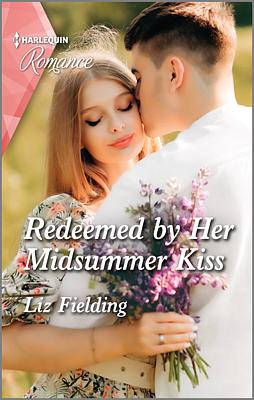

Redeemed by Her Midsummer Kiss
Autore
Liz Fielding
Letto da
15,3K
Capitoli
16
An escape to the country. A kiss to reawaken them both… Honeysuckle Rose finds much-needed solace in her great aunt's garden. But her peace is threatened by her distracting and brooding neighbor, Lucien Grey. Once a high-flying news reporter, Lucien returned from the front line a changed man. Honey can see that beneath his frosty exterior is a heart waiting to be thawed. Can their unexpected but impossible-to-ignore midsummer kiss be the beginning of a fresh start… together?
CHAPTER ONE
‘With burdocks, hemlock, nettles, cuckoo flowers, Darnel, and all the weeds that grow.’
—King Lear, William Shakespeare
‘MURDERER!’
Lucien Grey’s first reaction to the furious pounding on his front door was to ignore it. After a succession of village worthies, from the vicar to the chair of the parish council, had called to introduce themselves, invite him to open the summer fete or join the bridge, cricket and tennis clubs—all of which he’d politely declined—he’d found a screwdriver and removed the knocker.
And the village had finally got the message. This, however, was not the polite knock of someone hoping to involve him in some local good cause.
The hammering was hard enough to rattle the letterbox.
Concerned that there might have been an accident in the lane, that there might be casualties, he curled his fingers into fists to stop his hands from shaking and forced himself away from his desk. Confronted by a furious female thrusting a fistful of wilting vegetation in his face, it was too late to regret his decision. But he didn’t have to stand there and take abuse from some crazy woman.
Wearing dungarees that had seen better days, her white-blonde hair escaping from a knotted scarf, and with pink, overheated cheeks, she looked like someone from a Dig for Victory poster circa 1942.
He took a step back, intending to close the door, but she had her boot on the sill faster than the thought could travel from his brain to his hand.
It was a substantial leather boot laced with green twine and, as he stared at it, a lump of dried mud broke off, shattering into dust and clouding the polished surface of the hall floor.
‘Who are you?’ he demanded. ‘What do you want?’
The words were out of his mouth before he could stop them. He didn’t care who she was or what she wanted.
Too late.
She was going to tell him. With her foot firmly in the door, there was no escape other than to walk away and leave her in possession of his doorstep. Tempting as the thought was, she was clearly riled enough to follow him inside to continue her verbal battery, so he stood his ground.
‘I live in the cottage next door,’ she replied, ‘And you have sprayed my garden with poison.’
She was tall, but the lack of make-up and shining pinkness of her face made her look like a girl playing dress-up in her great-grandmother’s—make that her great-grandfather’s—clothes. Her expression, as murderous as her ridiculous accusation, eyes sparking with fury, suggested otherwise.
‘Look at these!’
She shook the dying plants in his face, the bright yellow rubber gloves she wore adding to the bizarre image.
He looked at them then frowned.
‘They’re nettles.’ This madwoman was berating him over nettles? ‘Dead nettles.’ Clearly not a disgruntled member of the gardening club... ‘Whoever sprayed them did you favour, but it wasn’t me.’
‘Not dead. Dying,’ she snapped back. ‘Dead nettles are lamium album, a valuable nectar source for bumble bees. These are urtica dioca, the habitat and food source for red admiral, peacock and small tortoiseshell butterflies.’
‘Madam, you may not have noticed, but there are hundreds of nettles—’
‘If you look carefully,’ she said, cutting him off mid-sentence, ‘you will see where the caterpillars have woven silk tents around themselves while they pupate.’ She pointed the tip of a grubby, yellow rubber finger at one of the wilted leaves. ‘That is a red admiral,’ she added. Then, in case he hadn’t got the point, ‘Would have been a red admiral if the nettle patch hadn’t been sprayed with weed killer.’
‘I’m sorry, but if you’d witnessed some of the atrocities that I’ve seen you wouldn’t be weeping over a few butterflies.’
‘Sorry?’ She looked up from the nettles. ‘Such an easy word to say, and rendered meaningless the moment you followed it with “but”.’
She was right, of course, but he wasn’t about to indulge in semantics with the woman. He just wanted her gone and rescue came from an unexpected source.
‘Isn’t that a caterpillar?’ he asked as he spotted a movement amongst the wilted leaves. ‘It looks very much alive to me.’
‘What?’ She took a closer look. ‘Oh my God, it’s a small tortoiseshell. There’ll be dozens of them.’
‘And I have it on good authority that they’ll be very hungry.’
She glared at him, not in the least bit amused.
‘Very hungry. And you’ve just wiped out their food source with your chemical attack.’
Lucien felt his blood run ice-cold.
‘How dare you?’
‘Dare?’
She didn’t back off. On the contrary, she took a step closer, dark blue eyes in his face. Large, long-lashed, very dark blue eyes that provoked explosion of memory, a flashback to a burst of pain in another time, another place. He stepped back, throwing up his hand in a defensive gesture.
‘Mr Grey?’
It was the burning sting of the nettles brushing against his arm that jolted him back to the doorstep and the present, to the woman who’d disturbed him.
Her free hand was on his arm, steadying him. She was so close that he caught the sharp scent of fresh herbs and the sweetness of lavender on her clothes, could feel her soft, earthy warmth stirring his numb body to life.
‘Lucien?’
Her mouth, soft, pink, inviting, was millimetres from his own. She was pressed against him, supporting him with her body. As the stirring became more urgent, more noticeable, her lashes swept down...
He could not have said who moved, only that the gap closed in a hot lightning strike as their lips met in the kind of mindless kiss that sizzled like an electrical overload. Light the blue touch paper...
He was somewhere else. The ground was shaking, he was choking, and he knew, just knew, that he had to hold on to this woman, had to save her...
‘Mr Grey...’ She was holding him and for a moment everything was all right. ‘Mr Grey!’
A shiver went through him as he dragged himself back to the silence of a Cotswold village where the only sound was the distant echo of a cuckoo.
‘Are you okay?’
The mad nettle woman was regarding him with real concern. He’d just kissed her as if the world was about to end and she was asking him if he was okay? No outrage, no stinging slap...
Could it all have happened in his imagination? The flashbacks came out of the blue, but that was unlike anything he’d ever experienced...
‘It’s nothing,’ he said, taking his cue from her. ‘I was stung. My own fault.’
She didn’t answer for a moment, those compelling eyes continuing to hold his gaze before dropping to the ugly scar on the inside of his arm, livid against the faded yellow of skin exposed to years of sun. His automatic reaction was to pull away and cover it but she tightened her grip on his arm, preventing him from touching it.
‘Don’t rub it!’ she warned.
‘It’s nothing,’ he repeated. ‘An old wound.’
‘Yes...’
She continued to hold his arm as if expecting something more but, when he didn’t elaborate, she said, ‘I was talking about the sting. If you rub the histamine and formic acid into your skin, it will make it much worse. Leave it for ten minutes, then run it under cold water and wash it with soap and water.’
‘You don’t carry emergency dock leaves?’
He invested the enquiry with all the sarcasm he could muster, desperate to escape, regain his composure and a sense of control. She let her hand drop, leaving behind a smear of dirt from her glove.
‘I’m afraid they suffered the same fate as the nettles.’
‘I am sorry,’ he repeated, and this time he meant it.
He was sorry that he’d left his desk, sorry that he’d opened the door and sorry that he’d chosen Lower Haughton as a bolthole.
The Dower House, part of a great estate, was on the outskirts of the village, isolated but for what, according to the letting agent, had once been the gardener’s cottage.
‘I was told that the cottage next door was empty,’ he said.
‘The bees, the butterflies and the insects are always in residence.’ She shook her head again, this time impatiently, and a lock of fair hair made a bid for freedom, bouncing over her left eye. She grabbed it with huff of impatience and brushed it behind her ear. ‘I would have done the neighbourly thing of calling to introduce myself when I arrived home, but I was warned that you didn’t welcome callers.’
‘I’m here to work,’ he said. ‘I don’t have time to socialise.’
‘I understand, and you have my word that I won’t be knocking on the door to borrow a cup of sugar.’
‘There would be no point. I don’t use it.’
‘Maybe you should give it a try.’ Her mouth twitched, and for a moment he thought there might be a smile to take the sting out of her words, but she managed to restrain herself. ‘It has a very dodgy history, and isn’t great for your health, but it beats the hell out of weed killer.’
‘From what I’ve seen of your garden, madam, weed killer should be at the top of your shopping list.’
‘Excuse me?’
‘You have to admit that your garden is a bit...’
Realising that he was being drawn into a conversation he hadn’t asked for, didn’t want, he stopped.
‘A bit...?’ she prompted and, when he refused to be tempted, a hint of a victory smile drew his gaze back to her mouth.
Sweet, yielding, tasting of strawberries...
‘The word you’re struggling for, Mr Grey, is wild,’ she said, snapping him back to reality.
‘Are you telling me that it’s deliberate?’
She might smell like heaven and have come-to-bed eyes but she was a crazy woman who had the dress sense of a navvy and actively encouraged weeds.
She almost certainly had cats.
‘And how does the rest of the village feel about that?’ he asked. ‘Because, when I arrived in Lower Haughton, I noticed a sign boasting that it had won a gold medal in the Best Kept Village competition last year. They didn’t win that with weeds.’
‘You’d be surprised.’
‘Only if I gave a damn,’ he said, determined to put an end this conversation. ‘I don’t know what happened to your nettles, but I will find out, and I’ll make sure it doesn’t happen again.’
He made a move to close the door, but the boot stayed put.
‘I know exactly what happened,’ she said, and clearly had no intention of moving until she’d shared the bad news. ‘You’ve hired a couple of cowboys who cut the grass too short and whose answer to everything else—bugs or weeds—involved chemicals.’
‘I’ve hired no one. The lease includes garden and cleaning services. The men who were here this morning were just doing their job.’
‘Then it wasn’t carelessness?’ She was very still now. ‘It was deliberate,’ she pressed. ‘A contract killing.’
‘No!’ The last thing he’d wanted was a chat with the garden crew. They’d called out to him about the weeds when he’d come back from his run, and he’d told them to do whatever they thought best. Finding himself on the defensive, he said, ‘You can’t deny that your garden is overrun with weeds which, according to the contractors, are encroaching on mine.’
‘What constitutes a weed depends on your point of view, Mr Grey. Unlike your sterile acre, my great-aunt turned her garden into a wildlife haven, and I intend to keep her legacy alive.’
A wildlife haven?
The cottage backed onto the river where he forced himself to run every morning. A glimpse of thatch beyond what, in the days when it had been part of the Hartford estate, must have been a well-kept orchard. The trees were thick with blossom, but the grass and weeds grew thick and high with neglect. He’d been told that the cottage was empty.
Not any more, apparently, but how she kept her property was none of his business and he held up his hands in a gesture of surrender.
‘I’d offer to buy you replacement nettles, but I doubt the local nursery would be able to supply them.’
‘Not intentionally,’ she agreed, an idea that appeared to amuse her. ‘Don’t worry about speaking to your so-called gardeners. I’ll make sure that they don’t repeat their offence.’
She finally stepped back but, free to shut the door and go back to his desk, he found himself reluctant to do either.
‘Will you be able to save them?’ he asked. ‘The caterpillars?’
But, now that he was the one who wanted to talk, she was the one backing away. ‘I’ll do my best.’
And then she turned and strode away down the drive. Lucien stood for a moment, watching as her long legs covered the ground so fast that she was almost out of sight when he called after her.
‘There are plenty of nettles on the path by the river.’
Stupid. She must know that. But she didn’t hear. Or maybe she did, but she didn’t look back, and a moment later she was out of sight, leaving him with only a powdering of dry mud on his hall floor and a burning itch in his arm to show that she’d been there.
His hand hovered over his arm as the urge to rub it intensified.
Don’t touch it for ten minutes?
Really? It was that specific? Or was that the length of time she wanted him to suffer?
On the other hand, she’d sounded as if she knew what she was talking about. With a garden overgrown with nettles, she had probably learned the hard way.
Honey was practically running by the time she reached the ancient oak near the gate of Lucien Grey’s hideaway. Out of sight of the house, she leaned against its trunk to catch her breath.
She couldn’t believe that she’d called the hero of Bouba al-Asad a murderer. Lectured him like a schoolboy.
Now that the rush of adrenaline-fuelled anger had receded, she felt a rush of shame. The man who had once courted danger in his flak jacket and helmet, veteran of a thousand reports to camera while under fire in the world’s trouble spots, had the gaunt, hollowed-out look of a man who’d seen too much.
He was not the tanned, vigorous man whose shrapnel wound she had cleaned and dressed in a makeshift hospital while he’d continued to talk into the camera. She’d told him that he needed to be medevacked for proper attention, irritable that he’d been taking up her time when, unlike her other patients, he had a choice about being there.
Catching her tone, he’d looked back, and there had been a moment when he’d actually looked at her. Not just as some faceless person who’d patched him up, but really looked at her, as if searching for the person behind the mask and the disposable gloves.
He’d taken a step towards her as if to say something but, at that moment, an explosion had shaken the temporary hospital, filling the air with choking dust, and she’d had her hands full with the evacuation of the wounded.
By the time she’d had a moment to catch her breath, to think about him, he was gone.
She’d been astonished when she’d come home to discover that they were neighbours. The gossip in the village shop was that he had leased the Dower House in order to write a book about his experiences, but the excitement at having a celebrity amongst them had been swiftly quelled.
He was polite, she’d been told, but invitations to dinner, to give a talk to the WI and to open the village fete had been declined due to the pressure of a tight deadline, and she hadn’t called to introduce herself and remind him that they’d met.
It should have been galling that he hadn’t recognised her. But, after ranting at him like a fishwife, she was grateful that she’d been wearing a mask the first time and that he’d been too distracted to notice her, but for a rare moment of connection that had never left her. That for a split second had been there today...
According to Alma Lacey, who cleaned, shopped and cooked for him, he spent all his time locked away in his study—a room she had been forbidden to touch—and she rarely saw him.
Maybe he was working long hours, but that was more than screen pallor. A close-clipped beard did nothing to disguise the way the skin was stretched over the fine bones of his face. There was a glint of silver in the familiar thick mass of dark curls, and when she’d stepped up to face him she could feel him trembling.
He’d been angry but he hadn’t been seeing her. He’d gone to some much darker place inside his head, and in a heartbeat she had been supporting him as the terror had gripped him, as it had morphed into raw need. A need that had found a shocking echo deep in her belly.
She knew that emptiness, that desperation. Feeling his unmistakable response to her closeness, she’d wanted the mindless oblivion of physical connection, and for a moment she’d been a little lost herself.
A shudder passed through her—an awareness that all it would have taken was a touch and they would have been ripping each other’s clothes off right there on the doorstep.
Lucien Grey had been something of media heartthrob, a reason to switch on the evening news, and no one would blame her for grabbing a moment of meaningless lust.
No one but her.
He bore scars that went much deeper than the one on his arm. Invisible scars that were carried by men and women returning from the front line, having lost friends and having seen things that were burned for ever into their brain.
She knew enough, bore her own roster of mental scars, to understand that he’d had no idea where he was in that moment, no idea what he was doing. It had happened to her when she’d caught the chemical stench of the weed killer and it had felt as if the war had followed her home.
She would have to apologise, and under normal circumstances that would have had to be done face to face. Not this time.
While he really needed to get out and talk to people, he wouldn’t want to see her again. She’d leave a note, a pot of honey and some early strawberries from the garden on his back porch where Alma Lacey would find them and take them in.
But not before she’d rehomed the infant caterpillars on the nettles on the towpath and done what she could for the red admiral larvae and the tortoiseshell eggs.
What she should have done instead of storming next door with her accusation of lepidopteral homicide.