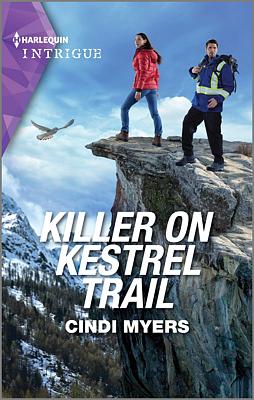

Killer on Kestrel Trail
Autorzy
Cindi Myers
Lektury
16,9K
Rozdziały
19
Two decades later… She's determined to get justice for her family. Twenty years after her sister's murder, Kelsey Chapman's determined to discover the truth behind what really happened on Kestrel Trail. When she arrives in Eagle Mountain, Colorado, she quickly joins forces with search-and-rescue expert Tony Meisner, who found Liz's body and has been haunted ever since. Kelsey needs Tony to solve the mystery…and dodge a murderer who may be hiding in plain sight.
Chapter One
Tony Meisner gritted his teeth against the pain in his leg and focused on getting down the trail. Hot sun beat down on the back of his neck; he wished he could stop and shed the blue Eagle Mountain Search and Rescue parka he was wearing. He had needed the coat on the shady side of the mountain, but here in the early-April sun, he was hot in spite of patches of snow on the ground. Carrying one corner of a stretcher with a one-hundred-eighty-pound man aboard was proving how out of shape he was after months off-duty.
But he was still mobile, he reminded himself—unlike the poor guy he was helping to carry on the litter. The hiker had fallen when a section of Kestrel Trail broke loose, and he sustained a closed fracture in his right leg. Thanks to Eagle Mountain Search and Rescue, he was on his way to a waiting medical helicopter. With time and therapy, he would hike again in a few months.
“And here’s our relief,” Danny Irwin called out as a quartet of SAR volunteers appeared over the next rise.
Tony tried not to groan as he lowered his corner of the litter and volunteers Eldon Ramsey, Ryan Welch, Carrie Andrews and Grace Whitlock moved in to carry their patient for the last leg to the helicopter-landing zone.
Tony pulled a bottle of water from his pack and eased onto a rock. “How are you doing?” Medical officer Hannah Richards, whose day job was a paramedic, sent him a concerned look.
“I’m fine,” Tony said. He rubbed his hands down his thighs, both of which had sustained fractures in a climbing fall last year. The pain didn’t matter, because he knew every day would be a little better. He could have waited a few more months to return to duty, but he had needed to be back with Search and Rescue where he belonged.
Caleb Garrison, a new volunteer with the group, settled beside Tony on the rock. “I understand you’ve been with SAR a long time,” he said.
“Since I was seventeen, and I’m thirty-eight now,” Tony said. He stowed his water bottle. Caleb was twenty-five. Tony was a SAR veteran at that age. He had a wealth of experience now, but he tried to stay open to the possibility of always learning more.
“You don’t get burned-out?” Caleb gestured down the trail, in the direction the other volunteers had headed. “You must have seen some pretty intense stuff.”
Tony nodded. He had responded to suicides, drownings, fatal falls and more than one mission that had gone from rescue to body recovery in a matter of minutes. “I guess this work is part of my DNA now,” he said. “I missed it while I was out.”
“Not many high school kids would be interested in doing this, I wouldn’t think,” Caleb said.
“We require all our volunteers to be eighteen now, but when I started, there wasn’t an age limit,” Tony said. He had been new in town, lost and lonely. Eagle Mountain Search and Rescue had welcomed him and given him a new family. He owed them more than he could ever repay.
He looked around and realized with a start that he and Caleb were sitting almost exactly where one of his first rescues had taken place. “I had only been with the group a few weeks when we found the body of a missing young woman right here,” he said.
“No kidding?” Caleb said. “What happened to her?”
Tony shook his head. “We never found out. A teacher reported her missing a little over a week before. The medical examiner ruled she had been strangled, but I don’t think the person who did it was ever found.” He shrugged. “Thankfully, we don’t get that kind of call very often. All of our missions don’t have happy endings, but we usually have a good idea of exactly what happened.” The knowing was a kind of closure. At the end of the day, a good mission might mean being confident they had done everything they could to help the person they’d been called to save.
“How many calls do you think you’ve been on all these years?” Caleb asked.
“A couple of thousand?” Tony guessed. In the early days, they might get one call a month. Now, with increased tourism and more people drawn to outdoor adventures, they might respond to half a dozen calls a month. Tony hadn’t responded to all of them, but he had been part of the team for most and captain three different times.
“I’m amazed you remember a call that happened so long ago,” Caleb said.
“You know what they say,” Danny, who had been listening, chimed in. He winked and smirked at Tony. “You never forget your first.”
“I remember them all,” Tony said. Every mission was seared on his memory—what the weather was like, who had participated, the challenges they had overcome, and whether or not their patient had survived.
“Did you ever think about not coming back to SAR after your accident?” Caleb asked.
“Never.” Through the long days in the hospital and during his time in a rehabilitation facility—and the hours and hours of difficult and sometimes excruciating physical therapy—the prospect of returning to search and rescue work had sustained him and kept him going. Every time they responded to a call, SAR volunteers had the chance to make a difference—for the people whose lives they attempted to save and for their families. “We do this work for other people,” Tony said. “But we do it for ourselves, too. Because it fills some space inside of us. At least, it does for me.” Everyone wasn’t as dedicated to Eagle Mountain SAR as he was. Maybe that meant they didn’t need it to complete them the way he did.
Sometimes the memories of the rescues that hadn’t ended well weighed on him, but most of the time he was proud to have made a difference. So little else in his life had.
KELSEY CHAPMAN HAD never been west of Mount Vernon, Iowa, when she steered her Honda Civic down the main street of Eagle Mountain, Colorado, on a bright Tuesday morning in early April. She slowed the car to a crawl and almost stopped in the middle of the street as she stared up at the snow-covered mountains surrounding the town. This was the place Liz had described as “the most beautiful spot in the world.” Now Kelsey finally knew what her sister had meant.
She forced her gaze back to the street until she spotted the sign ahead for the Alpiner Inn. Some of the tension went out of her shoulders as she pulled the car into an angled spot right in front of the inn. She had made the reservation online not knowing what to expect, but the place looked nice—a sort of Swiss Alps vibe, with fancy wood trim on the eaves and shutters, and window boxes awaiting flowers. She paused for a second on the sidewalk to gaze at the mountains again. Liz had been up there somewhere. All these years, Kelsey had wondered what had happened to her sister, and now she was finally going to find out. It hardly seemed real.
Her cell phone vibrated; she pulled it out of her pocket, glanced at the screen and then answered. “Hi, Mom. I just pulled up in front of my hotel here in Eagle Mountain.”
“So you haven’t found out anything yet?” Mary Chapman sounded out of breath, as she too often was these days.
“Are you using your oxygen, Mom?” Kelsey asked.
“I’m fine.”
“The doctor said you needed to use it if you got short of breath.”
“I don’t like dragging that machine around. And I’m just excited, that’s all. What is Eagle Mountain like?”
“It’s very pretty.” Looking down the street literally meant looking down, as the elevation fell from one end of the town to the other. “Lots of Victorian buildings, cute little shops and restaurants, and snow-covered mountains in the distance. Like a postcard.”
“I’ll never think of that place as anything but ugly,” Mary said.
A little of Kelsey’s excitement over being here drained away. “Now that I’m here, I understand a little better what Liz loved about it.”
“Find out what happened to her,” Mary said. “That’s all I care about.”
“I’ll call you tomorrow,” Kelsey said. “Maybe I’ll know more by then, but it might take longer than a couple of days.”
“Someone must know something,” Mary said. “I tried to persuade your father to hire a private detective to go down there right after it happened, but he wouldn’t hear of it.”
“Dad wanted to pretend Liz never existed,” Kelsey said.
“Don’t be too hard on your father,” Mary said. “Losing Liz broke his heart. He couldn’t talk about her because it hurt too much. And he felt guilty, too. The two of them said some ugly things before she left.”
“You would think he would want to know who killed his daughter,” Kelsey said.
“I think he felt better not knowing,” Mary said. “You don’t understand that now, but someday, when you have children, you might.”
They said goodbye, and Kelsey pulled her roller bag from the back of the Civic and trundled it inside the lobby. A blonde close to Kelsey’s age looked up as she entered. “Hello,” she said. “What can I do for you?”
“I’m Kelsey Chapman. I reserved a room for two weeks.” She didn’t know if that was enough time for what she needed to do, but she had to start somewhere.
“Welcome to Eagle Mountain. I’m Hannah, and my parents, Brit and Thad, own the inn. If you need anything while you’re here, let one of us know.”
Kelsey handed over her credit card and waited while Hannah processed the charge. The inn had what Kelsey imagined was Scandinavian decor—lots of pale wood and blue and white cushions, antique ice skates, and skis and sleds on the wall, in addition to many framed photos of the surrounding mountains. “Are you here on business or pleasure?” Hannah asked as she returned Kelsey’s credit card.
“Um, just vacationing,” Kelsey said. Certainly no one was paying her to be here, but she couldn’t consider her task a pleasurable one, either.
“There’s lots to see and do around here,” Hannah said. “Let me know if there’s anything in particular you’re interested in. And definitely check with me before you go hiking. Some of the trails higher up still have too much snow on them to attempt just yet. I don’t want to have to bring you back to town on a stretcher.”
At Kelsey’s alarmed look, Hannah laughed. “Sorry. I volunteer with Search and Rescue. Plus, my main job is as a paramedic. I’ve seen so many accidents I tend to want to warn everyone who is new around here.”
Kelsey’s heartbeat sped up. “How long have you been with Search and Rescue?” she asked.
“Six years.”
Not long enough, Kelsey thought. “Do you have volunteers who have been with the group longer?” she asked.
“Oh, sure. We’ve got one member who has been with the group almost twenty-one years.”
“What’s his—or her—name?” Kelsey asked.
Hannah looked amused. “Why are you so interested?”
Kelsey could have spilled the whole story then and there, but she was afraid people might dismiss her as a kook. “I’m always interested in people’s stories,” she said. “If I run into someone who’s volunteered to save other people for twenty-one years, I want to know their name.”
“It’s Tony,” Hannah said. “And you’ll know when you see him because he’s probably wearing a Search and Rescue T-shirt or hoodie. I think that’s his whole wardrobe.” She leaned closer, her tone confiding. “But seriously, don’t let all this search and rescue talk make you think this is a dangerous place.”
This is a dangerous place, Kelsey thought, but she only smiled as she accepted her room key from Hannah. My sister died here, she could have said. And I’m trying to find out who killed her.
TONY STAPLED THE last of the handouts for the training session he was teaching Tuesday evening on dealing with head injuries and added it to the stack at the end of the folding table. The power point equipment was hooked up and functioning. He had added a few new photographs from last week’s rescue up on Kestrel Trail. The man they had rescued was at St. Joseph’s in Junction and expected to make a full recovery.
A beep indicated a door had opened, and he turned to see a young woman with long dark brown hair leaning around the door. “Hello?” she called, tentative.
“Hello.” Tony walked forward to meet her. He had been making more of an effort not to limp, and he thought the practice was paying off. His goal was to get back to his previous level of fitness, no matter how long it took. “What can I do for you?” he asked.
“I’m looking for Tony.” She smiled, and he felt a tightness in his chest. She was beautiful, with straight hair almost to her waist; blue, blue eyes; and a slender yet decidedly feminine figure. She was also young—ten or even fifteen years younger than he was, which made him feel a little like a dirty old man.
“I’m Tony Meisner. What can I do for you?” Was she a relative of someone they had previously rescued? Occasionally someone like that would stop by to say thank you.
“I’m Kelsey Chapman.” She stared at him intently.
The name jolted him. “Elizabeth Chapman,” he said without thinking.
The flash of pain in her eyes told him he had guessed right. “Yes,” she said. “But everyone called her Liz.” Her expression softened. “She was my sister. I didn’t know if anyone would remember her after so much time.”
“I remember,” Tony said.
“You remember...finding her?” Kelsey said. “Someone told me you were with Search and Rescue back then. Were you there the day...the day they found her...her body?”
All these years, he had wondered if anyone would ever show up asking about Liz. She had come to town alone, and she had died alone, but he had never believed a person so full of sweetness hadn’t had someone, somewhere, who loved her. The woman standing in front of him now looked enough like Liz that he could almost imagine they were standing together in the hallway at the high school, after class. “I was there,” he said. “I knew Liz before she disappeared. And I was the one who found her.”