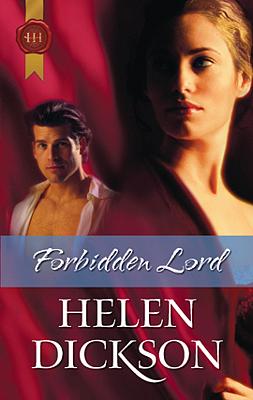

Forbidden Lord
Auteur·e
Helen Dickson
Lectures
18,3K
Chapitres
12
Life at her vicious stepfather's house is more than Eleanor Collingwood can bear. With celebrations underway for her stepsister's wedding, no one will see Eleanor flee. That is until Lord William Marston storms in… He's the man who betrayed her father to Queen Mary. The man thought banished to the Americas… The most dashingly gorgeous man she's ever set eyes on! Lord Marston is forbidden! But he can offer her freedom… at a cost. Is marriage and a baby too high a price to pay?
Chapter One
It was pitch-black behind the curtains of the high bed. Eleanor woke, turning her head this way and that, like a trapped animal looking for a way out. Some instinct seemed to be telling her, warning her, that there was danger, that she was not alone. She lay absolutely still, terror holding her in frozen shock.
Then she heard him, heard his breathing as he edged closer to the bed. She could feel the sweat, ice cold on her flesh. If he reached her, she would die. If she didn’t make a sound, if she stopped breathing and her heart ceased its infernal pounding, if he didn’t smell her fear, her rage, perhaps he would go away and she would be safe.
Inching her way slowly up the bed, she peered through a crack in the curtains. The faint glow from the remaining embers of the fire showed the huge, dark figure of her stepfather not six feet from the bed. The light was behind him so she could not see his face, but she could imagine his eyes—slits of reddened lust—and his slack lips.
Suddenly Frederick Atwood reached out and, whipping the curtains apart, stood looking down at the girl cowering beneath the covers. ‘Don’t move.’ He was excited, inflamed by his own lust. His claw-like hand gripped her, pushing her back, bending over her. He held her firm, a sadistic thrill running through him when he felt her tremble.
Eleanor could smell his rank breath, felt his mouth wet against her shrinking flesh. A scream rose to her lips, but it was cut off when his hand clamped over her mouth. Flinging her arms wide his fingers began tearing at her nightdress. Feeling his weight upon her, pinning her to the bed, for a second she was so dumbfounded she could do nothing when she felt his hand slide up her inner thigh. And then her spirit rose to the fore, exploding within her, and she was fighting the vile creature whose intent it was to ravish her. With a cry of revulsion and with all the strength she could muster she forced her knee upwards.
Eleanor’s assailant grunted and groaned and fell away from her. Springing from the bed, trembling—not with fear, but with disgust, repugnance, humiliation and fury—she glared at him. In her mind she wanted to run from the room, to find someone, anyone, to tell the world what a vile lecher her stepfather was, but she knew no one would believe the word of a hysterical eighteen-year-old girl over that of the powerful Frederick Atwood, an alderman and influential and powerful merchant in the City—who aspired to one day becoming Lord Mayor of London, a man convinced of his own invincibility.
As though he had read her thoughts, his voice came to her from the gloom at the other side of the bed. ‘Don’t think you can run from me or hide from me, girl,’ he spoke with terrifying authority as she scurried towards the door. ‘If you have a mind to run to the servants, then I advise you to think again. They will not dare have the temerity to interfere lest they find themselves out on their ear. I am the master here. My authority is absolute and my word is law,’ he said, with that arrogant indifference of his position to those beneath him.
Breathing hard, Eleanor swung round and faced his shadowy figure, her eyes blazing like hot coals in her white face, her small chin jutting out at a truculent angle. As her stepfather struggled to his feet, it was evident he was experiencing great discomfort.
‘You beast!’ she raved. ‘You lecherous beast! You killed my mother with your perversions, even if it did take you almost three years to do it, and now you have transferred your attentions to me. Now you think to dominate me as you did her, to grind me down too, but I tell you now, Frederick Atwood, you will not.’
‘I always achieve whatever it is I want, and one way or another I shall have you. However long it takes, I will succeed.’ His voice slithered over the trembling girl, menacing and dangerous, but she was not afraid of him. It was one of the reasons why he wanted her so much, he would enjoy taming that wildness, crushing that audacious spirit like a cockroach beneath his shoe.
‘Never. I am not my mother. I am tougher than she was—stronger. Like a cat I have a way of surviving in the most dire circumstances and you will not defeat me.’ Without more ado she flung the door open and rushed out.
The great house was silent as Eleanor tumbled behind the heavy curtains into one of the window embrasures in the great hall. Leaning her head against the stone mullion, she drew up her knees, so depressed and weary that she could not think. In February Fryston Hall was cold, damp, dreary; tonight, with the fire in the central hearth having gone out, it was doubly so.
When her mother had been alive, the way her stepfather had always looked at her had made her suspect him of unspeakable things. But though he watched her, he had never laid a hand on her in that way—until now. Suddenly Fryston Hall had become a prison that fostered in her a desperate need to escape. While ever she remained she was a prisoner of her gender and her stepfather’s wicked intent.
She could not believe she had said those things to him. As a child she had been brought up to show respect, to speak when spoken to and accept what she was told by her elders, but all that had been forgotten in the heat of the moment. She had never lacked courage, but sometimes it was hard to maintain cheerfulness in the face of despair.
If only she could go back to Hollymead—if only her mother and father were alive. Never had she needed them as much as she did then. Hollymead had been a warm place, a place of laughter, as serene and beautiful as a benediction. Her eyes bespoke the sadness of its passing, of the memories that would never again return to life, and she could not stop the welling tears. It had ended when her father, Sir Edgar Collingwood, a knight of the realm and Frederic Atwood’s cousin, had been executed for conspiring against Queen Mary, bringing disgrace, devastation and heartbreak to the entire family.
Taking advantage of the widow’s plight and secretly coveting her wealth—Marian’s own private fortune that had come to her on her father’s demise at the time of Edgar’s execution had not been stripped from her, unlike her husband’s and along with all his properties when the court had passed sentence—Frederick Atwood had befriended her and married her.
Just as though the image of her parents had brought sanity, a calm reason took over Eleanor. She would return to York, to Hollymead, where her Uncle John now lived, her father’s brother. Sir John Collingwood, a widower with one son, was a proud man, a man of intellect, a scholar; he had been deeply affected and shamed by his brother’s treasonable scheming to prevent the Queen’s marriage to Philip, the Catholic Prince of Spain, soon to be king. There had been no contact between Sir John and Edgar’s widow and daughter since that dreadful day of Edgar’s execution and Eleanor had no idea how he would receive her, but he had always shown a fondness for her and been keen to tutor her in her lessons.
Of course she could always go to her Aunt Matilda at Cantly Manor in Kensington, but she was in France visiting friends and was not expected back for several weeks. Unfortunately Cantly Manor was too close to Fryston Hall and it would be the first place her stepfather would go to look for her, and without her aunt’s protection he would bring her back.
And so her decision was made without impediment. Her mind was calm and clear for the first time since her mother had died, her heart alive with elation and hope. She considered the many dangers that could beset her on the long journey north, but she dismissed them in her eagerness to get away. How she would like to leave right now, before daybreak, but it was Catherine’s wedding day and Eleanor was to prepare her for the event.
Catherine, who was five years Eleanor’s senior, was her stepsister and the reason why Eleanor had not gone to live with her aunt when her mother had died. Catherine always managed to maintain a calm poise throughout her father’s blusterings and firmly believed he had absolute authority over her. Like Eleanor, she was an only child; when Eleanor had come to live at Fryston Hall she had looked up to her. She had strived to form a close relationship with the older girl, but Catherine’s nature did not encourage closeness—which Eleanor attributed to her father’s harsh, unloving treatment throughout her life, although Catherine’s sympathy and presence had been a comfort to her when her mother had died.
Eleanor attended Catherine into her bridal finery assisted by two of her ladies. Catherine insisted on her ladies, who dressed her and saw to her every need, being within calling distance at all times. The most favoured of her ladies even slept in her chamber at night, when a pallet and rolled-up straw mattress would be pulled out.
Catherine did not display the happiness usually found in a bride. Her face was submissive and she submitted to the ministerings with a quiet dignity as she sat at the toilette table. With her lips set in a thin line, she was holding a hand mirror in one hand, gazing at her reflection, while the other idly stroked the silken ears of her small pet spaniel in her lap.
Eleanor was sentimental about marriage and felt sympathy for her stepsister, which she didn’t do very often, for Catherine was a prickly female. She was to marry Sir Henry Wheeler, a merchant of considerable wealth and influence in the city, which suited Frederick Atwood’s ambitious bent.
Gilded with a fairness and cold serenity, Catherine seemed without any flaw or imperfection. Accepting that any hope of a union between her and the handsome Lord Marston was futile, she had dutifully and without complaint agreed to marry Sir Henry Wheeler with a dignity that had made Eleanor want to cry, but deep within Catherine lay a part of her that had loved Lord William Marston, and maybe still did.
Having tried and failed to convince Catherine that Sir William was a traitor and a rebel, and that even if he should appear after so long a time he would refuse to consider his suit for his daughter’s hand, out of greed and self-satisfaction Frederic had entered into the agreement with Sir Henry Wheeler. But whereas Sir Henry was already enamoured of the fair Catherine and assured theirs would be a happy marriage despite her acerbic tongue, to Frederick it was a business arrangement.
‘You look lovely, Catherine,’ Eleanor said, shooing the two tiring maids away as she secured the French hood decorated with jewels to the bride’s head. Her gown was of richly embroidered ivory satin with a standing collar and hanging sleeves. ‘Sir Henry will be quite dazzled by your beauty.’ Glancing at the mirror, she noticed Catherine’s frown. ‘I hope you haven’t developed an aversion to the gentleman?’
‘No, of course I haven’t,’ Catherine replied, her tone waspish as she irritatingly shoved the spaniel from her knee. ‘Henry may not be as young or as handsome as…’ she faltered, biting her lower lip ‘…but he is not unattractive. He is kind and attentive and to my liking. Father holds him in high regard, and I am convinced of his sincerity to me.’
‘But you continue to think of that other,’ Eleanor dared to say quietly, glancing round to make sure they were alone. Though the memory of William Marston was still strong in Catherine’s heart and mind, she had long since begun to accept that he had gone and was not coming back. ‘It is three years since he fled—to the Americas, your father said—and never a word to you. The man is not worthy of your thoughts. Now you have a good life before you—away from Fryston Hall. You must put him from your mind.’
‘You are right, Eleanor, and that is what I intend to do. I will be a good wife to Henry, but William was so handsome—so gallant.’ Catherine’s eyes softened and misted over with remembrance. ‘He was rich—although not as rich as Henry, and he was tall—taller than any man I have seen.’
‘And a traitor,’ Eleanor reminded her coldly, ‘if what your father told you is to be believed—and, as you know, he is never wrong.’ Her voice was heavily laden with sarcasm.
Catherine’s kohl-ringed eyes meeting her stepsister’s in the mirror were narrowed and suddenly dagger sharp. ‘Why you insist on thinking ill of William, Eleanor, when nothing was ever proven, amazes me. William was guilty of association with the conspirators and that is all. There were those at Court envious of his success and determined to destroy his reputation and prestige with Queen Mary. Thus she was led to suspect his guilt in trying to prevent her marriage to Philip. If he had not fled the country—’
‘After betraying my father and fellow conspirators. Do not forget that it was Lord Marston who divulged my own father’s involvement in the plot.’
‘That is circumspection, Eleanor, but if he had not gone away—’
‘Run away more like,’ Eleanor retorted scornfully.
Catherine shot her an annoying look. ‘Think what you like. You are entitled to your opinion, but I suppose if William had stayed then he, too, would have been apprehended and probably executed. But why did he go so far—and without a word to me?’
‘I don’t know, Catherine.’
Eleanor had heard many things about the dashing Lord Marston, yet none of them endeared him to her. When life at Court had palled he’d escaped abroad and sought fame as a soldier, winning the esteem of a brilliant man of war. Honours came easily, for he possessed all the qualities that favoured a young man of spirit and adventure.
She could not fault Catherine for her loyalty and her rejection of the evidence her father had produced of Lord Marston’s involvement in the conspiracy that had been responsible for sending her own father to the block, but after the despicable manner in which he had denounced her father and fellow conspirators and cast Catherine from his life, she was not persuaded that he was deserving of such devotion.
‘Nevertheless, he was lucky to escape with his head intact,’ Eleanor remarked, not without bitterness, as she felt the pain of memory. ‘The same cannot be said of my father, who confessed his guilt. He could not accept the Catholic, Spanish Philip as Queen Mary’s husband. He remained a true Protestant to the end.’
Seeing Eleanor’s pained and sad expression, Catherine turned and looked at her. ‘Along with many more, Eleanor. At that time England was a tense country of continual suspicion and pretend friendships. The violence and uncertainty of Mary’s reign influenced many lives—even my father’s, in a way, and it made me see him for the kind of man he is.’
‘What are you saying?’
A bitterness entered Catherine’s eyes. ‘That he is a coward at heart and he can change his coat in a moment. He has always been of the Protestant faith, but if it came to recanting that faith in exchange for his life, then I have no doubt that he would do so—unlike the brave ecclesiastics who were tried and condemned and burned in those horrible fires at Smithfield.
‘I remember Father called them fools. It made me ashamed. And I shall never forget that it ended disastrously for you too, Eleanor, and your mother—but, contrary to what you were told, I will never believe William had any part in it.’
‘Perhaps we will never know the truth of it. Being just fifteen years old at the time, I never did fully understand what was happening. But I did know that the brutal manner of his execution, of being separated from him, broke my mother’s heart.’
‘I knew she was unhappy married to my father,’ Catherine conceded half-heartedly, dabbing rose water on the exposed flesh above the stiffened bodice of her bridal gown. ‘He—is not always considerate to those around him.’
‘No—no, he is not.’ Eleanor had never made any attempt to hide from Catherine how much she despised her father; she wondered how Catherine would react were she to tell her he was an evil old lecher who wanted her in his bed.
Guests—over three hundred people from the city and far and wide, had arrived at Fryston Hall for the wedding feast. It was a lavish affair, intended to impress, with no expense spared, the well-laden tables in the brightly lit banqueting hall demonstrating Frederick Atwood’s wealth.
The nuptials spoken, after a short prayer was said thanking God for the food, there followed a prolonged banquet of countless dishes: mutton and venison, capons, larks and duckling, and boars’ heads on beds of apples. The pièce de résistance was a peacock royal—a bird that had been carefully skinned, cooked and then placed back inside its feathered skin.
This was followed by desserts of every size, description and flavour, from preserved fruits, jellies, tarts and cakes. Eleanor’s favourite were the impressive-looking sweets made from marchpane—a mixture of ground almonds, sugar and rose water. They were brightly coloured, using vegetable dyes and then shaped into models of ships, fruits, flowers and anything else that took Cook’s fancy.
Even Frederick Atwood had to admit that the three cooks at Fryston Hall had surpassed themselves. Jack, who was in charge of the roasting and the boiling of meat, Mrs Grimshaw, whose speciality was making rich, spicy sauces to go with the meat, and Bessie, the pastry cook, who made pies and baked bread in the big brick ovens in the pantry.
Wine flowed with abandon. Festive entertainment followed to impress his daughter’s new in-laws—jesters, acrobats and jugglers cavorting for the guests—while harassed servants rushed to and fro. Every room of the rambling fourteenth-century manor house, from the great hall to the kitchens, was covered with cavorting revellers.
To the left of Eleanor’s stepfather was his nephew and heir, Sir Richard Grey, lounging in his chair with a lazy indolence. His clothes were ostentatiously rich—a blaze of purple-and-scarlet velvet, satin and lace embellished with silver thread. With gold and jewelled rings on his fingers and a huge ruby at his throat, his whole person exuded pride and prosperity—false prosperity, since most of what he had came from his uncle.
Tall and sinewy, he was a fancy, good-looking fair-haired popinjay, a slippery character, stuffed full of himself and his own importance. In fact, he would have been an impressive figure but for his disagreeably cunning expression. Eleanor had no particular liking for him and always avoided him when he was at Fryston Hall.
Outside the storm that had been threatening all day finally broke, whipping itself into a frenzy. Returning from the garde-robe, Eleanor shuddered. It was hardly the sort of night to be abroad, but when she looked at her stepfather sitting smug and confident and saw how he was watching her through hooded lids, she felt that anything was better than staying at Fryston Hall one more night. Come what may, she would leave just as soon as the bridal couple had been put to bed.
Swathed in a tight-waisted gown of garnet silk, the chemise and Spanish farthingale making the skirts stand out and fall in a shimmering cascade to her feet, and her square-toed matching velvet shoes, she looked dramatic and arresting. Eleanor knew that she looked no less beautiful than the bride as she danced at the wedding feast with a buoyancy that belied the rising tension inside her as the hour for her departure approached.
The music swelled as people took to the floor for a courante, a pantomimic dance suggesting courtship. It was quite fast in tempo and who better for Eleanor to dance it with than Martin Taverner, a bright, intelligent young man who had been seated next to Sir Richard Grey throughout the evening. Martin was no stranger to her and he was extremely nimble on his feet. He also had a tendency to stutter, which many of his friends found annoying but which didn’t bother Eleanor.
‘Are you having a pleasant evening, Martin?’ she asked, bestowing on him a dazzling smile as he led her out on to the floor, thinking how fine he looked in a sky-blue jerkin and matching cap and a light grey doublet with slashed sleeves.
‘Immensely, and l-looking forward to d-dancing with the fairest lady in the r-room.’
She laughed lightly, enjoying the sound of the music. ‘Your flattery is misplaced, Martin. I think you spend too much time writing poems. Surely the bride is the fairest lady here tonight.’
‘Mistress C-Catherine is very lovely, I g-grant you,’ he replied, ‘b-but you outshine them all, Eleanor.’
With a shock of bright blond curls and bright blue eyes, Martin was good looking, slight and fine boned; in fact, some would call his boyish features pretty and effeminate. He was for ever scratching away with his quill writing poetry, which Eleanor always found both interesting and entertaining in content.
Nobody could understand all the things she liked about Martin—the way he listened to her and was all consideration and gentleness. He was always amiable towards her and considered her his friend—it was a friendship both his father and her Aunt Matilda would like to nurture and steer towards marriage. Affected by the spectacle of her mother’s sufferings before her death, Eleanor always avoided the issue through a personal wish to remain single for as long as possible, but she knew she would have to consider the matter when her aunt returned from France.
As she danced her eyes were caught by Sir Richard, who was lounging indolently in his chair, watching them with his peculiar intentness—in particular Martin—over the rim of his goblet until his scrutiny made Eleanor feel uncomfortable and intensely irritated. She saw his hand reach out and surreptitiously caress the rump of a young page, whilst keeping his gaze on Martin with every indication of interest.
The young page flinched and glanced at Sir Richard, startled, but Sir Richard seemed totally unaware of him as he continued to stare at Martin. Curiously troubled by the act, Eleanor frowned as she watched the page scurry away out of reach.
‘None of the men can keep their eyes off you,’ Catherine remarked pettishly during a lull in the dancing as they listened to Harry, the fool, strumming his lute and baring his soul in a troubadour’s song.
Catherine hadn’t been too disturbed until lately by her stepsister’s popularity with the opposite sex as she had grown to young womanhood, but now, as she had observed the fresh-skinned, laughing dancing girl pirouetting with first this adoring partner, and then that, her amber eyes shining like lustrous candles and her honey-gold hair, which she wore loose beneath her hood as if to flaunt her youth and maiden-hood, bouncing down her slender spine, a surge of jealousy chilled her blood.
‘You are old enough to marry, Eleanor. I suspect Father will be looking to one of them for a husband before the winter’s out.’
Hearing the barb that curled behind Catherine’s words, though her tone was pleasant enough, while sipping spiced wine from a pewter cup, Eleanor put it down and looked at her squarely. ‘Your father and Aunt Matilda both. When the time comes it will be a convenient arrangement—like yours to Henry, and I hope I will be given a say over my own marriage partner.’
How smug and confident Eleanor sounded, Catherine thought with annoyance. ‘How childish you are, Eleanor, to think you are strong enough to stand against my father. When he finds you a husband, the marriage will go ahead whatever your whims and fancies, so you’d best resign yourself to it.’
‘My feelings must be regarded—I shall insist on it, and before any marriage is contracted, my aunt will have to be consulted.’
‘Say what you like,’ Catherine uttered with an inward snigger, ‘but my father will not be overruled.’
Despite her harsh words it was a source of irritation that Catherine was forced to admire her stepsister’s striking looks and the proud set of her face, which was a defiant gesture and not in the least childish.
When the dancing was about to resume, no one heard the sound of clattering hooves from the courtyard in front of the house. A few moments later the door was flung open to admit two newcomers, travel stained from riding far.
One of the men paused to carefully assess his surroundings. Ignoring the servant who approached to enquire his business, with his gloved hand on the hilt of his sword and his sodden cloak swept back over his broad shoulders, he climbed the cantilevered shallow staircase to the great hall followed by his companion. The music and loud laughter streamed forth, drowning out the sound his close-fitting leather thigh boots made on the wooden stairs.
In the entrance to the hall he paused and calmly surveyed the scene. It was lively and colourful, packed tight as any barrel of herrings, with liveried servants bearing great platters of steaming food. Hundreds of candles flared and wavered and smoked. Lords and ladies slouched or sprawled at tables littered with food and flagons and goblets of wine and spilled ale. Wolfhounds and deerhounds scavenged beneath the tables, while minstrels in the gallery strummed their guitars and played their lutes, trying to make themselves heard above the din of voices.
The man’s hard gaze swept the throng, coming to rest on Frederick Atwood. He was seated at the long table on the raised dais—an elevated position for the lord of the manor and his family.
Frederick halted his conversation with the lady next to him as he caught sight of the black-garbed figure striding purposefully towards the dais. Their eyes met. Frederick rose, grim faced.
‘Marston!’
His voice came out as a hiss, but its mere sound attracted attention, and then an ominous silence swept over the hall as the musicians ceased to play and every eye became riveted on the newcomer in fuddled disbelief. The very name scalded Eleanor’s being with hot indignation. Tall and powerfully built, this intruder, who looked as if he could claim the ground on which he walked on, emanated a wrath so forceful that every man and woman shrank in their seats.
William Marston, a man whose features were chiselled to perfection, had once been one of the most audacious, imperious gentlemen of the Court. The ladies and general public had adored him, and he had taken a charter of their hearts to the Americas, which was never cancelled. He had been a great courtier of the realm, a great swordsman. Dressed in sombre black, his wide-brimmed hat dripping water on to the floor, he was a shock to the beholder.
Frederick thrust his chair back so violently that it scraped harshly on the floorboards. He started up, his hands supported on the table. There was an expression of outrage on his face, his colour choleric. ‘So you are back.’
‘As you see, Atwood. Back to wreak vengeance on those who conspired against me—and others, men who were not as fortunate as I.’
The deep timbre of his voice reverberated around the hall.
‘How the devil did you get in? Had I foreknowledge of your visit, you would have found my doors barred.’
‘It wasn’t difficult gaining entrance—your watchmen were not at their posts—but worry not,’ William said drily, ‘I’m not staying. I find being in this house distasteful to say the least. This is an unappealing but necessary visit. I wanted you to be the first to know I have returned to England from foreign parts.’
‘But this is an outrage—to come bursting into my house without invitation,’ Frederick declared forcefully, his long, thin face suffused an angry crimson.
The air between them was filled with tension, hostility and hatred.
William’s gaze passed along the rows of diners and came to rest on an empty chair, where it dwelt for a moment and then shifted to the swaying tapestry behind the chair, before coming back to Atwood. ‘Your nephew, Sir Richard Grey, is absent, I see.’ He smiled knowingly. ‘Perhaps he saw me coming and crept away to hide his cowardly carcass,’ he drawled, a razor-edge of sarcasm in his voice. ‘Not that it matters. I’m in no hurry. If my suspicions about him are proven, I’ll catch up with him in my own time.’
William laughed in derision, the silver-grey eyes taking on a steely hardness. ‘You hoped to see me dead, Atwood. Come, admit it. You worked your mischief, I know it, and the reason why does not elude me. Disgraced for standing against the marriage of Mary Tudor to Philip of Spain and dispossessed of my family’s wealth and property, I was a pauper. You did not merit me as suitable a husband for your daughter’s hand as Sir Henry Wheeler,’ he said, knowing all there was to know about the highly respected and influential City merchant, ‘and your decision to get rid of me was not only out of fear at what I would do, but greed-inspired—taking into account that Sir Henry’s wealth far outshone my own.’
‘Believe what you like. ’Tis of no consequence to me. It offends me beyond measure to have you strut into my hall when I am entertaining my guests.’
‘The occasion being?’
‘My daughter’s wedding day,’ Frederick flung at him smugly. A slight narrowing of his eyes was William’s only reaction. What went on behind his cold visage Frederick could only guess at.
Understanding dawned on William. ‘Ah! So that is the reason for the celebration.’ He shifted his gaze to Catherine, who was staring at him with an expression of stunned disbelief and was as white as a sheet. She was still holding the loving cup she had just shared with Henry. He smiled broadly and, removing his dripping hat, bowed his dark head politely.
‘I always knew you would make a beautiful bride, Catherine—I remember telling you so—but a marriage between us was not to be. I rejoice to see you well, and may I take this opportunity to congratulate you.’ His gaze took in the man at her side. ‘Both of you. I wish you every happiness.’
From where Eleanor sat, her gaze encompassed her stepfather and the intruder. The strange atmosphere that threaded these two people together made her uneasy. It was as tangible as the air she breathed, and as mysterious as the strange gleam in Lord Marston’s eye. As he moved closer to her stepfather, entirely assured, he emanated an angry vigour. There was arrogance and a certain insolence in the lift of his head and in the relaxed way in which he moved.
He was a man of impressive stature, tall and lean and as straight as an arrow with a whipcord strength that promised toughness, and, even in her predicament, she could not help but admire the fine figure he made. His curly dark brown hair sprang thickly, vibrantly, from his head and curled about his neck, a few threads of silver gracing his temples. He was clean-shaven, his dark-complexioned face slashed with two black brows. His chin was juttingly arrogant and hard, his mouth firm, hinting at stubbornness that could, she thought, prove dangerous, making him a difficult opponent if pushed too far. Yet there were laughter lines at the corners that bespoke humour. But it was his eyes that held Eleanor. They were compelling, silver-grey and vibrant in the midst of so much uncompromising darkness, and they were settled on her stepfather, watchful and mocking.
‘Have a care what you accuse me of, Marston,’ Frederick uttered, his face hardened into a mask of icy wrath. ‘You are a traitor and deserved to die along with the rest, and should you have returned from wherever it is you’ve been hiding these past three years before Queen Mary’s demise, then your disobedience might have resulted in a long term of imprisonment in the Tower or the removal of your head.’ His righteous display of anger fairly bounced off the walls.
The guests listened and stared in unbridled curiosity, leaning their heads together as they exchanged whispered comments. All eyes were on William, the gentlemen wondering how he had the audacity to come back so cocksure of himself after so long an absence, the ladies thanking God for the return of his handsome face. He didn’t look worried; if anything, he looked supremely confident.
William’s firm lips curved in a lopsided grin. ‘I doubt Queen Elizabeth will call for my blood.’
‘Aye, the Queen has a penchant for attractive young men,’ Frederick uttered with scathing sarcasm. ‘Your sort will always find favour at the Court of Elizabeth—where, I suspect, you will idle your days dancing attendance on her, for it is only at Court where position is to be granted, offices to be won, and money to be made.’
‘The pursuit of wealth and position is a weakness in a man, which you should know all about, being prey to it yourself.’
Seeing the vivid alarm showing in Catherine’s eyes and startled by the flood of emotion on her face, bristling with resentment and pushed beyond the boundary of reason and caution by this man’s sudden appearance and used to speaking her mind, Eleanor stood up, emboldened by the wine.
‘Can you not be satisfied that you escaped with your life, when others, good men, all of them, went to the block at Queen Mary’s command?’ Her voice rang out, clear and vibrant.
With considerable surprise, William turned. The piercing amber gaze from the girl’s eyes almost knocked him back on his feet. A spark of desire was sent coursing through his body, and for a moment he was rendered speechless. What irresistible charms did Atwood have at Fryston Hall?
Attired in garnet silk with a stiffened belt of gold fastened round her tiny waist, she was quite tall and lithe, with rounded breasts—a body made to be touched by a man’s hands. The skin of her face was creamy, glowing, a soft flush highlighting perfect cheekbones. Her lips were moist and the shade of coral that lay on the bottom of tropical seas, her eyes large and framed by sweeping dark lashes, her hair a warm shade of honey gold, thick and gently curling down her spine from beneath her bejewelled headdress.
His attention full on her, he moved slowly forward to stand before her, his eyes never leaving hers for an instant. They assessed her speculatively with that look that the male assumes when presented with an attractive woman. She was perfect, exquisite, and she reminded him of a young warrior queen, proud and unyielding. Who was she? Her lovely features, mirroring her thoughts, were clouded with undisguised resentment. For some unknown reason she was angry with him. What had he done to deserve her ire?
‘Is there something about me that you find distasteful?’ he asked.
His voice came smooth and deep to Eleanor’s ears, yet there was an amused mockery that seemed to scorn everything about the occasion and the people present. At the moment he seemed relaxed and at ease, but she sensed that he was aware of everything that transpired around him.
‘Indeed, I have heard nothing to recommend you, sir.’
His wry smile indicated his surroundings. ‘You are not alone in that.’
Eleanor saw admiration in his perusal of her face and her breath caught in her throat, for he stood a head taller than any man present. She had the kind of beauty that drew men’s eyes, and she knew it. Any visitor to Fryston Hall was quick to pay her compliments, especially the men.
William turned and arched a dark brow towards Atwood. ‘What lady is this,’ he enquired, ‘who speaks so freely?’ The silver-grey eyes settled on Eleanor’s once more, capturing them with a calm coolness.
‘She is Mistress Collingwood,’ Frederick provided with caustic venom, resenting the appraisal he had seen in Marston’s eyes when he had looked at Eleanor. The mere thought that some other man might take what he coveted was enough to turn his mind, and if that man happened to be William Marston it could not be borne. ‘Her father was Edgar Collingwood—one of your fellow conspirators.’
Eleanor saw Lord Marston’s brows lift and he could not hide his amazement, his bewilderment, but suddenly his expression cleared as though a candle had been lit in his mind, revealing the answer to the puzzle. Shock and dismay were mirrored in his look and his features softened. As he looked at Frederick Atwood there was cold hatred in his eyes.
‘So, you got what you wanted after all, Atwood, after all your scheming.’ Turning to the irate young woman, he inclined his head with some modicum of respect. ‘My apologies, Mistress Eleanor. I didn’t recognise you after all this time—all grown up and lovely to look at.’
Hearing him speak her name with a familiarity that bemused her caused Eleanor’s composure to falter slightly. She might have seen him some time, possibly as a child, but so many people had come to Hollymead she couldn’t remember—although she could not imagine anyone forgetting meeting a man as striking as Lord Marston.
She checked herself, reminding herself that this man had been the cause of her father’s downfall. He, too, had been arrested, and as a concession for betraying the names of his fellow conspirators he had been granted his freedom—although his properties were stripped from him. Afterwards, so word would have it, he had fled England to save his own skin. This injustice caused the softening of her features to yield beneath the onslaught of pure rage as her pride ached for revenge.
‘It is Mistress Collingwood to you, sir.’
William laughed softly, his teeth sparkling white in his tanned face. ‘I beg your pardon. Mistress Collingwood it is—until I know you better.’ Now he knew who she was, he summed her antagonism up in a moment. Both he and her father had been involved in the same conspiracy, and she must resent the fact that he was alive, her father dead. He turned his attention back to Frederick. ‘I’m astonished to find Mistress Collingwood here beneath your roof. Your stepdaughter, is she?’ He cast Frederick a look of frozen contempt. ‘You made Edgar Collingwood’s widow your wife?’
‘That is my affair.’
‘So, you got what you planned all along. I congratulate you, Atwood. You are a connoisseur of manipulation and deceit. But, if Marian is now your wife, I find it strange not to see her seated beside you at your daughter’s wedding.’
‘My mother is dead.’ Eleanor’s voice shook with the passion of remembrance, as if she wanted to dredge the bitterness and hurt from within her and cast it at this man’s feet.
William met her gaze, understanding more than she realised. For a split second the intensity of his eyes seemed to explode and an expression Eleanor did not understand flashed through them, then it was gone. The mere thought of Atwood touching Marian Collingwood sickened him. His brows knit together in a query.
‘I’m sorry to hear that. She was a fine lady. How long?’
‘October last year. Just four months.’
William digested this calmly. He knew Marian had been out of her mind when Edgar was executed. She had been a lovely woman, with a gentleness and unworldliness combined with a look of innocent sensuality. Being totally devoted to her husband and daughter, she had rarely come to London, much preferring to spend her days at Hollymead. She had been protected by her husband, and when she was at her most defenceless, when her mind was sorely wounded, she had fallen prey to Frederick Atwood, a man whose reputation was one of dissipation and debauchery—a man her husband had despised.
‘Tomorrow I travel to my home in the north—it was restored to my family when Queen Elizabeth came to the throne. I intend calling on Sir John Collingwood, your uncle, at Hollymead, since it was his petition that brought the matter to her Majesty’s attention. I shall tell him I have seen you and found you in good health.’
‘Enough, Marston,’ Frederick fumed. ‘Mistress Collingwood is none of your concern. Your presence in my house offends me, so get out. ’Tis a brave man who barges into my home uninvited.’
‘I am a cautious man, Atwood—as you can see,’ William said with a slowly spreading sardonic smile, turning slightly to indicate his companion standing back in the doorway, a heavy crossbow held in massive fists directed at Frederick. ‘I come well prepared. May I present Godfrey, my loyal companion.’
Godfrey was a huge golden oak tree of a man, with a shaggy head the colour of a lion’s pelt and his granite face half-covered by a curling beard. Every eye, as if drawn by a magnet, became riveted on this terrifying apparition with his feet braced wide apart. The wooden floorboards seemed to strain and creek as he moved forward, each stride twice that of an average man’s.
William looked at Frederick, seeing how his face had tightened and paled, his brow dewed with sweat. He smiled. ‘Be wary of him, Atwood. Only a fool would court risk when he doesn’t have to. Could I shoot the way my friend does, I’d never again pick up a sword.’
‘The devil he does,’ Frederick hissed.
‘Godfrey obeys my orders to the letter. Providing he is given proper respect, left alone he is really quite placid—though I’m afraid he is not very refined. He is a master when it comes to his fists and with weapons—none finer—and, should any man feel inclined to test his skill and raise his sword against me, his arrow will pierce your heart before you can blink. So you see, Atwood, his foe might just as well commend his soul to the Almighty, for he is already dead.’
Frederick drew himself up in outraged disbelief. ‘You wouldn’t dare threaten me.’
‘Try me,’ William responded, his voice silky smooth, his eyes chips of ice. He moved closer. ‘I bid you farewell, Atwood, but heed me and heed me well.’ Bracing his hands on the table and leaning forward so that his face was only inches from Atwood’s, the words he next uttered were for him alone, but heard by those in close proximity, including Eleanor.
‘I shall pay you back in full measure for the harm you have done me and my family. I did not leave these shores by choice—as well you know. You made a serious error in crossing me—you made an even more serious one when you embarked on your crusade and chose me as the focus of your ill will. I am going to crush you. Not necessarily at once—there is no limit to my patience and determination. But I will do it. Before God I will. That I swear.’
Turning on his heel, he strode out, followed by Godfrey. Those who had witnessed the bitter altercation between the alderman and William Marston listened to the retreating footsteps until they could be heard no more, then there was a collective sigh of withheld breath and everyone began to talk at once, but there was no denying that his appearance had cast a mocking shadow over the festivities.