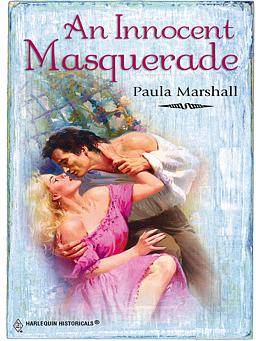

An Innocent Masquerade
Autore
Paula Marshall
Letto da
18,1K
Capitoli
16
THE MYSTERY MAN OF HER DREAMS After losing his beloved wife in childbirth, Thomas Dilhorne is a man inconsolable. Worried that his son will never recover from his grief, Thomas's father sends him to Melbourne to do a little business and try to enjoy himself. But an attack by robbers turns the Dilhorne heir into a man who can remember neither his name nor his past. Kirstie Moore can hardly believe it when her father brings home a mysterious vagrant! Fred Waring might have duped her father into believing he was a decent sort, but Kirstie has her suspicions. Soon "Fred" proves he's a good worker and works his charms on the Moore family, including beautiful Kirstie. But will she still love him when she discovers his true identity?
Chapter One
‘It’s big, Pa,’ said Kirstie Moore faintly, shaking her ash-blonde head. ‘Melbourne is even bigger than I thought that it would be. Are you sure we’re doing the right thing?’
‘Ballarat’ll be smaller when we get there, my love,’ said Sam Moore robustly, ‘and you know that we couldn’t stay at the farm. I explained all that before we set out.’
Kirstie nodded an unhappy agreement. She considered saying something along the lines of ‘better the devil you know than the devil you don’t,’ but refrained. Once Pa got an idea into his head it tended to stay there.
She remembered the morning, nearly a month ago, when their neighbour, Bart Jackson, had come visiting and her father had told him that he could see a way out of the cripplingly narrow and poverty-stricken life which was all that living on their barren farms was giving to them. They and their children deserved better than existing on the edge of starvation in a place where young Kirstie would never find a suitable husband.
‘We can sell our land, go to the gold field and make our fortunes,’ he said vigorously. ‘Jarvis, the banker from Melbourne, is only too willing to buy us out and sell them to some Melbourne bigwig with more money than sense. We can use the proceeds to outfit ourselves for the diggings. Come on, Bart, there’s nothing left for us here. What’s to lose?’
Bart, who had always followed Sam’s lead, thought that this was splendid advice, and they shook hands on it. After he had gone Sam walked into the kitchen to tell his eldest daughter this exciting news. ‘What do you think of going to the gold fields, eh, Big Sister? Ballarat, perhaps? They says there’s riches there for the taking.’
Kirstie, who had been known to her family and friends as Big Sister ever since her mother’s death in giving birth to little Rod, believed at first that her father must be joking.
‘I thought you was off to milk the cows, Pa, not daydreaming.’
‘No, Big Sister,’ he told her. ‘No more milking cows for me, I hope. I’m tired of working like an ox for nothing. We’ll sell up, and be off to the diggings as soon as possible.’
‘The diggings, Pa?’ Kirstie nearly dropped Rod, whom she had been spoon-feeding, in her excitement and horror at hearing this unlikely news. ‘What shall we live on there?’
‘This,’ he said, waving a hand at the few poor sticks of furniture in the room. ‘Together with the money for the farm it’ll give us enough for a stake, as well as for a couple of drays, digging equipment and a little something for food until we strike lucky. There’ll be young men there, perhaps a husband for you, as well—there’ll never be one here. Besides, others have made their fortune at the diggings—why shouldn’t we?’
Kirstie’s blue-green eyes flashed at him. ‘And others have lost everything—and I don’t want a husband, I’ve the family to look after and that’s enough for me.’
‘But it won’t always be, Big Sister.’
‘And we shall be leaving Mother’s grave behind us.’
‘Kirsteen,’ he said, using her real name for once. ‘She left us nigh on two years ago and staying here won’t bring her back. She had a hard life, daughter. I’d like a better one for you. You’ll live like a princess if we strike it rich.’
‘If…if…if…’ she said fiercely. Big Sister was always fierce and kind and hardworking. ‘It’ll be hard for the little ones in the diggings.’
‘You’re wrong there. The little ones will like it most of all. They’ll be free to run around, you see.’
Kirstie wailed in exasperation. She knew that it was no use trying to talk to him, he had already made his mind up before he had so much as said a word to her.
‘Don’t take on so, Big Sister,’ Sam said humbly. ‘I know it’s hard. Harder to stay, perhaps. The kids are wild to go.’
‘The kids don’t know any better. You do.’
Sam Moore gave a heavy sigh and sat his big body down on a battered chair.
‘Oh, Big Sister, can’t you see? It’s my last chance to have any sort of life. The farm killed your mother and it will kill you. You’re already getting her worn look and you’re still so young. Please say that you understand and will make the best of it. You’ve never failed me yet, however hard the road.’
This humble appeal moved her as his enthusiasm had not.
‘Dear Pa, if that’s how you feel, I’ll try to do my duty by you—but I wish that you’d spoken to me first.’
‘And now you know why I didn’t. Oh, Kirstie, I want to hear you laugh again—there’s not been much that’s jolly here lately, has there—?’
She was about to answer him when the door opened and Patrick ran in.
‘Oh, Pa, is it true what Davie Jackson is saying? That we’re all going to the diggings to get rich? Oh, huzzah, I say.’
After that she could offer no more opposition, however desperate she thought Pa’s plan was. The notion that simply going to the diggings would secure her a husband was laughable, but she could not tell him so. Why should a suitor there be any better than poor oafish Ralph Branson whose offer of marriage she had recently turned down? It just showed how desperate Pa was that he could offer her such a prospect.
Besides, she didn’t want to become a wife, since being a wife meant that you were simply a man’s drudge both in and out of bed. No, she would prefer to stay Big Sister and, later on, perhaps, the kind unmarried aunt who had no responsibilities to any man.
In the meantime, she would cease to criticise Pa and offer him all her loving support in this unlikely venture.
So here they were, Pa, Kirstie, Aileen, twelve, Pat, ten, Herbie, four, and Rod, two, bang in the middle of Melbourne with all their possessions loaded on to two drays, drawn by bullocks. Pa was driving one dray and Kirstie the other, with the Jacksons’ dray drawn up behind them.
Oddly enough, when they had started out it had been Pat who had burst out crying at the prospect of losing the only home he had ever known. In his young mind you could go to the diggings and still stay at home. To quieten him, and the little ones who had begun to roar with him, Kirstie gave Pat their scarlet and gold parrot to look after. When that wasn’t enough she sang them songs from back home in England, songs which Ma had used to sing.
‘That’s my good girl,’ Pa had told her quietly. ‘I knew that you’d not let me down.’
When they had reached Melbourne they had found it full of people like themselves, all making for the diggings. There was nowhere to stay or to sleep except in and around the drays whilst they bought further provisions, tents and equipment. The little ones ran wild, dodging in and out among the many tramps who were lying in the street, dead drunk and clutching empty bottles: ruined before they had even reached the diggings.
Two of them were lying where the Moore party was parked in front of The Criterion, Melbourne’s most expensive hotel. One was large with thick dark hair and a long beard and the other was red-headed and small. Both were ragged and smelled evil.
Kirstie sniffed her disgust at the sight of them, while Pa and Bart talked busily with those who seemed to know what ought to be done at the diggings if a fortune were to be made.
‘Just the two of you won’t get anywhere,’ said one burly digger. They were all burly, rough and good-natured, as well as free with their violent language, blinding and bloodying in front of Kirstie as though she were not there. ‘You need to form a small syndicate. A big chap would be best.’
The trouble with taking on a big chap, Sam thought, was that he might see the Moore family, tenderfeet all, as a suitable party for pillaging. Someone less powerful might be safer.
On the morning that they were ready to leave they had still not discovered any extra mates.
‘We’ll try to find someone when we get there,’ said Pa hopefully—he was always full of hope.
They were just hoisting their last load of provisions into Kirstie’s dray when a middle-sized Englishman, looking vaguely ill, came up to them. He was respectably dressed in clerk’s clothing and said diffidently, in a low cultured voice, ‘They told me at the store that you’re off to Ballarat and needed a chum to make up your team. My name is Farquhar, George Farquhar. They call me Geordie here.’
Sam looked sharply at him. He scarcely seemed the sort of chum they needed, but then the stranger said, ‘I can not only drive the dray, I’m good with horses as well. I don’t drink or gamble and I’m stronger than I look. I also have a little spare cash to put in the pot if you’d care to take me on.’
That did it. Bart asked shrewdly, ‘How much spare cash?’
The man said, ‘Enough. I’ll not show you here, too public. If you want a reference, I’ve been working at an apothecary’s for the last three months. I’m steady,’ he added, ‘and they told me that you were steady, too.’
Sam looked him bluntly up and down, and, as usual, made a sudden decision on the spur of the moment.
‘Well, Geordie Farquhar,’ he said, ‘I like the look of you and I’m inclined to take a chance with you. Money in the pot—and join us in the hard work. Just do what you can. Let’s shake on it,’ and he put out his work-calloused hand. Bart followed suit, and the three of them solemnly sealed their bargain.
Geordie proved helpful almost immediately. He persuaded them to stay an extra day and sell one of the drays and buy a horse and wagon—‘It will be more useful than a bullock when we get to the diggings,’ he told them.
‘Except that we can’t eat it,’ Pa said practically.
‘Oh, horse isn’t bad,’ Geordie told them. ‘I’ve eaten horse rather than starve.’
The next morning, when an adventurous young Davie fell out of a tree on one of their earliest stops and broke his arm, Geordie set it for him carefully and patiently.
‘I used to be a doctor,’ he said brusquely when Bart thanked him. ‘It might be helpful in the diggings.’
Back at the farm neither Kirstie nor Sam had thought that when they finally left Melbourne for Ballarat they would be part of a vast exodus of folk walking and riding to the gold fields. With two bullock-drawn drays and the horse and wagon they were among the more affluent of the travellers—although, as Kirstie commented, that wasn’t saying much. They were mostly big, heavily whiskered men, many with pistols thrust into their belts. Some were already drunk, early in the morning though it was.
Pat, indeed, always lively and curious, gave a loud squeal when they passed a scarecrow of a man driving a rackety cart pulled by a spavined horse.
‘Look, Big Sister, look, it’s the two tramps from outside The Criterion. Fancy seeing them here!’
So they were. The little red-headed one was sitting up and looking around him while the big, dark one was lying on his back, eyes closed, a bottle in his hand, dead to the world already.
Kirstie sniffed her disgust at them. ‘Hush, Pat. They might hear you.’
‘Oh, Corny and The Wreck won’t mind. They’re used to people noticing them. Corny says they get more money that way. He’s the little one.’
‘There’ll be more money for them in the diggings, perhaps,’ commented Pa. ‘And you’re not to talk to them, Pat.’
‘Oh, I don’t talk to them. Besides, only Corny talks. The Wreck never says anything. Just looks.’
‘And smells!’ sniffed Kirstie.
‘One thing, though,’ said Geordie later, ‘at least they weren’t trying to cadge a free ride.’
He, Bart and Pa had been compelled to beat off with their whips great hairy ruffians trying to climb in beside them. One bold fellow, stinking of grog, jumped up and thrust his whiskered face at Pa, demanding that he sell him a ride. Pa threw him off, and left him behind in the dirt, hurling curses after them.
Some people were pushing wheelbarrows, full of their possessions, and their little children, some not as old as Herbie, even, were walking behind them. Public houses, inns and sly grog shops, so called because they were not legally licensed, lined the road. One lean-to shed had a sign, ‘Last sly grog shop before the diggings,’ which was a lie since a few miles further along was another with an even bigger sign saying, ‘This really is the last sly grog shop before the diggings.’
Geordie, who had a dry wit which kept them entertained, suggested that ten miles after the last one they came to they ought to set up their own grog shop and make a fortune—except that someone else would be sure to build another a few hundred yards further on! He didn’t drink, though, refusing a swig from the rotgut passed round after they had eaten their grub, and he never asked to stop at a grog shop.
He soon grasped that Sam Moore and Big Sister were the driving forces of the expedition. Sam was quiet and determined and made the decisions. Big Sister did all the donkey work. She rounded up the children, kept watch over them. scolded them, and bandaged their cut knees, in between doing the many chores which came her way. It was Big Sister who washed the clothes, lit the fire, cooked the food, banged a spoon on a tin plate and shouted ‘Grub’s up’, a sound which began on the journey and which was to echo round the diggings in the months to come.
And on the road she entertained them by singing, in her small true voice, the songs which Ma had taught her to sing—their last link with long-gone England.
Kirstie knew that the diggings were going to be a man’s heaven and a woman’s hell as soon as they reached the ruined landscape which was Ballarat. The diggings were called the diggings because that was exactly what they were. There were hundreds of great deep holes, many filled with water, with soil flung up around them, and left there in heaps. Besides that, there were more people than they had ever seen before, even in Melbourne, crammed though it had been. They swarmed round the muddy holes and the canvas buildings like wasps around a honey pot.
Whatever there had once been of rural beauty before the gold rush began had long since disappeared. The settlement pullulated with life and noise, particularly noise, something which none of the party had expected, and to which none of them was accustomed—but which, like everyone else, they came to accept and ignore.
Symbolically, perhaps, the first people Kirstie saw as soon as they arrived were The Wreck and Corny lying in the muddy road where their driver had turned them out when he had found that they had little to pay him with. Somehow they had managed to beg enough to share a bottle and a pie between them, and were busy sleeping their impromptu banquet off.
Worst of all, Kirstie could plainly see that living in the diggings was going to be one long, improvised and dreadful picnic. Any hope that she might resume the orderly life she had been used to on the farm disappeared in the face of the cheerfully impromptu nature of gold-field society.
The men would love it, she thought bitterly, trust them. No need to be good-mannered, to sit down decently to eat. Male entertainment of every kind was laid on in abundance, for there was no getting away from the alleys where the grog shops, brothels, gaming halls, and bars flaunted their wares to the world.
There were even boxing booths, she discovered, and shortly after they arrived a small improvised theatre called The Palace started up—as though any palace could be constructed out of tent poles and canvas! There were few women in the diggings and Kirstie soon discovered that little was provided for them in this masculine paradise.
But exploring Ballarat was for the future. For the present it was time to settle in, to discover how to make one’s claim and work it, and how to sell the gold—if they ever found any, that was.
Unkempt men, quite unlike the husband whom Pa had promised her, their soil-encrusted clothes reeking of sweat, came over to speak to the new chums, to advise them where the stores were, who was honest and who wasn’t. They stared jealously at the drays and bullocks, at Geordie’s horse and wagon, and the equipment which the men began to unload while Geordie helped Kirstie to light a fire outside, and set up a tripod and cooking pot over it. Meals would have to be eaten in the open.
‘Really need all this, do you?’ asked one ginger-haired digger. He was pointing at the trunks and blankets Sam was lifting out. ‘Give you good money for this,’ he offered, putting a hand on a storm lamp.
Sam pushed the eager hand away. ‘Nothing to sell, mate. We need all we’ve brought for ourselves.’
‘Seems a lot to me,’ said Ginger, whose real name was George Tate. ‘If you’ve ever a mind to sell anything, I’m in the market for what you don’t want.’
The firing of a gun in the middle of removing Ginger’s sticky fingers from Kirstie’s cooking pots surprised them all. Kirstie dropped the frying pan she was holding and the younger children began to cry. Emmie Jackson, already depressed by their primitive living conditions, howled with them.
‘That’s nowt,’ said Ginger phlegmatically. ‘All digging has to stop when the gun goes off. It’s time to light the fire, eat your grub, and…’ he paused a minute to wink at the men ‘…that’s when the evening’s fun really begins.’
‘For the men, I suppose,’ returned Kirstie smartly, for only men, she thought, would want to live in this dreadful way—and enjoy it, too. No woman of sense would ever want to settle down in such dirt, confusion and mess, even to find gold.
Just to show that she meant business, she struck Ginger’s hand smartly with her iron ladle when it strayed again among the pots lying on the ground. ‘Give you good money for it, gal,’ he said cheerfully—it seemed to be his favourite phrase.
‘Don’t want money for it, good or bad,’ she snapped back. ‘We shall need all we’ve got in this Godforsaken hole.’
Grinning at her, he wandered off—only to be succeeded by another set of diggers who, like squirrels, Geordie said, descended to try to wrench their stores from them. He made it his business to protect Kirstie so that she could prepare their supper. The children had long since run off to begin a disorganised game of tag in and out of the filthy maze of holes and the alleys which stood in for streets. It didn’t improve her temper to see The Wreck shamble by, still clutching his bottle, Corny trotting along behind him.
Somehow Pa managed to round everyone up at last, after Big Sister had shouted, ‘Grub’s up,’ and they ate their meal with all the relish of the genuinely hungry.
‘Work tomorrow,’ he said, after he had finished eating. ‘Fancy a stroll, eh, Bart, Geordie?’ Kirstie, gathering up dirty pots, an apathetic Emmie Jackson helping her, watched them go.
Pitched among the tents and the huts of the diggers were all the masculine delights which Kirstie had disapprovingly noted, and the three men found themselves part of the seething life which roared and reeled around them. They stopped at a sly grog shop, drank and moved on. The lure of a dance-hall was rejected. Fat Lil’s Place, with Fat Lil outside in satin and feathers—the girls were all inside—was reserved for another night. Money best spent elsewhere at the minute, thought Sam regretfully, but Hyde’s Place, as the Golden Ace gambling den was known, beckoned them in, not to play, but to watch.
Further down the alley was a music hall where the trio enjoyed themselves after moving on from Hyde’s. After that they reeled home singing, waking up Big Sister when they stumbled around before falling into their improvised bedding.
Sam and Bart had already agreed that life was never like this on the farm!
The diggers in Melbourne who had told them that two of them were not enough to make a successful syndicate had not been deceiving them. Even adding Geordie was not enough, so the Moore party, as Geordie had nicknamed them, decided after a couple of weeks’ fruitless work that they really needed a new chum—preferably one big and strong. Sam suggested that they try to hire someone—safer than trying to find a partner since they could control him.
‘Well, now,’ Bart said, ‘that’s a good idea, but who is going to hire themselves out when they can stake their own claim, eh?’
‘You can’t mean a layabout, Pa,’ said Kirstie disapprovingly. ‘He wouldn’t work, not after the first pay day.’
‘Never know ’til you try,’ said Sam mildly. But even he quailed at the sight of some of the rogues and ruffians who worked until they earned a little money for drink and then lay about the alleys. Kirstie was probably right.
‘What about The Wreck?’ asked Geordie, while drinking tea one breakfast. ‘God knows he’s big enough.’
‘The Wreck?’ said Sam dubiously. ‘You can’t seriously mean The Wreck, Geordie.’
‘Yes, I mean the big fellow Corny Van Damm brought here. Corny was the brains of the pair of them. I’ve been watching him. Ever since the police frightened Corny away he’s been a lost soul. In and out of the nick, every penny thrown to him going on drink. But…’
Geordie stopped. How could he tell them that something about The Wreck roused his pity and his interest? The occasional worried and questioning look in his eye, perhaps. Whatever it was, Geordie had an impulse to save him.
‘The Wreck!’ exclaimed Bart derisively. ‘What use would he be? He’s big enough, I grant you. But…’
‘I know a few tricks to control drinking,’ said Geordie. ‘I could try them on The Wreck. Nothing would be lost if I failed. We could throw him out again.’ He shrugged. It would be interesting to test whether he’d lost his touch.
‘Geordie’s right,’ said Sam. ‘We could take him in. Sober him up. Pay him by the week. Get rid of him if he won’t give up the drink.’
Bart rose. ‘Last time I saw him he was lying outside Hyde’s Place. Yesterday afternoon, that was. There’s a patch of shade there he seems to like.’
‘He was in a bad way,’ said Sam. ‘Likely the police have picked him up. I’ll go over to the nick. They’d be glad to get rid of him to us.’
Kirstie put her oar in. ‘I think you’re all mad,’ she said tartly. ‘Talking about taking on The Wreck. Only fit to trip over, is The Wreck.’
‘Now, Big Sister don’t be hard,’ said Geordie gently. ‘A bit of pity wouldn’t come amiss.’
‘Bit of pity!’ scoffed Kirstie. ‘I know who’ll end up looking after him, cooking for him, and washing his clothes for him—and it won’t be you lot.’
‘Don’t think The Wreck’s much bothered about having his clothes washed, Big Sister,’ was Bart’s response to this.
‘Ugh,’ she snorted, ‘and I object to that, too.’ But nothing she said would move them, as she well knew. They were entranced by the prospect of a new, large and strong chum, even if he were at the moment a dead-drunk liability. They all trusted to Geordie’s magic powers to restore him to rude health and strength.
That afternoon Sam harnessed the one remaining dray—they had sold the other to raise money for more equipment—and took Kirstie shopping. While they were out they would look for The Wreck.
‘Taken off to the nick, half an hour ago,’ they were told by one of Hyde’s strong-arm men, so once shopping was over they set off for it.
In the compound at the front of the nick an officer was glumly watching The Wreck, who was reclining happily against its front wall: he was too disgustingly filthy to be put inside, the officer told them.
Sam knew the officer. He made a point, unlike some, of always being well in with the law.
‘In trouble again, is he, Mac?’
Mac scratched his head. ‘God knows what we are going to do with him, Sam,’ he said. ‘Locking him up is no answer. He just goes straight out and…’ He shook his head despairingly.
‘What if I took him off your hands, Mac? Geordie reckons he can dry him out, and then set him to work.’
‘That’ll be the day,’ said Mac drily. ‘Miracle worker is he, Geordie?’
‘Bit of,’ said Sam. ‘Done some good things for us, has Geordie.’
The officer looked at The Wreck, who smiled happily at them all.
‘Can’t lose,’ he said, much as Geordie had done earlier. ‘You’ll be doing us a favour, Sam, by taking him off our hands for a little, even if you don’t cure him. I doubt very much whether you’ll be able to sober him up.’
‘Depends on whether he’s a hardened drunk,’ said Sam, inspecting the sodden figure who now gave him the smile previously offered to Mac.
The Wreck said with great dignity, opening one red eye, ‘I can’t be drunk, because I never drink.’ He closed the eye again and began to snore. The officer groaned and helped Sam to haul him to his feet. Kirstie, sitting in the dray, was stiff with disapproval.
‘You can’t want him, Pa,’ she called to her father. ‘What use will he be?’
‘He’s a big fellow,’ said her father. ‘We’ll dry him out and put him to work. We need him, girl.’
‘I know that we need someone—but him? Can’t you find anyone more suitable?’
‘No one wants to work for anyone else now, girl. We’re lucky to get him.’
So saying, Sam helped Mac to walk The Wreck to the dray, his feet dragging behind him. Between them they managed to hoist him into it. He was so dirty that Kirstie drew her skirts away from him, making disgusted noises which seemed to wake him up a little.
He opened his bloodshot eyes and stared at her.
‘Where am I?’ he asked.
‘Where I don’t want you to be,’ she flung at him. When he tried to sit up she pushed him down again. ‘Lie still. I don’t want you near me. He’s disgusting, Pa. I think that this is a big mistake.’
‘Think what you want, my girl,’ said her father equably. ‘He’s coming with us, and if he proves useless we’ll throw him out.’
‘I’m not disgusting,’ said The Wreck reproachfully. ‘Fred’s tired, that’s all. Fred needs to sleep.’
‘Then sleep,’ she threw at him. ‘Your breath is as nasty as your person, and that’s a feat in itself.’
‘Unkind,’ moaned The Wreck. ‘Women should be gentle.’
‘Gentle!’ Kirstie’s voice would have cut steel. ‘And men should be decent. When you’re decent I’ll be gentle, not before.’
He ignored this and, rolling over, said placidly, ‘I’ll sleep now,’ and immediately began to snore.
‘Fred?’ said Sam to Mac, now that their passenger was settled. ‘Is that all the name he has?’
‘Waring,’ said Mac, glad to see the back of Fred—for the time being at least. ‘Fred Waring, at least that’s who he says he is. Not too sure about that sometimes. Doesn’t even know where he is or what he’s doing. Except drink.’
Kirstie drew her skirts still further away from Fred and looked to the front, offering Mac her opinion of the police for letting him go so easily.
Sam picked up the reins and began the journey back to their claim.
Geordie Farquhar was up to his waist in the hole he had started to dig the previous evening, just before the gun went. He was using his pickaxe, not with the same strength and vigour as Bart and Sam—Bart cleared nearly twice as much mud as Geordie in any one session—but there was no doubting his determination.
He was already far more muscular than the soft man he had been before arriving at the diggings. When Sam returned with the dray he put down the pick and hauled himself out of the hole, wincing at his blistered hands. Even Sam and Bart had trouble with their hands and they were far more used to manual labour than he was. Geordie had been proud of his beautiful hands once—but once was long gone.
He walked over to the dray. Big Sister jumped out, stiff with distaste. She said scornfully to him in passing, ‘A fine creature we’ve brought you, Geordie Farquhar, lying there in his muck. The dray will need fumigating.’
‘Give over, do, Big Sister,’ said Sam in his mild way. ‘Come and help me with the new chum, Geordie.’
Bart put his head out of his hole. ‘Got him, did you, Sam?’
‘Aye, and blimey, he’s a big ’un. He’ll do when we’ve sobered him off.’
The three men looked at Fred lying in the bottom of the dray. He was now fully conscious and smiled up at them sweetly—but showed no signs of wanting to get up.
‘Big Sister was right,’ said Geordie. ‘We’re dirty. He’s disgusting.’
‘Get him down to the creek,’ said Bart practically. ‘Clean him up there. Sober him up a bit.’
‘Right,’ said Sam, ‘but he’ll need clean clothes. His are too dirty even for the diggings. He’ll need boots, too. His are useless, but where shall we find clothes or boots for him? We’re all too small for us to give him any of ours.’
‘Andy Watt,’ offered Geordie briskly.
‘That’s right,’ said Sam.
Andy Watt had been a big digger and a neighbour on their last claim. When the rains set in Andy had got drunk, fallen into one of the flooded holes, and drowned. Geordie had thoughtfully ‘saved’ Andy’s clothes and possessions and stored them away in his wagon.
‘Might come in useful some day,’ he had said. Geordie was a proper squirrel, they all agreed.
Geordie went to his wagon to collect the clothes, boots, soap and a towel. Sam and Bart hauled a protesting Fred out of the dray and walked him on his jelly legs down to the creek. Big Sister, still stiff with disapproval, watched them go.
Fred had a happy look on his face. He had no idea what his new friends were going to do to him when they reached the creek. If he had, he would not have looked so contented.
Geordie Farquhar, loaded with his possessions, gave Big Sister a wink when he passed her.
‘What use do you think he’ll be?’ she shouted at him.
‘Never know, Big Sister, until we try, do we?’
Bart and Sam had now thrust the protesting Fred into the creek. You could scarcely call it cleaning him. The water was milky, if not to say murky, from the many washings in it of the muck and quartz in which the gold was embedded. But it performed the dual purpose of cleaning the encrusted Fred of much of his grime and half-sobering him into the bargain. Every time he tried to climb out, Sam and Bart shoved him back in again.
The noise and the excitement not only brought all the children down to see the fun, but attracted a small crowd of men and women as well. Finally Sam and Bart let him climb on to the bank—and then threw him back in again for one last soak. The watching crowd cheered lustily when, shouting and spluttering, he hit the water, which rose in a vast fountain drenching the spectators!
This time when he surfaced Sam and Bart dragged him out and began stripping him of his sodden clothing now that it was fit to touch. The women in the crowd screeched and covered their eyes when they pulled his trousers from a loudly protesting Fred. Geordie threw him the scrubby towel not only for very decency but so that he might dry himself.
Fred was now shivering so violently from reaction that Geordie had to help him to dress. Fortunately Andy Watt’s clothing fitted him well enough. Even the boots seemed to be the right size. Once he was fully dressed and standing more or less erect, all three were agreed that he was indeed a right big ’un, and if he could work at all would be a useful mate.
Fun over, the crowd dispersed and Sam’s party returned to base where Big Sister’s withering stare seared them all.
‘A right picnic you made of that. You should have charged for watching. We could have made enough to pay for next week’s grub.’
She had to allow, though, that The Wreck was much improved after the trio’s ministrations. His long hair was beginning to dry in rioting waves and curls. His beard needed a trim as well. Fred blinked at Big Sister when he saw her watching him and gave her a slow smile, revealing excellent white teeth. The smile was the first—but not the last—he was to favour her with.
‘I’m Fred,’ he said cheerfully. ‘Who are you?’
‘That’s Big Sister,’ shrilled Pat, who had watched the forced bath with great appreciation. It was better than a play, being real life not pretence.
Fred smiled again. Something about the young woman who was so cross with him appealed to his fuddled brain. Perhaps it was her bluey-green eyes which reminded him of someone, but exactly who, he couldn’t remember. He wanted her to talk to him so he said eagerly, ‘Hello, Big Sister. Say hello to Fred.’
He was so impossibly childlike that rather than attack him Kirstie swung on Pa, Bart and Geordie, who were all enjoying Fred’s innocent unawareness of Big Sister’s anger with him.
‘Think it funny, do you?’ she raged at them. ‘Am I expected to cook and wash for him as well?’
‘So long as he’s part of the gang,’ Sam told her.
‘And how long will that be, Sam Moore?’ That showed him how cross she was. She only called her father by his full name when she had been tried beyond endurance. The Wreck, Fred, whatever his name was, stood for everything which Kirstie disliked so about her new life. How could they arrive with such a useless creature and expect her to be enthusiastic about him? So far as she was concerned, he was more extra work for her while they would get little back in the way of work from him.
And all her father could say was, ‘We’ll see, girl, we’ll see.’
‘You mean, I’ll see!’
‘I’m hungry,’ announced Fred, blithely unaware of what a bone of contention he had become. ‘Fred hasn’t had anything to eat today.’
He had sat down on the ground at the beginning of the argument between Kirstie and Sam and it was now passing back and forth over his head.
‘Yes, he ought to be fed,’ said Sam. ‘Do him good. Set him up for work tomorrow.’
Big Sister whirled on them all, shaking a rebuking finger, either at Fred or the other men, it didn’t matter which. They were all as bad as one another.
‘You see! You see!’ she exclaimed. ‘The first thing he wants is food—and I’m to cook it for him, I suppose.’
‘You will?’ said Fred hopefully. ‘That’s kind of you, Big Sister.’
The three men collapsed into laughter, whether at Fred’s sublime innocence or Kirstie’s anger they could not have said.
She shot into the hut and shot out again carrying two cold lamb chops and a damper—the diggings’ primitive version of bread—on a tin plate.
‘Will that do?’ she demanded, thrusting it at him.
‘Nice,’ said Fred, beginning to demolish the food where he sat.
Kirstie stared down at him, watching him cheerfully chewing his way through the grub. For the first time her face softened a little.
‘Are you sure that he’s not simple?’ she demanded of Geordie, who had been watching Fred with a trained eye ever since he had helped to haul him out of the dray. ‘He seems simple.’
‘No, Big Sister,’ he said quietly. ‘I don’t think that he’s simple. He may have been injured recently, though.’
He squatted down by the sitting Fred.
‘Had a knock on the head lately, old fellow?’
Fred looked up. ‘Think so. Not sure. Fred’s had lots of knocks lately.’ He was impatient to finish his chop.
‘Mind if I take a look at your head? I promise not to hurt you.’
‘Don’t mind,’ said Fred, still chewing busily. He smiled at Big Sister again. ‘Nice, I like this.’
Geordie’s long and skilful fingers explored Fred’s skull gently. He soon found a tender spot. Fred winced and pulled away.
‘You said that you wouldn’t hurt Fred,’ he mumbled reproachfully through his last mouthful of chop.
Geordie looked thoughtfully at him before breaking one of the diggings’ major rules. ‘Do you remember your home, Fred—where you come from? Did you live in Melbourne, or did you go there because of the gold rush?’
Fred pushed his empty plate away and hung his head, muttering, ‘My head hurts when you ask me that, Geordie.’
His distress was so plain that even Kirstie began to feel sorry for him.
‘Do you remember anything at all, Fred?’
‘Yes.’ Fred’s voice was so low that they had to strain to hear him. ‘But not much. It hurts when I try to remember.’ He looked around him agitatedly. ‘Where’s my bottle? Who took my bottle away?’
Geordie stood up, shaking his head. ‘It’s all right, Fred, don’t worry. You can tell me another time, perhaps.’
Fred shook his head agitatedly. ‘No, no, nasty—Fred doesn’t want to remember. No one was kind to him. They didn’t give him chops—not like Big Sister.’
‘What’s wrong with him?’ asked Sam. ‘Is he ill? Or what?’
‘Not exactly ill, no, but he needs looking after. He’s lost his memory, you see. He might get over it, and then again he might not. It depends on whether he wants to.’
He looked sadly at Fred, who had cringed into himself, his head on his chest and his knees drawn up to his chin. ‘He’s had a blow on his head, a severe one, and I think that that was what caused him to lose his memory. He’s obviously forgotten who he is—or rather was.’
Big Sister was suddenly sorry for the unkind way in which she had spoken to Fred ever since they had freed him from the nick.
‘He’s not really ill, then, Geordie?’
‘No, Big Sister,’ said Geordie gently. ‘He’s not really ill, but he does need looking after.’
He looked sharply at her. ‘I think that what he might need most of all is kindness.’
‘Will he get his memory back?’ asked Sam.
Geordie shrugged his shoulders. ‘Who knows? He might, and he might not. Only time will tell.’
The gun went off when he finished speaking, so they couldn’t put Fred to work that day, even if they had wanted to, or thought that he was fit to begin digging. When Fred uncoiled himself Bart took him on one side and explained to him that they had freed him from the nick, washed, clothed and fed him, and in return they expected him to work for their syndicate.
‘We’ll pay you a weekly wage, of course,’ Sam added. ‘We’ll see you right.’
Fred nodded agreeably.
‘I’ll try to be good,’ he said.
Geordie had hurt him a little, but these days his head had begun to pain him less and less. The vague feeling of unexplained misery, which had plagued him during his memory of his recent past and which had led to his drinking to forget it, was also beginning to disappear. Besides that, since the Moore party had washed him he had become aware of Ballarat for the first time, rather than seeing it as a blur of unmeaning noise and colour.
Kirstie watched him demolish another large plateful of stodge with every appearance of pleasure, and his reputation as a man who loved his grub was already on the make. He looked happily around while he ate and listened carefully to Bart, Sam, and Geordie when they told him what they expected of him. None of them, even Geordie, had any notion of how much of their instructions he understood.
In all directions lights had come on. There were small fires everywhere. People sat in the open, eating, laughing and talking. Music drifted from a big canvas tent nearby. Ginger Tate, who worked the claim next to theirs, was playing a banjo; the hard drinking and high living which followed the day’s work had already begun.
The lights pleased Fred. He stopped listening to the talk around the fire and pointed his knife at near and distant flames.
‘Pretty,’ he said to Big Sister who was gathering up the dirty plates and cutlery.
‘What is?’ she asked him when he obediently handed her his plate and tin cup.
‘The lights.’ He struggled a minute, attempting to find words to express his pleasure. ‘They’re beautiful.’ He smiled at her so winningly that this time, despite herself, she smiled back at him. She wondered what he would look like if his long black hair and his straggling beard were trimmed. He was certainly a fine figure of a man, justifying Sam’s belief that he would be an asset to the syndicate if he were able to work properly.
‘That’s better,’ he said encouragingly.
‘What’s better?’
‘You. When you smile you look pretty. Do it more often—for Fred.’ His artlessness robbed the words of any ulterior meaning.
‘I need something to smile at, Fred Waring,’ she snapped back at him, but it was only a little snap, nothing like those with which she had treated him when they had fetched him from the nick, before Sam and the others had cleaned him up and had discovered that he had lost his memory.
Allie helped her to collect the pots and carry them into the kitchen of the rude hut which the men had built for her. A large hand appeared in front of her when she bent over the washbowl. It was Fred’s.
‘Help?’ he queried. ‘You need help, Big Sister?’
Kirstie stared at him. Whatever their other virtues, the men took it for granted that all the chores around the camp—except for the digging—were done by her. None of them had ever offered a hand to help her during the long day which began at dawn and only ended when she was the last to retire, for now that Emmie’s baby had been born, everything fell to Kirstie.
Here was Fred, though, saying uncertainly and looking anxious, ‘Big Sister does a lot of work. Fred help?’
Sam appeared in the doorway, having followed Fred into the hut. ‘Anything wrong, Fred?’
It was Kirstie who answered for him. ‘No, nothing wrong, Pa. Fred came to help me.’
Sam began to laugh. He went outside to share the joke with the others, leaving Kirstie annoyed and Fred puzzled.
‘Big Sister’s got a kitchenmaid.’ Sam smiled. ‘Don’t wear him out for tomorrow, mind.’
Kirstie bounced to the hut door. ‘He’s got more consideration for me than some I know, Sam Moore!’ she shouted, bringing on another burst of laughter. Even Geordie Farquhar was looking amused.
She let Fred dry the pots, remembering what Geordie had said about kindness. When they had finished washing up Fred went back to the fire where Bart and Sam were passing a bottle back and forth. Geordie was repairing some tack.
‘I need a drink,’ Fred announced, and put out his hand for the bottle.
Geordie spoke before Sam or Bart could answer. ‘No, Fred, you’re not to drink.’
Fred’s eyes filled with tears. So far Geordie had been kind to him: it was the other two who had been rough and thrown him into the water.
‘Oh, I do so want a drink, Geordie. Please.’
Geordie walked over to sit by Fred. He took him by the right wrist, and looked hard at him, almost like the mesmerist in the little fair at the other end of the diggings.
‘No, Fred. Drink isn’t for you. You’re poorly, Fred. Drink will make you worse, not better.’
‘I feel better when I drink, Geordie,’ said Fred, pleading with him.
‘I know you do. But it’s wrong, the wrong sort of better, Fred. Do you understand me?’ He tightened his grip on Fred’s wrist and looked even harder into his eyes.
‘Bart and Sam are drinking,’ said Fred in a sullen voice.
‘It’s not wrong for them. It’s wrong for you. Look at me, Fred. Look into my eyes. Don’t turn your head away.’
Geordie’s stare grew even more piercing. Fred turned his head away to try to avoid it, but something drew him back again and, this time, when he looked into Geordie’s eyes, he was lost. Kirstie, watching them, thought that the usually self-effacing Geordie had suddenly become hard and dominant: a man of authority. Sam and Bart were silent and fascinated spectators of his attempts to control Fred.
Fred dropped his head to break the spell which Geordie was beginning to weave around him. Geordie put a hand under his chin and raised it.
‘Look at me, Fred, and repeat what I say. Geordie says that it’s wrong for you to drink.’
Fred obediently began to do as he was bid—and then faltered. ‘Geordie says it’s wrong, but…’
‘No buts, Fred. You understand me.’ His grip on Fred’s wrist tightened, Geordie could feel Fred’s hammering pulse. ‘No buts, Fred, and no drinking.’
Fred looked sorrowful. ‘No buts, Geordie, and no drinking.’
‘Promise me, Fred.’
‘I promise, Geordie. No buts and no drinking.’
They sat there for some moments, quite still, Fred drowning in Geordie’s eyes until Geordie took his hand from Fred’s wrist. He said, his voice low but firm, ‘That’s it, Fred. No more drinking for you in the future. You understand me? Say “Yes, Geordie”.’
‘Yes, Geordie,’ Fred said, and then fell silent, inspecting his hands as though he were seeing them for the first time.
There was a moment of silence. Then Big Sister moved away and Bart and Sam started talking again, and although Fred watched the bottle sadly, he made no attempt to take it, or ask for it with Geordie glaring at him from across the fire.